Have a question?

In the right circumstances, could a hybrid car be "cleaner" than an electric vehicle?

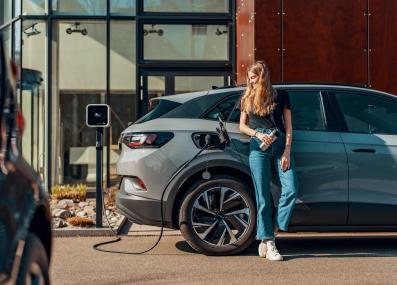
Fully electric vehicles are usually the cleanest choice, but it is possible for a hybrid vehicle to create even less climate pollution, depending how and where they're manufactured and driven.


January 14, 2025

Electric vehicles (EVs), research has consistently shown, produce fewer climate-warming emissions compared to cars that burn gasoline or diesel. But could hybrid vehicles be a better deal for the climate than full EVs? “You can construct those cases and get that answer,” says Sergey Paltsev, deputy director of the MIT Center for Sustainability Science and Strategy and senior research scientist at the MIT Energy Initiative. However, it might require cherry-picking data to find a very specific set of circumstances.

There are two types of hybrid vehicles, both of which run on a mix of electricity from a battery (like an EV) and a gasoline engine (like an ordinary car). A traditional hybrid vehicle, like a Toyota Prius, carries a battery that recharges while the car’s engine runs. This energy is delivered to the wheels through electric motors, allowing the car to switch quickly between electric and gas power depending on driving conditions. A plug-in hybrid vehicle (PHEV), meanwhile, is essentially a full EV with a gas engine as a backup. This allows it to get by with a much smaller battery than a pure EV: when the battery runs out, the gas engine takes over.

No matter the vehicle, driving on gasoline virtually always does more to affect the climate than driving on battery power. That’s partly because burning gasoline in an engine directly produces climate-warming carbon dioxide (CO2). But it’s also because electric motors are much more efficient than engines at turning energy into driving power. For example, consider an EV charged in West Virginia, where most electricity comes from burning coal—itself a major source of CO2. This car still produces less CO2 per mile driven than a gas-powered car, because it gets so much mileage out of every bit of electricity in its battery.1

So how could a hybrid, which uses gasoline at least part of the time, ever be cleaner than an EV? To know which vehicle is truly least damaging to the climate, you also need to factor in all the emissions created over the car’s lifetime.2 And that’s where the math gets tricky. 

If you look at a line graph of an EV’s lifetime CO2 emissions, you’ll see there’s a big bump at the beginning. That’s because building EVs creates more emissions than building gasoline cars, due to the mining and manufacturing needed to make their large batteries. After this big initial bump, there’s a gentle slant as the EV creates a modest amount of emissions every time it charges up, because electricity currently is not emissions-free.

Meanwhile, a gas car’s graph would start with a smaller bump, but then slope dramatically upward as it spends its entire driving life—more than a decade on average—burning gasoline and releasing CO2. After a few thousand miles of driving, the gas car’s emissions overtake the EV’s and keep rising.

Hybrids, both traditional and plug-in, fall in the middle. Because their batteries are smaller than an EV’s, their graphs start with a medium-sized bump. This makes it possible to draw up scenarios where a hybrid is less climate-polluting than an EV. For example, a person who does most of their driving within a few miles of home could own a plug-in hybrid and rely on electric power nearly all the time. In this case, the PHEV is, in practice, a true EV, but with a smaller battery. With fewer manufacturing emissions, this hybrid would almost by definition be "cleaner" than a full EV—although that calculus could change quickly if the owner began to use their hybrid’s gas engine more often.

However, Paltsev says, driving habits aren’t the most important factor when comparing hybrids to EVs. The bigger questions are: How clean is your electricity, and how dirty is battery manufacturing?

Let’s return to our EV charged in West Virginia. It drives cleaner than a gasoline car, but not a lot cleaner. In 2019, Paltsev worked on a study that concluded that, once you factor in manufacturing, this West Virginia EV will only barely be cleaner than a gasoline car. Here, a traditional hybrid would actually be 30% cleaner than a full EV.1 

If you live somewhere that’s highly reliant on coal power, then, an EV could be seen as a bet that the power mix will get cleaner over your car’s lifetime. And, Paltsev points out, this would not be a crazy bet: the United States, like many other countries, is rapidly adding clean solar and wind power while phasing out coal. Already, most places are not like West Virginia, and we can expect EVs to be cleaner than hybrids and continue to get cleaner in the years to come.

Battery manufacturing is harder to evaluate. For one thing, Paltsev says, many estimates of the emissions created by battery manufacturing are based on data that goes back to the previous decade—and may be outdated for an industry changing so quickly. It’s also not universally agreed what counts as manufacturing, and studies are not consistent. Any fair study of this question will have to include the emissions from mining the metals that go into a battery—but what about the emissions from building the mining equipment? “It really depends where you draw the boundaries for your comparison,” he says.

Paltsev says a few studies, using high-end estimates for the amount of climate pollution created by battery manufacturing, have found plug-in hybrids to be cleaner than EVs. In his estimate, those figures are too high—perhaps double the likely emissions of today’s cleanest EV battery production—but it’s not surprising that researchers studying a hard question in a fast-changing environment can reach different answers. 

Although Paltsev’s research is clear that EVs are the best choice for the climate, he would never say they’re the only good choice. Driving a hybrid can dramatically reduce climate pollution compared to owning a gasoline-only vehicle. If that’s the right choice for some drivers, then he encourages them to make it. “Every ton of CO2 that we can reduce matters,” he says.


Thank you to many readers who sent in related questions, including David Byrne of Dublin, Ireland, Claire Kowalchik of Emmaus, Pennsylvania, Shreenivas Mate of Ventura, California, Sherry Morgan of South Deerfield, Massachusetts, Peter North of Woolwich, Maine, and Jimmy Voorhis of Boulder, Colorado.

Submit your own question to Ask MIT Climate

Get the latest from Ask MIT Climate monthly in your inbox

Read more Ask MIT Climate


Creative Commons Attribution-NonCommercial-ShareAlike 4.0 International license (CC BY-NC-SA 4.0).

Want to learn more?

Listen to this episode of MIT's "Today I Learned: Climate" podcast about electric vehicles.

Transcriptions

Laur Hesse Fisher: Hi, and welcome to Today I Learned: Climate. I’m your host Laur Hesse Fisher from the MIT Environmental Solutions Initiative.

Electric vehicles, or EVs, are seeing an incredible surge around the world right now: in 2010, there were less than 20,000 EVs on the road – ten years later, there’s over 10 million.

In the U.S., EVs are still only about 2% of new car sales, but it’s looking like that will change:  several U.S. states are requiring that all new cars be zero-emissions by 2035, and some of the world’s largest carmakers – including Volvo, Honda, and GM – plan to be all-electric by around that same year.

EVs are being touted as a major solution to climate change. But why is that? How do they work and what kinds of changes are needed as more electric cars hit the road? To dig into this, we brought in someone who studies transportation technology.

David Keith: Hi, my name's David Keith. I'm a professor at the MIT Sloan School of Management in the system dynamics group, where I study the emergence of new technologies in the automotive industry.

LHF: Today, most cars on the road are powered by gasoline also called “petrol” – which is derived from the oil that we pump out of the ground. And when cars burn gasoline, it sends all kinds of pollutants into the air out the tailpipe: including the greenhouse gas, CO2.

DK: So on the order of 30% of U.S greenhouse gas emissions come from the transportation sector broadly, and about two thirds of that is from what we call light duty vehicles, which is cars and pickup trucks. So about 20% of all greenhouse gas emissions in the United States come from what we think of as cars.

LHF: Let’s start by breaking down how electric vehicles are different from gas-powered cars.

DK: In the gasoline vehicles that most of us have today, we have an engine up the front and then we have a gas tank in the back. An electric car replaces all of that with an electric powertrain. So instead of a gas tank, we have a battery and instead of an internal combustion engine, we have an electric motor.

The main benefits of electric cars is that they don't produce the emissions that come from the combustion of gasoline, that contribute to climate change, and the other is particulate emissions, small particles that are leftover when we burn gasoline, that can be very harmful to human health and contributes to the smog that we see in some big cities like Los Angeles.

Electric vehicles don't have tailpipe emissions. They don't even have a tailpipe.

LHF: So if we all switched to electric vehicles then… no more greenhouse gases, no more pollution, right?… Well, unfortunately, it’s more complicated than that.

DK: An electric vehicle is only as green as the electricity that goes into it. Those emissions could be zero or nearly zero if that electricity is coming from renewables, such as solar and wind. But on the U.S. electricity grid today, we have a lot of gas and some coal and other things as well.

LHF: That means EVs can still cause greenhouse gas emissions, but instead of at the tailpipe, it’s at the power plant.

DK: The vision for electric vehicles into the future — and the opportunity — is that as the grid gets greener, those electric cars that are already on the road will continue to get greener because the fuel we're putting in them have lower and lower carbon footprint.

LHF: That makes me wonder, because our electric grid still relies on fossil fuels, does switching from gas cars to electric cars make a difference today?

DK: We want the grid to get greener. But, not having green electricity is not really a reason to not electrify our vehicles. An electric vehicle running on coal has the fuel economy equivalent in the order of about 50 to 60 miles per gallon. So the dirtiest electric vehicle looks something like our best gasoline vehicles that are available today and an electric vehicle that's running on a really clean electricity supply that New England or the Pacific Northwest, or these places, the fuel economy equivalent — the MPGE is what we call it — it's up into the hundreds, so 110, 120 miles per gallon. It's a substantial improvement on the vehicles that run on gasoline.

LHF: But ramping up EVs is not without bumps in the road. If we want to keep driving our cars and want to seriously slow down climate change, we might also need to think about how we use cars today.

DK: In our work at MIT, we talk a lot about the norms that exist around vehicle ownership. We have a hundred years of history that has imprinted in our brains what car ownership involves, how fast it drives, how you refuel it, how long it takes to refuel — all of these things.

What we've observed is that we don't buy a vehicle that meets the average needs we have on a day-to-day basis. We buy a car that can serve our 99th percentile needs, which is the long driving holiday that we're going to take or towing the boat or whatever it is.

The first wave of electric vehicles had about a hundred mile range driving range. And now we're up into the 300 mile range. And yet almost every driver on almost every day will not use that 300 miles of driving range that they have.

LHF: Why does this matter?

DK: Range is expensive, because the more range we want, the more batteries we need to put into the car.
There's been a profound reduction in the cost of these batteries over the last decade. Batteries are about one sixth the price they were. But we're still talking $10,000 to $15,000 just for the battery to go into the car.

LHF: Currently, making batteries – for cars, but also for things like our laptops and cell phones – well that carries other costs, too: environmental costs, like water issues that arise from mining lithium, which is one of the metals that batteries need. Societal costs, like the forced and child labor that still exist today in the cobalt mines of Democratic Republic of the Congo. We have an entire episode in season two that focuses on this, called “Cleaning up clean tech", if you want to learn more about it.

But fewer batteries is not the direction that the market is going in.

DK: What we're seeing, is consumers tell us they want electric vehicles that operate like their gasoline vehicles operate today, which is long-range and fast refueling.

And it really feels like we're reaching a place in the market where the technology is maturing and we're seeing many more affordable and, and long range EVs. The latest, greatest electric vehicles are able to recharge in 20 minutes.

LHF: It doesn’t only matter how long it takes to charge an EV, but also where to charge it. Chargers are popping up, sure at gas stations, but more so where people are already parking their cars for a long time -- at home,  but also in lampposts and parking meters on city streets, in parking garages, and shopping-mall parking lots.

What also matters is when we charge our cars.

DK: If a hundred percent of vehicles on the road today were electric, our electricity consumption would go up in total, and it would go up quite considerably, on the order of say about 20%.

The aggregate amount of energy we're using matters, but also the time of day that we're charging matters a lot as well. If we all charged our electric vehicles overnight, while we slept and when electricity demand is relatively low, then supplying all that additional electricity probably wouldn't have a huge impact on the electricity grid. But if we all want to charge at, you know, 5:00 PM on a Friday afternoon in the middle of summer, when the peak load on the grid is already very high, then adding that additional load, could be really impactful and costly.

LHF: By the way, to understand this better, we have an entire episode in season two talking about how the electric grid works, and we recommend you check it out.

OK so, with all these innovations and demand increasing, EV sales around the world have doubled between 2020 and 2021. But because of how the car market works, it still might be a while before most cars on the road are electric.

DK: A new car sold today will be on the road for the next 15 to 20 years. But it's actually only about 20 to 30% of the population who buy new cars.  The market for used cars is about twice as big as the market for new cars. And this market hasn't existed for long enough that those cars have filtered down such that there's, you know, a really robust market for used electric vehicles.

LHF: One way to build up the market for EVs is to make them cheaper to buy.

DK: Many governments and others have incentivized the purchase of electric vehicles. But as I just said, the people who are buying those new EVs and who are often the ones eligible for those incentives are moderate to higher income households frequently. There are still a bunch of questions around equity of access.

LHF: Another way to get more people buying EVs is to tout how cool they are.

Ford F-150 Ad Narrator: It's got a targeted 775 pound feet of torque. It's targeted to go from zero to 60 in the mid-four second range. It's a driving experience that's pure, unfiltered exhilaration from the moment you hit the accelerator. Oh, and it's an F-150. Introducing the all electric F-150 Lightning, the smartest, most innovative F-150 we've ever built.

LHF: The F-150 pickup is the best selling vehicle in America. And Ford is betting its new electric version can appeal to an entirely new audience.

There are still challenges to work out – companies and researchers are working to make batteries less toxic to produce, as well as more easily recyclable or repurposing them for things like storing electricity from wind and solar. We have some great resources in our show notes on all these topics that we recommend you check out.

As these things get worked out, we’re going to be seeing many more electric cars on the road in the coming years – and there’s good reason for that.

DK: There is an environmental need in the automotive space to introduce zero emission vehicles, given that 20% of emissions that come from cars. And electric vehicles appear to be the most compelling solution to do that for passenger cars and light trucks.

I mean, I view EVs as one part of the solution, but certainly not sufficient as we think about sort of sustainable mobility more broadly. A limitation of purely going down the EV path is that we're not addressing some of those broader questions about traffic congestion or road safety. And there are many people in society who can't own can't afford to own a car at all. That's probably a conversation for another day.

LHF: That is a conversation we’re having another day: in fact, it’s our next episode coming out soon.

Please rate and subscribe to TILclimate on Spotify, Apple, Google or wherever you get your podcasts. As always, we have an accompanying Educator Guide to help teach about electric cars in the middle and high school classroom – check it out at climate.mit.edu/educators.

We’d love to hear from you—what climate topics should we cover? What questions can we answer? Email us at tilclimate@mit.edu. On Twitter we’re @tilclimate.

Thanks to David Keith of the MIT Sloan School of Management and thank you for listening.