Have a question?

Can we do anything useful with excess solar and wind energy, besides store it?

Yes: we could use it to power flexible activities at different times of day, or to send electricity further afield — as long as the grid allows it. 


August 14, 2024

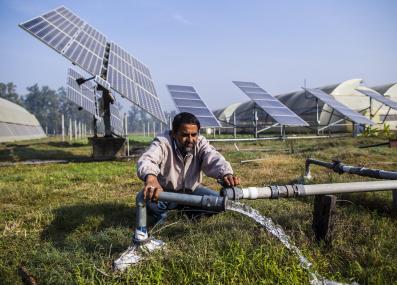
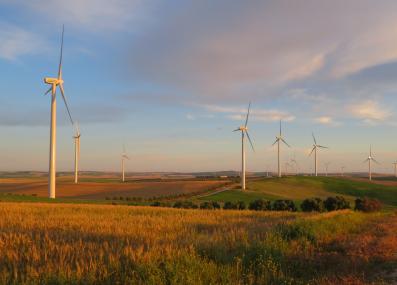
Because solar panels and wind turbines make as much energy as there is sun and wind available to power them, at times these renewable energy sources will give us more electricity than we can use. Today, this quandary only crops up in a few places, like California and Texas, where wind and solar make up an especially large share of the energy mix. But as the electric grid becomes cleaner, more and more places will find themselves dealing with periods of excess energy, when wind and solar generation is relatively high and electricity demand is relatively low.

That presents an opportunity: finding new ways to use this energy, so it doesn’t go to waste. 

The most common solution for too much wind or solar energy is to store it in big batteries. These can then support the grid when renewable energy is scarce, like as the sun is setting or on a windless day. But there are other potential uses, says Paul Joskow, an economics professor emeritus at MIT and former director of the MIT Center for Energy and Environmental Policy Research.

First, there’s “flexible demand.” Some uses of electricity, like turning on the lights and cooking meals, need to happen precisely when we need light and food, but many other activities could happen at any time of day. For the average electricity user, that may mean charging an electric car in the middle of the day, when solar energy is plentiful, or later at night (e.g. after 8 pm) when wind turbines are spinning and demand is relatively low. Good management of flexible demand also means ensuring that not everyone switches their electricity use to the same time, but that there’s a spread of charging across several hours in the evening to avoid putting too much stress on the electric grid. 

On a larger scale, certain industries like petrochemical plants, desalination facilities,1 or clean hydrogen projects may also be able to shift their production to times that better align with excess renewable electricity. 

The challenge for flexible demand is that electricity prices in most states don’t encourage it, says Joskow. The exception is California, where customers can save money by changing the timing of electricity-heavy tasks: electricity is cheaper in the middle of the day, quite a bit more expensive between 4 and 9 pm, and cheap again later at night. Joskow is part of a research group at the MIT Energy Initiative that has been developing alternative electricity pricing structures to provide better incentives for customers to shift some of their electricity use to times when supply is abundant, while minimizing pressure on the grid.2

Computerized devices can also make some demand flexibility automatic. “Smart” electric meters and chargers can pay attention to electricity prices and generation when people do not, and shift charging and other tasks to times when there’s more renewable electricity to use. Programs where utilities control certain appliances—like cycling air conditioners on and off to control demand, while offering customers a discount for participating—could also prove popular, says Joskow. 

Another solution to the too-much-renewable-electricity dilemma, he says, is building out the transmission system. In certain parts of California, a lack of long-distance transmission lines keeps the grid from moving excess solar from regions with high supply to regions with high demand. “If we could eliminate those constraints, we basically could use that excess solar energy more widely,” says Joskow. Local transmission constraints have also meant that solar operators in California have at times had to cut back on solar generation to prevent that electricity from overwhelming the grid—electric lines can only handle so much electricity at once without risking damage. State and federal regulators and policymakers have finally begun to address both types of transmission constraints, says Joskow. 

Still, even with all these measures, an optimal clean energy system is likely to be “overbuilt”—meaning there will be hours and days when we simply can’t use as much solar and wind energy as we’re making. “You can't eliminate this issue. It's inevitable if you have a deeply decarbonized system with wind and solar generation that are dominant, because there just are going to be hours where the demand is low and supply is high,” says Joskow. 

In the end, it’s not a huge deal if we’re producing excess wind and solar and not putting it to use. Unlike oil, coal, or gas, renewable energy is not a finite resource, these projects cost nearly nothing to run once built, and they produce no climate-warming greenhouse gas emissions when generating electricity. So there’s not much of a catch to producing too much of it. One study found that overbuilding the system by as much as 43 percent would yield the lowest cost for a clean electricity system, saving more than $3 trillion compared to a system that does not include overbuilding.3


Thank you to Eric Rodriguez for the question.

Submit your own question to Ask MIT Climate

Get the latest from Ask MIT Climate monthly in your inbox

Read more Ask MIT Climate


Creative Commons Attribution-NonCommercial-ShareAlike 4.0 International license (CC BY-NC-SA 4.0).
Footnotes

1 Wu et. al., "Flexibility quanitification of desalination plants for demand response: An adaptive robust optimization methodology." Applied Energy, Volume 373, November 2024, doi:10.1016/j.apenergy.2024.123835.

2 For examples, see: Paul L. Joskow, MIT Department of Economics: Papers, op-eds, testimony and presentations.

3 Wang et. al., "Determining cost-optimal approaches for managing excess renewable electricity in decarbonized electricity systems." Renewable Energy, Volume 178, November 2021, doi:10.1016/j.renene.2021.06.093.


Want to Learn More?

Listen to this episode of MIT's "Today I Learned: Climate" podcast on energy storage.

Transcriptions

LHF: Hello, and welcome to Today I Learned: Climate. I’m Laur Hesse Fisher.

Here in the United States, the large majority of new energy we’re building today is renewable and doesn’t pollute the climate. And mainly, that’s due to two technologies: solar panels and wind turbines. They provided around two-thirds of new electricity in the U.S. in 2022.

AH: We are gradually switching to putting up renewables as opposed to gas and other fossil fuel options because it's cheaper. The problem is we know we can't keep going at this pace without storage.

LHF: That’s Prof. Asegun Henry. He studies energy storage in the MIT Department of Mechanical Engineering, and he told us about how all this new wind and solar is changing how we operate our electric grid.

AH: Maybe this is something that people don't appreciate, but the way the grid operates is, you have grid operators that try to do a prediction of how much electricity they expect everyone to use in the next hour. And then they effectively send a signal to all these power plants to tell them how much electricity to produce to try to match the load that they expect. And they do this very delicate 24/7 balancing act. If they make too little, the grid goes down.

We are talking about switching to a system that right now is largely based on fossil fuels to a system that is based on renewables. And the big difference is that fossil fuels, it's like a faucet. You can turn up how much fossil fuels you use, or turn it down and you have control over it. The same is not true with renewables. You do not get to turn a valve. You just get the weather that you happen to get that day.

LHF: And this, actually, is a major difference.

AH: The upper ceiling on the amount of wind and solar you can deploy before you run into some serious problems is in the range of 20 to 30%.

LHF: Okay, hang on, let’s repeat that. In some parts of the world, their electric grid today – with no other technology – can only include 20-30% wind and solar energy and still be reliable. This is mostly because we need electricity when the sun isn’t shining and the wind isn’t blowing. But the opposite is true, too.

AH: So in places like California, Nevada, they’re producing so much that they can't use it during certain times and they throw it away.

LHF: If we want wind and solar to be our main sources of electricity, we have to figure out a way to have more control over it. Energy experts call this issue “intermittency,” because the energy output from wind and solar is intermittent. And that means we need a second technology to go alongside our solar panels and wind turbines.

AH: You have to have some way of storing more energy than you need when the weather is favorable so that you can use it when the weather is not favorable.

LHF: So how exactly does energy storage work? What storage technologies are out there? And how much energy storage do we need to make wind and solar dominant?

To answer those questions, we’ll start at the beginning. Like, the very beginning: one of the most basic laws of physics.

AH: The first law of thermodynamics basically says that you cannot create or destroy energy. But there are different types of energy, and you can convert between them. 

LHF: So when we talk about “storing” energy, what we really mean is changing the form that energy takes. And for our wind and solar intermittency problem, that means taking an electric current, turning it into something else, and then turning it back into an electric current later.

Often, that “something else” is chemical energy: the energy that holds together the atoms in a molecule.

AH: Probably everybody's used a AA or AAA battery. There's one side of a battery that has one chemical, there's another side of the battery, there's another chemical. And these two chemicals really want to chemically react. And if they react, there's a lot of energy that's gonna come out. You don't allow them to react, though. You instead put in between a separator material—it's called an electrolyte.

LHF: These chemicals might be different from one battery to another—a AA battery uses a zinc-based chemistry, while the more powerful batteries in a phone or an electric car are based on lithium.

But the electric grid is much bigger than a phone or a car.

AH: So when you now say grid-scale energy storage, the number one thing you're talking about is the scale is huge. And so the amount of energy we're talking about, the amount of material, the size is dramatically different. And as a result of that, the way you think about what technology you would even use for that scenario is very, very different.

LHF: So instead of a phone, let’s think about a power plant. A midsize coal, gas or hydropower plant might produce around 500 megawatts of electricity.

AH: If you wanted to store the amount of energy coming out of that power plant for one hour, that means your battery would have to be 500 megawatt hours.

LHF: For comparison, a very big non-grid battery—say, the one that powers a Tesla electric car—holds roughly 100 kilowatt hours.

AH: So 5,000 Tesla batteries is essentially what you would need. It's like half a football field. That's now getting to a scale relevant for the grid.

LHF: And that’s to store just one hour of electricity from a midsize power plant!

And we actually do store energy this way today. Facilities basically just like the one Prof. Henry described are being built and operated right now, especially in places with lots of renewable power, like California, Texas and Arizona. These facilities have thousands of large lithium-based batteries, and they solve a very specific problem.

AH: What we do right now is we want to use batteries to smooth the transition between relying on a significant amount of solar during the day when the sun is out. The sun goes down, all that solar's gonna turn off, and you have to ramp up fossil turbines to keep the grid going.

LHF: But those turbines—the ones that turn coal and gas power into electricity—weren’t built to turn on in the short time it takes the sun to go down. Ramping them up that fast wears them out.

AH: And what you want is a battery that can help smooth it so that the turbine doesn't have to turn on super fast. That's a one- to six-hour battery that helps solve that problem. That's the first set of batteries that are being deployed now.

LHF: So this helps us get to a 20 or 30% wind and solar-powered system—about where Texas and California are today. But beyond that, our storage needs actually change.

AH: As you put more and more renewables on, now you’ve got a different problem, which is I gotta survive through the night on just renewables. So you need a battery that can charge up during the day and then keep discharging through the night until the sun comes back up. That's actually the majority of the batteries you need on the grid to do this kind of daily cycling. 

LHF: We also need storage that can hold even more electricity than that.

AH: There's gonna be days where like, it's pretty cloudy, you don't get much sun, and these batteries are holding enough energy to keep the entire grid going. Then you've got to even solve another problem, which is you may have an entire week or two where it's really bad and there's not much energy going out from the renewables, and you've got to have some reserve capacity waiting in the wings. These batteries may only turn on four or five times a year. 

LHF: So how much energy storage do we need altogether, for all these different purposes? Well, estimates vary, but a U.S. government report in 2022 concluded that the U.S. alone, to get all of its energy from clean sources including a high percentage of wind and solar, would need six terawatt hours of energy storage by 2050. That’s the equivalent of twelve thousand power plants, or 60 million Tesla car batteries. 

Now, you could come up with scenarios that need less storage—by relying more on other non-climate-polluting sources, like maybe nuclear or fossil fuels with carbon capture and storage. Or by building big transmission lines that move wind and solar power to where we need it the most. But even in those scenarios, we’re still building a massive amount of energy storage in the future. And that’s really only going to be possible if that storage is a lot cheaper than it is today. 

AH: All the cost targets for storage are about getting the storage costs so low that you can add it to the renewables. And so that means you need a 10 times cheaper battery than we have today. So now the two together become comparable or cheaper than gas.

LHF: Which is why researchers are trying to make batteries with different, cheaper, more common materials.

AH: Iron, zinc, magnesium, aluminum, these are the cheapest elements on Earth. You know, there's like a handful.

LHF: Iron and aluminum-based batteries, among others, have already been made to work in the lab—including here at MIT. But they’re not ready for primetime yet.  

It’s also possible that the future, ultra-cheap energy storage we need won’t look like a traditional “battery” at all. For instance, believe it or not, the main way electric grids around the world store energy today is through water, with a technology called pumped hydro.

AH: The way pumped hydro works is you have two bodies of water that are at two different heights and to charge it up, you take a water pump and you move the water uphill.

LHF: And when you need electricity, you let the water flow back downhill through the turbine in a hydroelectric dam.

Today, more than 90% of the world’s grid-scale storage is pumped hydro. It’s cheaper than lithium batteries, and it can discharge the electricity slowly, over a long period of time, making it good for the kind of long-term energy storage we need most. But the issue is, it’s hard to build more pumped hydro than what we have now.

AH: It turns out that most of the good locations are already used up. 

LHF: So here’s an option that can work almost anywhere: hydrogen. In our fourth season episode on hydrogen, we talked about how you can use electricity from solar and wind farms to get hydrogen out of ordinary water. Then later, you can burn that hydrogen as a fuel to make electricity again.

AH: Hydrogen or fuels in general have the ability to sit without any leakage, to be stored for extremely long periods of time and stockpiled.

LHF: And then there’s the technology Prof. Henry works on: thermal energy storage. 

AH: So to charge a thermal battery, you now are taking in electricity and you're using it to heat up the atoms in an insulated box that doesn't allow that heat to leak back out. And then later when you want electricity back, you allow them to cool down and you convert the heat to electricity essentially in a similar way that we do in a power plant. 

LHF: And there’s also compressed air, and superconducting magnets, and all sorts of different ways that scientists are getting really creative about storing energy in different forms. Which is great, because we will likely need several different options here: we might use one technology, like batteries, for the overnight problem of the sun going down, and quite a different option, say, hydrogen, for the occasional dark, windless week.

And as much as this sounds like only a technology problem, it isn’t.

AH: It is a bit frustrating that we treat technology as the only aspect of the problem where new things can happen, where new innovations can take place, and people don't really get excited about changing a policy, but that's the bigger impact. I would say the Inflation Reduction Act and other new legislation has made this the most exciting time in climate technology development that we've had from a government funding standpoint. It's never been this good. It is undeniably a game changer for the companies and the technologies that need to get developed and deployed here.

LHF: That’s our show today. But to learn more about energy storage and the technologies that might provide it, check out our show notes—or our educator guide to bring these ideas to the classroom. That’s all at tilclimate.mit.edu. And I would love for you to email me. Yeah, you! Email me and the team at climate@mit.edu. Tell me about yourself, and where you’re listening from, and why you listen to Today I Learned: Climate. We would love to hear from you, and we may mention you and your work in a future TILclimate episode.

TILclimate is produced by the MIT Environmental Solutions Initiative at the Massachusetts Institute of Technology. David Lishansky is our Editor and Producer. Aaron Krol is our Scriptwriter and Associate Producer — and did our artwork. Michelle Harris is our fact-checker. Sylvia Scharf is our Climate Education Specialist. Ilana Hirschfeld is our Production Assistant. The music is by Blue Dot Sessions. And I’m your Host and Producer, Laur Hesse Fisher. 

Thanks to Prof. Asegun Henry for joining us, and thank you for listening.