New to climate change?

Transmission

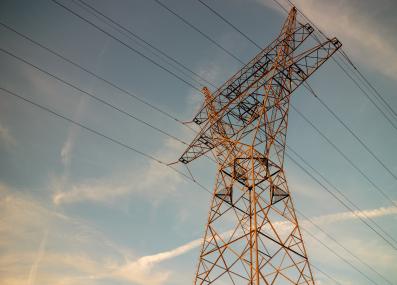
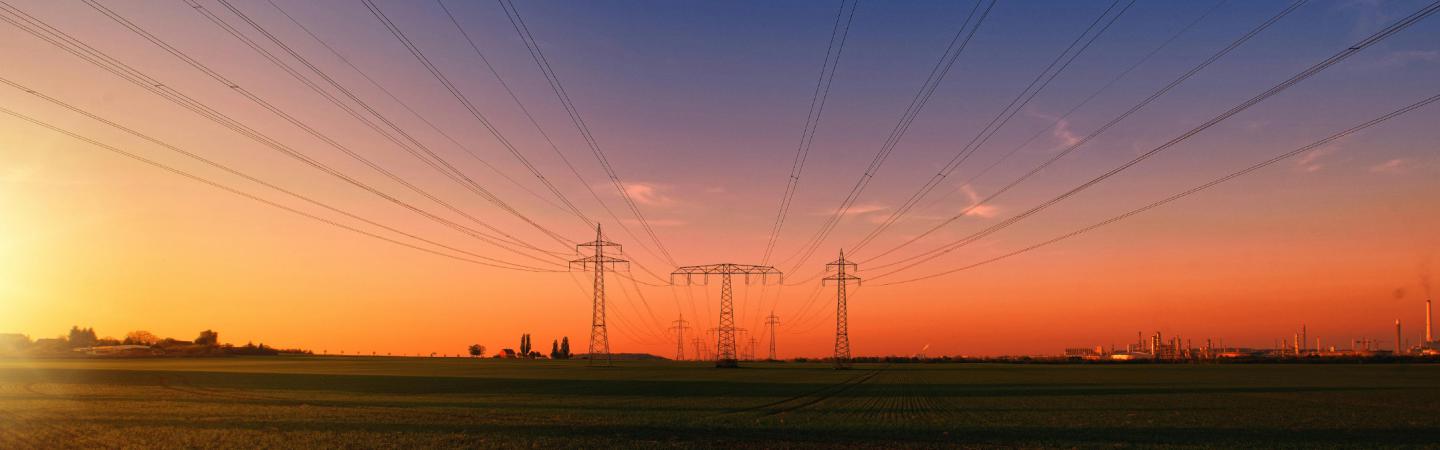
The high voltage transmission network is the “highway” that transports electricity from the power plants that generate it, to the homes, businesses and infrastructure that use it. A vast system of cables, transformers, substations, switches and communications equipment, this network keeps our energy system in constant balance. Thanks to our transmission network, when demand for electricity spikes, we can fire up far-flung power plants, letting huge regions rely on a shared electric grid.

Transmission and the shift to clean energy

Our modern energy system is only possible with a large transmission network. A clean energy system that does not contribute to climate change will need an even larger one.

Partly, that’s because we expect to use more electricity for tasks like driving cars and heating homes, which today run largely on climate-warming fossil fuels. And partly, it’s because the fastest-growing clean energy sources are wind and solar farms. These are built where wind, sun and space are abundant, usually far from population centers. To get electricity from the windiest and sunniest areas, we will need more transmission lines spanning wider distances.

The U.S. Department of Energy estimates that, to use 100% clean energy by 2050, the United States’ current transmission capacity will need to more than double.1 This is possible, and would also offer us cheaper electricity. But it demands that we build transmission much faster than we have in the past.

Making the most of today’s grid

The more we can rely on existing transmission lines, the better. “Reconductoring” is the practice of replacing old electrical cables with higher-performing ones. Cables made from materials like carbon fiber can carry much more power than traditional copper and aluminum wire.

Many power lines are also underused. For safety reasons, operators avoid putting more electricity through their lines than the cables can handle in worst-case weather conditions. Real-time weather monitoring, paired with control systems to rapidly switch between lines, would let us safely use our transmission at much closer to full capacity.

Even new transmission lines can be paired with existing infrastructure. Lines can be built along highways, railroads and canals, taking advantage of the right-of-way from these projects and lessening the impact on the landscape. This strategy can offer quicker, cheaper construction, while minimizing concerns about where new power lines are built.

Seeing the big picture

Bigger transmission networks bring more benefits, making the most of every energy source. For this reason, the planning and management of transmission systems would ideally span huge areas and cross many jurisdictions. In Europe, for example, an organization called ENTSO-e coordinates the work of transmission operators in 36 countries, makes continent-wide plans for new transmission projects, and recommends funding for transmission across boundaries.

In the United States, there is no umbrella group to perform all these functions. Instead, seven “regional transmission operators” (RTOs) serve separate areas, and many smaller, utility-run transmission systems fall outside them. In addition, the North American Electric Reliability Corporation sets reliability standards for these system operators.

RTOs rarely cooperate on shared transmission projects. When they do, conflicts can arise: who bears what share of the costs? Which new energy sources should be brought onto the grid first?

Projects that cross RTO boundaries can also have trouble raising money. When an RTO plans its own, internal transmission project, the developer is usually a regulated utility, which can recover its costs by passing them on to electricity customers. By contrast, large, inter-RTO transmission is normally developed as an “independent” or “merchant” project. The developers need to negotiate long-term contracts with electricity shippers and/or customers in order to get funding for construction. This makes them riskier investments, which may lose money if costs are higher or performance lower than expected.

All these planning challenges mean that the biggest transmission projects are the hardest to build. Yet these are often the projects most needed to take full advantage of cheap wind and solar power.

Red tape

Any big construction project can have negative impacts. A new transmission line might cause problems for local landowners, natural habitats, or the energy system. Sensibly, these projects are highly regulated to take these impacts into account.

But for big transmission projects, the regulations are complex, redundant, and hugely time-consuming.

Most projects must get separate permits from federal, state, and local governments. Larger projects may need permits from several states, plus additional agencies responsible for federal and state forests, parks, grazing, and other protected areas. And any group that objects to a transmission project can tie it up at multiple points along the way.

All told, the permitting process can take far longer than the construction. In some cases, projects have waited almost 20 years for final approval to start building. Long delay can kill viable projects altogether, as costs rise and market opportunities pass.

Planning for the grid of the future

These challenges are not so bad when the electric grid is meeting our needs. But today, demand for electricity is rising, and new transmission is needed to carry it. We are also beginning to deal with the extreme and dangerous weather events that come with unchecked climate change. These risks will continue to worsen until the world fully switches from fossil fuels to clean energy, with all its added needs for transmission.

Building more transmission faster would require new ways of doing business. The federal government could be more active in planning, looking at our whole transmission network, choosing the most promising new routes, and encouraging or requiring RTOs to cooperate. The government could also do more to finance new transmission. And permits could be dealt with in a single, shared review with strict time limits.

Without a plan to swiftly grow our transmission network, the transition to clean energy will be harder and more expensive. Whatever electricity we don’t supply with long-distance transmission, we will have to generate locally. The Department of Energy estimates that for every dollar spent on transmission, $1.60 to $1.80 is saved on not building other energy infrastructure: savings that could add up to hundreds of billions of dollars in the coming decades, and cheaper, cleaner electricity for all.1


January 21, 2025.


Creative Commons Attribution-NonCommercial-ShareAlike 4.0 International license (CC BY-NC-SA 4.0).
Photo Credit
Johannes Plenio via Pexels
Footnotes

1 U.S. Department of Energy, Grid Deployment Office: “The National Transmission Planning Study,” 2024.


Want to learn more?

Listen to this episode of MIT's "Today I Learned: Climate" podcast on how the United States plans and builds new energy infrastructure.

Transcriptions

LHF: Hello, I’m Laur Hesse Fisher of the MIT Environmental Solutions Initiative, and you’re listening to Today I Learned: Climate.

As the world races to address climate change, arguably the first step is moving as fast as possible to build clean energy.

And in the United States, the Biden administration set a goal of powering our country with 100% clean electricity by 2035. And Congress has passed laws that  dedicate hundreds of billions of dollars to realizing that goal. (If you want to learn more about those laws, check out our episode America's Big Year of Climate Action.)

But now it’s time to actually build all this clean energy infrastructure. And the more we dug into how big energy projects get built in the U.S., the more we realized—our energy regulations are not set up to make this much change this quickly.

Our guest today is a specialist in big energy markets, and how they grow and change.

JP: I'm John Parsons. I'm an economist here at MIT at the Center for Energy and Environmental Policy Research, which is basically the home at MIT for economics research on environment and energy issues.

LHF: It may seem obvious that building a clean energy system will involve a lot of… well… building. But the scale we’re talking about may still be surprising. So let’s start with how much construction we’re actually considering here. 

JP: So a great source for that is provided by the researchers over at Princeton's Net Zero America. They've examined a set of different pathways to decarbonize by 2050.

LHF: Today, we’ll focus on their middle-of-the-road pathway—which we’ll link to in our show notes. This assumes that by 2050 we’ll get most of our energy—about 90%—from wind and solar. But we’ll also have some nuclear, hydropower, and natural gas with carbon capture and storage.

JP: The build out of solar farms in that scenario requires about the land of Massachusetts, Connecticut and Rhode Island combined. That's just for solar farms. Then when you add in wind farms and transmission and other things, you get even more requirements. It comes to about 6% of the landmass of the United States. So it's very large.

LHF: If you set aside biofuels—which provide a tiny percentage of our energy but take up a huge amount of land—today, our energy system takes up about 1 and a half percent of the continental United States. So we could be talking about quadrupling it—or more.

Why? Well, first, a clean energy system needs a lot more electricity than a polluting one. Think of cars running on electricity instead of gasoline; homes heated with electricity instead of natural gas. And in last week’s episode we talked about all the energy storage and transmission lines we need to store and carry all this electricity.

And finally, a lot of our best clean energy sources are just physically larger than fossil fuel power plants. 

JP: For example, with wind, you will require a large mass of land over which you build lots of different towers and turbines. 

LHF: For every acre you need to make coal power, you might need two acres to make the same amount of solar power, and then ten acres for wind. 

Now, a lot of this land can also be used for other things. A great example is wind farms.

JP: The actual footprint of the tower is relatively small. So, for example, if the whole wind farm was 100 acres, only one acre, 1% of it, would be where the turbine has a footprint. So you can still farm crops or have cattle or what have you, among the towers of a wind farm.

LHF: Which is exactly how we do this already. About 90% of America’s wind farms share space with agricultural land, and those landowners get royalties from wind companies.

And we can do this for other tech, too. Transmission lines can be run along highways—or, if we’re willing to pay more, be buried underground. We can build wind turbines out in the ocean—what’s called “offshore” wind—instead of the “onshore” wind we’re adding on land. And some solar can be put on rooftops or parking lots, or share space with crops that like shade.

JP: So 6% is not insurmountable. But it poses a problem because it means you have to find landowners, communities, and political entities that you can succeed in convincing to allow that to be built out there.

LHF: It’s like a jigsaw puzzle. We know, roughly, how much clean power we need to build. But it’s not so easy to fit all the pieces on a map of the United States. And to illustrate this, let’s look at a study Dr. Parsons worked on trying to map a clean energy system for the northeastern United States.

JP: So we run these economic models that calculate for us what would be the lowest cost way to deliver energy services to the region, while minimizing the carbon footprint. And if you turn the crank on our model, we'd fill the model with a lot of onshore wind and we wouldn't build any offshore wind. Because the cost of offshore wind is relatively expensive.

LHF: But that’s not what’s happening in real life. In fact, the Northeast is planning to build a lot of the pricey offshore wind out in the ocean, near Cape Cod and Long Island.

JP: So you have to step back and ask, well, what's going on in reality that isn't being taken into account in the model? So one of the things that's going on is, it's going to be hard to site all of that onshore wind. There are lots of different localities, they have lots of different priorities, lots of different zoning regulations. So the politicians in Massachusetts and in several other states have made a decision that to get moving fastest, we can make a big wind farm happen out in the ocean.

LHF: Why is it so hard to line up land for energy projects? Well, let’s imagine you want to build a wind farm. The first thing you’ll do is come up with a good place to build it. 

JP: Then you have to have some preliminary negotiations, like with landowners or what have you, to secure some rights, kind of like if you were looking at a book that you might want to turn into a movie and you want to option it.

Now you have to actually do the work to build it out, beginning with filing for permits. You've got your environmental authorities, your land use authorities. You've got the local authority, which may have some regulations about how the land is used. You've got state entities. So it can be many. As well as then filing for these things we call interconnection rights.

LHF: “Interconnection rights” are basically permission to connect your project with the electric grid.

JP: The construction takes about 18 months. But before those 18 months are several years of getting your permits, developing your relationships with the region, and so on. For wind farms, I'd say you're talking minimum five years, and how far out it goes just depends.

LHF: And five years to approve a wind farm is actually short compared to some of the other energy projects we need.

JP: Transmission lines are another order of magnitude. I mean, it can be for some transmission lines decades; for others it would be one decade. 

LHF: Now compare that to the goal we talked about at the beginning of this episode: 100% clean electricity in the U.S. by 2035. Will we get there in time?

JP: Reducing emissions is urgent. If we do things the way we've been doing them for the last several decades, we're not going to get very far.

LHF: In fact, this is a problem we’re already running up against. There are over a terawatt of renewable energy projects awaiting their interconnection rights. If they all got built, they would double the size of our nation’s electric power fleet. It would be enough to get the country to 90% wind and solar energy.
 
Now, don’t get too excited. Historically, less than a quarter of projects in these queues actually get built.

And in the age of renewable energy, this problem is actually getting worse. It’s easy enough to evaluate how one big coal or gas plant will connect to the electric grid, but it’s much harder to figure that out for lots of smaller wind and solar farms. 

The solution isn’t just to do away with all these rights and permits: they were created for good reasons. Your building permit says that your wind farm isn’t going to be built in a dangerous way, an your environmental permit says that your power lines won’t harm the environment. Of course we want to check those things. We just want to check them more efficiently.

Which is why a few states have started streamlining these regulatory steps. Like, in 2020, New York created an Office of Renewable Energy Siting to process all of the permitting for large wind and solar projects within a one-year deadline. Congress is debating something similar nationwide—which is especially important for power lines that cross state borders. And in June 2023, Congress did pass a law to speed up environmental reviews of energy projects.

But Dr. Parsons says faster reviews are only one part of the reform we need. 

JP: What we need to do is step back and develop a plan.

A really good example is with offshore wind. Do we make each wind farm build its own connection to the onshore grid? Or do we maybe build a backbone of a wire running down the East Coast and enable each wind farm to connect to that backbone? It may be cheaper if we plan it out as an integrated system.

LHF: To understand what state- or regional-level planning can accomplish, it might help to look at a project that’s already underway: a major power line to bring hydropower from Quebec to New York City.

JP: So the state of New York is a good example for some of the state institutions that you want to have. They passed a major piece of climate legislation in 2019, really pushing them quickly to decarbonize their electricity system. But New York State already had NYSERDA, the New York State Energy Research and Development Authority.

LHF: Unlike a regulator, NYSERDA’s job isn’t to review proposed energy projects: it’s to make new ones happen.

JP: It's basically a planning agency of the state. So here you have big transmission projects that the NYSERDA agency helped to evaluate and shape. Private developers are going to be owning these transmission lines, but NYSERDA had the capability to make the arrangements to finance them. So it's that kind of planning capacity and the ability to broker a solution that makes a difference in moving the whole project forward faster.

LHF: But here in the U.S., that kind of central planning for infrastructure is an exception, not the rule. And if we’re just scattering jigsaw pieces on the table and hoping they pop themselves into place, it’s much more likely we’ll build an overpriced system that won’t meet our climate goals in time.

If you look at your own energy utility, or state, or town, it’s likely asking questions about this process right now. Questions like: do we have a plan to get clean energy? Are we empowered to make a plan? And how long does it take to say yes or no to the next energy project to come online?

JP: I think the United States has, in the last several decades, found it harder and harder to build things. Not just transmission, not just the electricity system. Mass transit, high speed rail, tunnels, what have you. We need to expect our state employees, state offices, to move quickly, and we need to give them the capability to move quickly, and we need our judicial institutions to respond quickly — faster than they do now.

There are a lot of complicated interests to take into account. We can respect all community interests and needs, but we have to move. And if we get to work to make the changes we need, yes, we can meet our goals.

LHF: That’s the end of our episode today—and of season five of TILclimate. But if you want to make a difference in your state’s clean energy planning, look to our show notes for some examples of what can be done—or check out our Educator Guide, where we’re making these ideas accessible for the classroom. Find all that and more at tilclimate.org. And remember to subscribe to the podcast for an announcement about season six—because TILclimate will be back in 2024.

We want to hear from you. Yes, you! Please email me and the team at tilclimate@mit.edu. Tell us about what you’re working on and why you listen to the show. And if you’re listening on Spotify today, you might see there’s a little poll for you to fill out. We want to know how often you listen to our episodes, and so, how frequently we should release them in 2024. For those of you listening on Spotify, thanks for filling that out for us.

TILclimate is produced by the MIT Environmental Solutions Initiative at the Massachusetts Institute of Technology. David Lishansky is our Editor and Producer. Aaron Krol is our Scriptwriter and Associate Producer — and did our artwork. Ilana Hirschfeld is our Production Assistant. Michelle Harris is our fact-checker. Sylvia Scharf is our Climate Education Specialist. The music is by Blue Dot Sessions. And I’m your Host and Producer, Laur Hesse Fisher. 

A big thank you to Dr. John Parsons for speaking with us, and thank you for listening.