New to Climate Change?

Microgrids

Microgrids are electric power systems that let a community make its own power without drawing from the larger electric grid. During an emergency, microgrids can disconnect from the wider grid, keeping the lights on through events that affect power generation and transmission.

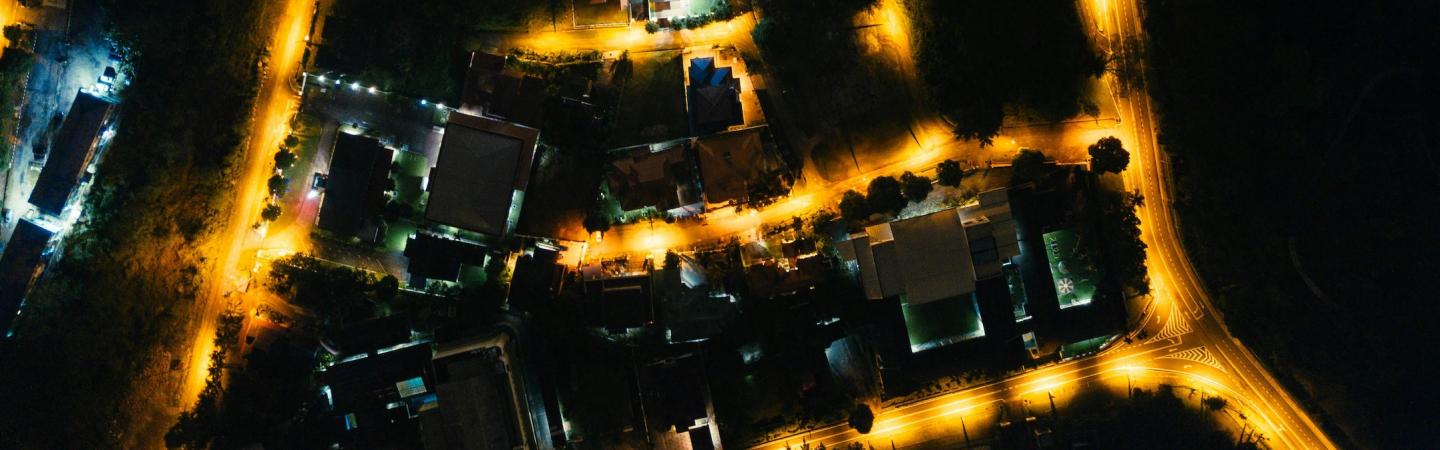
Microgrids can serve an area as small as a single neighborhood, an apartment complex, or the campus of a hospital, business or university. But the same idea can also scale up to serve an entire city. A microgrid can also power just a key portion of its area, such as emergency services and government facilities.

Microgrids and the clean energy transition

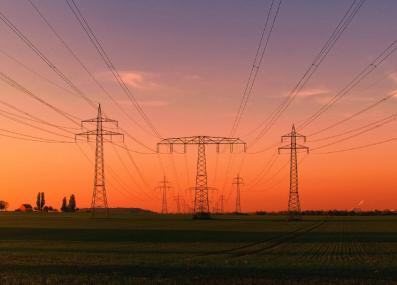
For most of its history, the electric grid has relied mainly on large, central power stations, using resources like coal, hydropower and nuclear power. These stations make enormous amounts of electricity—often enough to supply millions of homes. Far-flung networks of substations and transmission lines connect these stations to consumers, so that just a few power plants can supply wide regions with cheap electricity. 
 
But as the world builds new forms of energy, including small generators and sources that don’t contribute to climate change, this model is changing. Today, the focus is on clean energy technologies such as solar panels and wind turbines. These can easily be built at a very small scale, down to a few solar panels on a rooftop. And because large tracts of land are needed to make solar and wind farms that produce as much energy as central power plants, it is often more practical to build them as smaller, “distributed” resources.
 
This, in turn, makes it easier to build microgrids. Not every community can host a large power station, but it is relatively easy to build enough solar and wind energy to meet local needs. Emerging forms of energy storage, like advanced batteries, can also be built on a small, local scale, providing another source of backup power that can unhook from the grid.
 
Automated grid controls have also made microgrids more practical. In a blackout, a microgrid must stop transmitting electricity to and from the wider grid quickly, before its equipment is affected. Computerized systems can now spot early signs of an impending blackout and make the decision to disconnect automatically.

Microgrids and extreme weather

Small power stations are not a new invention, and there have been many cases going back decades of small campuses with their own power supply disconnecting from the grid to get through a blackout. MIT itself has generators that kept the main campus running during the Northeast Blackout of 1965. 
 
The idea of building microgrids as a deliberate strategy, however, is fairly new.
 
In large part, that’s because climate change has brought new risks to the electric grid. Transmission lines can be damaged in intensifying hurricanes, heatwaves and wildfires; worsening droughts can lower the output of hydropower stations, or leave nuclear and coal plants without enough water for cooling; rising seas leave coastal areas’ power plants more prone to flooding. In a grid that relies on moving electricity long distances from a few plants, these events can cause widespread outages. 
 
At the same time, society has grown more dependent on having a reliable supply of electricity at all times, including to keep life supporting equipment in operation.
 
Microgrids can help vulnerable areas adapt to these changes. And because they play well with modern clean energy technologies, they can go hand in hand with remaking our energy system to produce fewer climate-warming greenhouse gases. In the most ambitious vision, whole regions can become networks of interconnected microgrids, working together to provide cheap, efficient electricity in normal times, and disconnecting in emergencies to keep blackouts from spreading.


Published January 29, 2024

 

Creative Commons Attribution-NonCommercial-ShareAlike 4.0 International license (CC BY-NC-SA 4.0).
Photo Credit
Chuttersnap via Unsplash

Want to learn more?

Listen to this episode of the Ask MIT Climate podcast on local energy resources like microgrids.

Transcriptions

David Hsu: I'm teaching this class on energy systems, and I thought to myself, I want to give my students an example of how they can take action at levels other than the federal level. And I think the exact same fall, I had a student walk in my office from California and said, I want to write my thesis on community choice aggregation. And I was like, what is community choice aggra-what? And then the exact same week, I think, I got a flyer on my door saying that my town was going to choose to do community choice aggregation.

Madison Goldberg: Welcome to Ask MIT Climate. I’m Madison Goldberg. Our guest today is David Hsu.

DH: I'm an associate professor of urban environmental planning here in the Department of Urban Studies and Planning at MIT, and most recently, I've been studying the future of electricity and gas networks.

MG: Before talking with Professor Hsu, I had never heard of “community choice aggregation”—even though it turns out I’m actually getting cheaper and cleaner electricity from it myself. We’ll explain how it works a little later. But here’s the key thing to know for now: It’s an example of how a county or city or town can hold some sway over where their electricity comes from.

Which gets us to our topic for today. Professor Hsu is going to tell us about ways of getting power to people that are much more local than big, utility-driven grids. And we’ll learn what these local models have to offer as the world strives to build cleaner, more affordable, and more accessible energy.

But first, a bit of history.  

DH: What we credit as the first kind of small grid was built by Thomas Edison. It was a factory in lower Manhattan, but it also lit restaurants and stores. And I don't think it was more than probably 100 or 200 lights. But we actually consider that the grid, because that's one of the first times they tried to build a district that had electricity circulating between multiple establishments.

MG: So, in these early days of electric power, a handful of businesses could join forces to run a power plant. Or…

DH: Famously, one of the earliest installations that Thomas Edison does is in JP Morgan's house. So JP Morgan is like, one of the richest men in the world.

MG: And if you were as rich as JP Morgan, you could basically have your own miniature power plant: Morgan had a steam engine installed on the grounds of his manor.

But by the early 20th century, electricity was not just for business owners and the ultra-wealthy. Power plants got bigger, making more and cheaper electricity. And electrical lines got longer, so that power could reach more customers.

DH: And this is where electricity becomes democratic. And what you start to see is people start using electricity in factories, then people realize that it's actually good for expanded electric lighting. It turns out, electric streetcars complement lighting nicely, because streetcars are busy during the day and lighting is only active at night, so you can use the same power plant for both. So you start to have all the building blocks for the electric grid we have today.

MG: And that basic logic, of sharing big, centralized power plants to keep costs low, has shaped power systems around the world. It’s why most people get electricity from big utilities and not from the mom-and-pop power plant next door.

But as energy technology changes, households, neighborhoods, and cities are thinking about ways in which the age-old logic might not always hold. Take the rise of solar panels and batteries.

DH: I've had solar panels for about 10 years. It's a super sunny day right now. I know I'm generating electricity.

And frankly, you know, electric cars are basically a battery on wheels, so I could theoretically run my house off my electric car for two or three days. And so what you start to get now is this behavior called grid defection. The system is providing 100% reliable power whenever people want it, and then the people who can afford to buy solar and storage can basically choose not to use that and not pay into the whole system as everyone else for certain times of day when it's expensive for everyone else.

MG: So there are tensions here: What do more local ways of making and distributing power offer that the large, centralized grid doesn’t? And what about the other way around?

These questions are the most urgent where the grid isn’t serving people reliably.

DH: A lot of places that don't have electricity systems that are fairly well developed, sometimes the quickest way to get electricity is to simply build a microgrid or a community level project.

MG: A microgrid works like that grid Edison built in Manhattan. You have a local power source, and wires sharing the power close by: maybe within one neighborhood, or one town. Often these microgrids link to the wider grid, but can also detach—so they don’t suffer blackouts, for instance, when a storm takes down a distant power line.

This isn’t a brand-new concept, but it’s growing—partly because, with solar and battery power, you can now use state-of-the-art technology at any scale you want.

DH: The nature of solar and storage is that it's modular. And so if you look at a solar farm with like 10,000 solar panels, that's basically the same as the 30 panels I have on my roof.

MG: And today, that’s helping to bring electricity to people who haven’t had access to it.

DH: I went to this village, like maybe 30 or 50 homes, in Jharkhand in India. This community chose to build, with an NGO partner, they chose to build a local microgrid. It had a cafe because the microgrid enabled them to serve cold drinks. I saw a little industrial workshop where people had a rice huller, like farmers would bring in their rice, and I think it would take the husk off the rice. One of the biggest desires for improved standard of living was television. And this is, like, a great improvement to standard of living. Like local industrial uses, that's like economic development. And then just being able to watch a projected image in a cafe while having a cold drink is something that people didn't have before.

MG: Microgrids and other small solar installations are popping up around the world, especially in South Asia and Africa, and in island nations where large grids are harder to build. And as these new approaches roll out, Professor Hsu says it's important to figure out whether a local option will be able to meet people's needs—and continue meeting people's needs as electricity use grows.

DH: I think the question is, in developing countries, how do you think development is going to happen faster? Do you think that the central government or the regional government can build the grid and serve everybody to the level we expect? Or do you want to give people the ability to simply buy the resources they need? And you see this in places like India or Pakistan, people are voting with their feet. They don't believe the central grid operator is going to provide electricity reliably enough. And if you're wealthy enough, or even middle class in Pakistan, it's a better deal for you to buy a solar panel.

It may not lead to the same grid we have today in the U.S., but the grid we have today, frankly, is not really as reliable and resilient as you want it to be. So this is not only to say that Kenya and India might follow a different path in the future, but it's also to say that the United States is going to make a different set of choices itself about reliability, resilience, and cost in the future.

MG: For instance, the U.S. is also adopting microgrids. On Kodiak Island in Alaska, a microgrid brings reliable power where the larger grid can’t penetrate. In Montgomery County, Maryland, it’s an emergency measure to prevent blackouts. In Puerto Rico, microgrids are a response to service interruptions, which are much more frequent there than on the U.S. mainland. And extreme weather worsens the problem. In 2017, severe hurricane damage left Puerto Rico facing the longest blackout in U.S. history.

DH: And so I've worked with a lot of local communities in Puerto Rico that are trying to build microgrids because they don't necessarily trust the electricity system.

MG: But even without splitting off from the larger grid, a growing number of communities are using new energy technologies to adopt more local control. We’ve finally come back to “community choice aggregation,” or “CCA” for short.

DH: Community choice aggregation is a policy by which local governments can sign a power purchase agreement, and they can choose where to get their power from. The utility still owns the wires, the wires that come into your house, the wires that distribute electricity in your city or town.

MG: And customers still pay for that service on their utility bills. But in a CCA, a city, or town, or group of towns gets to make the decision about who to buy their electricity from. And the utility has to serve that purchase, on the same wires everyone else is using.

Massachusetts became the first state in the U.S. to allow CCAs in 1997. And it’s spreading fast.

DH: If you look at Massachusetts, I think more than half the cities and towns in the entire state have organized this. California, which is the biggest state, I think is getting close to 40% of the population signed up for community choice aggregation.

MG: This growth happens to coincide with another big change in our energy system.

DH: That's like, kind of been a happy accident for the time when CCAs started, which is greener power has generally been cheaper and getting cheaper all the time.

MG: So a lot of CCAs have embraced wind, solar, and battery power, often faster than their utilities were.

At the same time, their growth hasn’t always gone smoothly. Some towns have swung between having CCAs and getting rid of them. And like with homes getting rooftop solar, there has been friction between CCAs and the wider grid. In California, utilities have complained that it’s hard to charge CCAs fairly for their use of the shared wires, and to engage with CCAs to make sure there’s enough spare supply for everyone else.

You might also ask if local governments are in the best position to deal with some of the big challenges our energy system faces today.

DH: We have electricity demand growth across multiple sectors, not only data centers and AI, which is happening very fast, but we also have electric vehicles, electrification of buildings. These are all going to demand more electricity. These are all macro grid problems.

Utilities have access to cheap capital. They have economies of scale. They actually have construction crews that put stuff in the ground, and they already operate the system. So those are four pretty big advantages that you know, no individual city or town wants to try to recreate those things.

MG: The logic that big power plants and big transmission lines are the cheapest, fairest, and most reliable way to meet demand is still very strong.

And yet we also have challenges, and opportunities, at more local scales. Solar panels and batteries can be deployed almost anywhere. The growing fleet of electric cars need somewhere to charge. People need reliable power amid worsening extreme weather.

And Professor Hsu believes newer, local models could let people experiment with solutions that a large utility can’t or won’t try.

DH: You know, CCA is just a mechanism for a community to decide where it wants its electricity from. Yeah, some communities are choosing greener power, but some people want things like cheaper power. Some people want local job guarantees. Boston has put in place its own rate structures to help low income residents of Boston afford electricity. Some people want more innovation, like in Cape Cod, you're getting building electrification pilots. You're getting CCAs in California building electric vehicle charging networks.

MG: CCAs have also built their own small solar farms on places like landfills, airplane hangars, and the rooftops of businesses.

DH: Like, these are places that the utility would never choose to build solar, right? It's not like every experiment is guaranteed to work out, but I think if we don't open up the capability to experiment, we're not going to get the innovation that we need.

MG: There’s no one model of the energy system that’s going to work everywhere. But we do know that, almost 150 years after Edison’s first grid, the design he set in motion is not delivering everything we need. Electricity prices are rising, our reliance on fossil fuels keeps making climate change more extreme, and there are places where people lack access to reliable power. Local solutions won’t fill every gap—but maybe they can fill some of them.

Ask MIT Climate is the climate change podcast of the Massachusetts Institute of Technology. Aaron Krol is our executive producer, and the writer for today’s episode. David Lishansky is our sound editor and producer. Michelle Harris fact-checks our episodes, and the music is by Blue Dot Sessions. And I’m your host and associate producer, Madison Goldberg.

Many thanks to Professor David Hsu for speaking with us, and to you, of course, for listening. You can find more episodes of the show at climate.mit.edu. We’re also on TikTok, Instagram, and Youtube @askmitclimate. And if you have an energy question—whether it’s about something miles away or right on your rooftop—we want to hear about it! Send us an email at askmitclimate@mit.edu.