New to climate change?

Advanced Nuclear Reactors

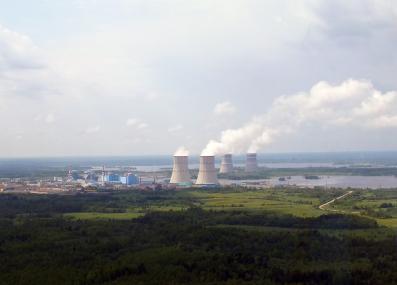
Nuclear power plants are a “low-carbon” alternative to fossil fuels that, once built, produce no climate-warming greenhouse gases. And unlike other clean energy sources like wind and solar, nuclear power takes up little space and can run continuously year-round. In 2023, nuclear energy accounted for almost half of the United States' low-carbon electricity.

But this energy comes mostly from power plants whose technology dates back to the 1960s and 70s. These plants are cheap to operate but expensive to build—and new ones are “mega-projects” that take 8 to 10 years to complete. While these older plants have been maintained and upgraded, new designs and alternative fuels are now emerging for the next generation of nuclear reactors. New reactor designs could both speed the transition to a clean energy economy, and serve new purposes that until now have been poor fits for nuclear power.

Moving beyond water

All U.S. nuclear plants use water as their coolant. This water absorbs heat from the reactor and turns it into steam, which spins a turbine and generates electricity.

Some newer designs use alternative coolants like sodium and helium instead. These can operate at higher temperatures than water, so the reactor’s heat can more efficiently be turned into electricity. These designs also make it easier to harness the heat itself, for industrial processes like chemical manufacturing that need a constant supply of high-temperature steam—today normally supplied by climate-warming fossil fuels. China recently launched the first commercial prototype of a design using a helium coolant, which transfers heat from the reactor to a separate heat exchanger to generate steam.

Nuclear energy for storage

Because nuclear plants never need to turn off, they’re a good complement to solar panels and wind turbines, which can only make as much energy as the weather allows. To address this “intermittency,” nuclear power plants can be paired with energy storage to save part of their electricity output for times when the supply of wind and solar energy is low. In fact, many nuclear plants are already paired with storage today, because they are most efficient when they run around the clock—even through the night when there’s less demand on the electric grid. Most often, nuclear is paired with “pumped hydropower,” using spare electricity to pump water uphill so it can later be released through a hydroelectric dam.

New nuclear designs under development use a different form of storage that takes advantage of their high heat output: molten salt tanks. These tanks can hold heat from the reactor for days, converting it to extra electricity when needed. With molten salt storage, a nuclear plant can run at full power constantly and still produce variable electricity, which is good for its economics and the stability of the electric grid.

Scaling down

A typical nuclear plant today makes over 1000 megawatts (MW) of electricity—enough to power a midsize city. But setting up a plant like this is a huge investment of time and money, and usually requires a custom design.

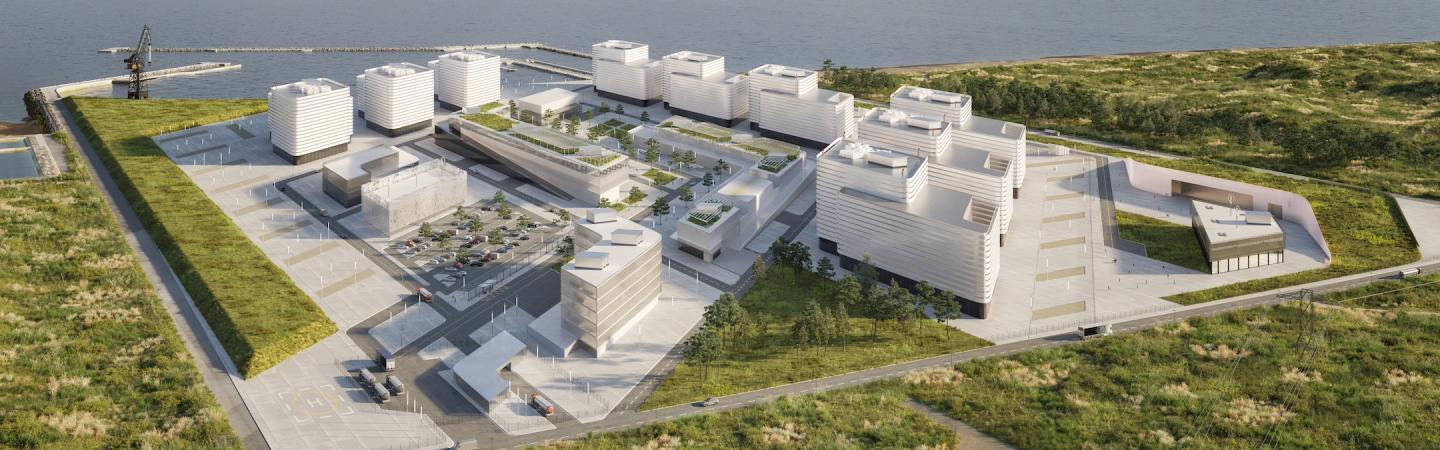
The next generation of nuclear power will feature smaller reactors. “Small modular reactors” have outputs of between 5 and 400 MW. Even smaller than these are microreactors or “nuclear batteries,” which private companies and the U.S. military are designing to supply just a few megawatts of power to places like remote mines and military bases, which do not have access to the electric grid.

The smaller the reactor, the more it can take advantage of mass production. The goal is for some future reactors to be factory-manufactured, transported easily, and installed quickly, all important cost-saving measures. Microreactors and small modular reactors could also be installed incrementally, one reactor at a time, much like wind and solar power. This lowers the investment risk to their owners and helps scale projects to local needs. And with simpler designs, more of their controls and safety measures can be automated, unlike traditional power plants that need large staffs.

Alternative fuels

Nuclear power has historically been very safe. Nonetheless, because of the risk of radiation leaks, power plants have rarely been co-located with energy consumers like chemical facilities, university campuses, or residential areas.

Small modular reactors could help bring nuclear energy directly to where it’s needed, as smaller power plants create less radioactive material. But engineers are also working on accident-tolerant fuels that will further reduce risks. One promising fuel is TRISO (tri-structural isotropic particles), a tiny ceramic sphere containing just a cubic millimeter of uranium. Breaking the uranium fuel into tiny, isolated particles can contain radiation within the reactor and minimize the risk of meltdowns.

These novel fuels require higher levels of uranium enrichment—not so high as to pose a risk for nuclear weapons proliferation, but higher than current U.S. regulations allow for commercial enrichment, fabrication and transportation. New regulation is needed to roll these fuels out commercially.

Today, the U.S. is investing in all these next-generation designs. Legislation since 2022 has provided billions of dollars for research and development of new nuclear technologies, and given nuclear plants the same tax benefits as clean solar and wind power. And in 2024, the ADVANCE Act was passed with large, bipartisan majorities to reform the way the Nuclear Regulatory Commission reviews new nuclear technologies and power plants, to lower costs and speed approvals.


July 30, 2024

 

Creative Commons Attribution-NonCommercial-ShareAlike 4.0 International license (CC BY-NC-SA 4.0).
Photo Credit
Iain Macdonald - Instance BV

Want to Learn More?

Listen to this episode of MIT's "Today I Learned: Climate" podcast on nuclear energy.

Transcriptions

TIL about nuclear power

Laur Hesse Fisher: [00:00:00] Hello and welcome to TILclimate, the podcast where you learn about climate change from real scientists and experts. I’m your host, Laur Hesse Fisher, with the MIT Environmental Solutions Initiative. We’re continuing our series on energy and climate in partnership with the MIT Energy Initiative.

In our last few episodes, we’ve covered the challenges of adapting our electric grid to take on much more clean energy. But there’s another way to generate tons of electricity without pumping greenhouse gases in the atmosphere--a technology that’s already mature, widespread, and competitive with fossil fuels -- and also, very controversial.

I’m talking about nuclear power. Today, we’ll explore how nuclear power works, why even some climate advocates don’t agree on using it, and why many energy experts -- including many at MIT -- say it’s a critical part of our clean energy future.

To dig into this, we sat down with an MIT professor who has spent his career studying nuclear energy.

Jacopo Buongiorno: [00:01:15] I'm Jacopo Boungiorno, I'm a professor in the department of nuclear science and engineering, I'm also the director of the center for advanced nuclear energy systems.

Laur Hesse Fisher: [00:01:22] Let’s jump right in. What exactly is nuclear power? It all starts with a process called nuclear fission, which is where a nucleus inside an atom splits, releasing some of the energy that binds the atom together.

Jacopo Buongiorno: [00:01:39] This shows up in a form of heat and then you can convert that heat into electricity that is sent to the grid. So in that sense it's a heat source just like burning coal, natural gas or getting heat directly from the sun. But the primary energy source in this case is Uranium.

Laur Hesse Fisher: [00:01:55] Uranium is a heavy metal that’s found in rocks all over the world. For this episode, it’ll be helpful to know that most of the Uranium out there is a kind called Uranium-238. And you need to alter -- or enrich -- some of that to another type, Uranium-235, in order to use it in nuclear power plants. More about that later.

The first nuclear power plant was built in 1954, near Moscow--and for the next 30 years, power plants started popping up all around the world. At the time, many people saw nuclear power as a huge leap forward from fossil fuels. For one, Uranium is super abundant.

Jacopo Buongiorno: [00:02:42] There is an enormous amount of Uranium out there, more than enough to, to continue to use nuclear and grow it actually, and grow its use for, for centuries that essentially affords countries a certain level of energy security.

The second feature that makes nuclear attractive is that the energy density of the Uranium fuel is many orders of magnitude higher than conventional fuels. And it has to do with the fact that a nuclear reaction breaks nuclear bonds, not chemical bonds and therefore liberates a lot more energy.

Just to give you an idea, a nuclear power plant that would generate enough to power the city of Boston would require on the order of three kilograms of Uranium-235 fuel per day. And that's something that I can hold, you know, on the palm of my hand. So, that tells you how much energy there is in this material.

Laur Hesse Fisher: [00:03:38] Today, we see another very important benefit of nuclear power. These power plants don’t emit any of the greenhouse gases that are driving climate change.

Jacopo Buongiorno: [00:03:48] You have an energy source that essentially does not have any emissions into the atmosphere and so that's the first reason why people are interested in nuclear now; because of course we're trying to minimize the carbon emissions into the atmosphere to prevent massive global warming and climate change.

Laur Hesse Fisher: [00:04:04] Nuclear power could have an especially important role to play because it’s both clean and dispatchable. That means that, unlike wind and solar, nuclear power can be revved up to produce electricity exactly when we need it. If you want to dig into this topic a little more, check out our episode on renewable energy.

Today, about 20% of our electricity in the U.S. is generated using nuclear power. That’s more than solar, wind, and hydropower combined.

Jacopo Buongiorno: [00:04:37] in the US over 50%, five zero, of our carbon free electricity today comes from nuclear. So it's already the largest clean energy source that we have on the grid today.

Laur Hesse Fisher: [00:04:49] Ok, but hold on -- if nuclear power is such a great way to get cheap, clean, reliable electricity -- and we’re already using it--, why aren’t we building more? Well, many people -- and even entire countries -- are nervous about it. There are three main concerns: nuclear waste, nuclear bombs, and accidents.

Let’s start with waste--which is radioactive, and needs to be kept away from people.

Jacopo Buongiorno: [00:05:20] In our community we call it spent fuel. It's basically the material, the uranium and the products of the fission reaction that come out of the reactor when the reactor is refueled and it's usually put in water pools and it cools down for between five or ten years after which, the spent fuel is put in dry casks. So these are steel and concrete little containers and they are air cooled.

Laur Hesse Fisher: [00:05:48] In the United States, these dry casks are stored at the nuclear power plants themselves. Other countries are building underground storage facilities to store their nuclear waste. Finland is planning to store waste in a bedrock that’s been around for about 1 billion years and is not susceptible to earthquakes. They say their waste will be safe for 100,000 years.

Jacopo Buongiorno: [00:06:14] It's one of few industries I think, in the whole economy that actually takes care of its materials from cradle to grave, right? So nothing is emitted into the atmosphere or in an uncontrolled manner.

I don't think any of the other power generation technologies do this.

Laur Hesse Fisher: [00:06:31] There’s another reason we need to be really careful about uranium, and it’s the second big fear people have about nuclear energy: the risk of nuclear proliferation.

Jacopo Buongiorno: [00:06:43] The issue is that there are materials that are used in civil nuclear power plants that potentially can be used for nuclear weapons. The fuel that is used in nuclear power plants is very low enrichment, I mentioned 5%. That material is not weapons material.

Laur Hesse Fisher: [00:07:03] As we mentioned earlier, we need to enrich some of the uranium to use it in power plants. In fact, we need to enrich 5% of it. To create a bomb, you would need to enrich way more uranium—at least 90%. There’s also an issue that the uranium could be modified into plutonium, another material that could be used for weapons.

Jacopo Buongiorno: [00:07:27] And the way to handle it, quite frankly, is to just have a very, very tight control of all those materials throughout the overall cycle. But it is- it is a real concern and, uh, you know, it's something that has to be- that- that secure regime has to be strengthened as much as possible if nuclear is to grow internationally.

Laur Hesse Fisher: [00:07:45] And then there’s the third main concern, accidents.

When Uranium atoms are split inside a nuclear reactor, they give off radioactive particles, which in high doses can cause terrible damage to our bodies. Now, in normal conditions, that radiation stays safely inside the reactor--in fact, reactors are so well designed for this that a nuclear plant actually emits less radiation than a coal plant.

Jacopo Buongiorno: [00:08:19] The main concern that I think people have is associated with fairly spectacular, rare events, accidents.

Laur Hesse Fisher: [00:08:28] The Chernobyl accident, in 1986 in modern-day Ukraine, was by far the worst.

Jacopo Buongiorno: [00:08:34] If you look at the, exactly at what happened at Chernobyl, the operators deliberately disabled the safety systems because they wanted to conduct an experiment. Well, you don't conduct an experiment on a commercial local power plant.

Laur Hesse Fisher: [00:08:47] As a result, the power plant exploded, releasing the radiation that was inside the reactor.

Jacopo Buongiorno: [00:08:53] The first responders, these were soldiers of the Soviet army that were sent to basically throw sand on the burning rubble. Those were exposed to some pretty horrendous levels of radiation. And many of those died.

Laur Hesse Fisher: [00:09:08] People who lived nearby were also exposed to radiation. The landmark report that assessed the impacts of Chernobyl found that locals who drank contaminated milk right after the accident had higher cases of cancer. And yet the same report found that the radiation that by far most people in the area experienced over their lifetime due to the accident was actually really low -- well below the levels that are known to increase your risks of getting cancer.

The radiation exposure was even lower for the tragic Fukushima accident, which took place in Japan in 2011.

Jacopo Buongiorno: [00:09:51] The accident occurred following the earthquake and tsunamis, which devastated that area

Laur Hesse Fisher: [00:09:57] Including flooding the power station, which led to the reactor leaking radiation. By the Japanese government’s official account, over 2,000 people died as a result -- but not from the radiation.

Jacopo Buongiorno: [00:10:14] For Fukushima, you're looking at an integrator over a lifetime exposure of the order of 20 mSv.

What does 20 mSv mean? So just to put things in perspective, when you go to do a CT scan to your torso, or you do some kind of radiation imaging, you typically get about a third to half of that dose. And so, you know, assuming that you do a couple of CT scans over the course of your lifetime, it's about the same amount of radiation.

The evacuation of 150,000 people from the Fukushima area was a tragic mistake. The amount of damage that has been done by moving people, for example, out of, older people out of hospitals and hospices and things of that type was much, much greater than any, health, damage that would have been caused by exposure to radiation because the radiation levels were so low.

Laur Hesse Fisher: [00:11:09] Right, those 2,000 people who died from the accident passed away due to complications of evacuating the area, not from the radiation.

Jacopo Buongiorno: [00:11:24] It’s really terrible. It's unfortunate all to avoid two CT scans to the chest.

Laur Hesse Fisher: [00:11:31] The question we’re really getting at, of course, is: is nuclear power safe?

Jacopo Buongiorno: [00:11:39] When it comes to risk and public health impact, there is no way to be particularly cheerful or positive, you have to look at the hard cold numbers and compare. And so if you compare nuclear to coal, to natural gas, to solar, wind, hydro, other ways to generate electricity, it turns out that nuclear has the the lowest actually, mortality rate per unit, energy per unit, energy generated.

Laur Hesse Fisher: [00:12:04] So how can this be? The World Health Organization estimates that over 3 million people worldwide die every year from asthma, lung cancer, and other illnesses caused by air pollution from fossil fuels.

 I was shocked to learn that if you include worker accidents in the mix too, nuclear power has actually had a lower death toll even than solar and wind. This was really surprising for me, and it might be for you, too. We’re including the studies in our show notes so you can read up on it for yourself.

Given all of this -- the fact that nuclear power doesn’t emit CO2, that it can deliver electricity on demand, that the health risks are relatively really low, and that the technology is evolving to be safer and cleaner -- many energy experts think we need to build more nuclear as a part of a clean energy future.

Jacopo Buongiorno: [00:13:07] The intermittency that is inherent in solar and wind forces you to have backup. You, you're going to need to meet demand, right? And if it's not met by a low carbon sources like nuclear or wind then it's met by either coal or natural gas. This is not to say that we don't need renewables - we do need them. But not alone. You do need a, a, you know, a diverse portfolio.

That's what all our analysis is showing is that the best way to decarbonize is with a portfolio of low carbon technologies.

Laur Hesse Fisher: [00:13:42] If you’re hearing a running theme in this energy and climate series, it's that each clean energy technology has its benefits and its challenges. And that we can take advantage of the benefits and reduce the challenges by building a mix of different technologies.

It’s up to us to decide what role nuclear power plays in this mix.

If you want to learn more about nuclear power, we highly recommend Dr. Buongiorno’s online course from EdX, which we’ll link to in our show notes. He also gives a great recap of the MIT Energy Initiative’s report on the future of nuclear, which you can find at energy.mit.edu/podcast.

OK so we’ve talked a lot about technologies that we can deploy immediately to clean our electricity grid. But what about new, potentially big impact technologies that are on the horizon? In our next two episodes, we’re going to dig into carbon capture and storage, and fusion energy, so stick with us.

Thanks to Dr. Jacopo Boungiorno for joining us today and thank you for listening.