Climate
Search

Main navigation

  • Climate 101
    • What We Know
    • What Can Be Done
    • Climate Primer
  • Explore
    • Podcast
    • Explainers
    • Climate Questions
    • For Educators
  • MIT Action
    • News
    • Events
    • Resources
  • Search
MIT

Main navigation

  • Climate 101
    • What We Know
    • What Can Be Done
    • Climate Primer
  • Explore
    • Podcast
    • Explainers
    • Climate Questions
    • For Educators
  • MIT Action
    • News
    • Events
    • Resources
  • Search
PostDecember 3, 2019

Why we should be far more afraid of climate tipping points

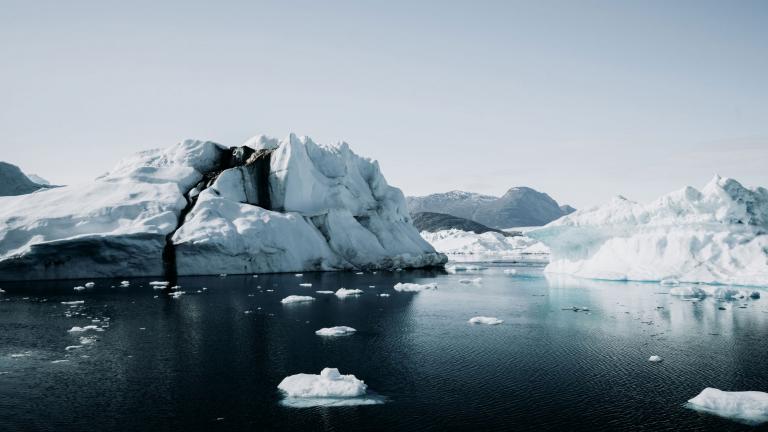
Scientists have speculated about a climate "tipping point," without too much certainty regarding when it would occur or what its exact consequences would be. In this article, James Temple, MIT Technology Review's senior editor for energy, warns that this point may be approaching more quickly than we think.

Read the full article at: https://www.technologyreview.com/s/614766/why-we-should-be-far-more-afr…

Image by: Unsplash/Annie Spratt

by MIT Technology Review
Topics
Arctic & Antarctic
Climate Modeling
Energy

Related Posts

PostJuly 27, 2026

The Value of Storage in Electricity Distribution: The Role of Markets

MIT Center for Energy and Environmental Policy Research
PostJuly 16, 2026

For energy systems that power a reliable grid, the future is all about loca...

MIT News
MIT researchers have created a way to make more climate-informed energy siting choices and shown how it can be used to make energy systems more resilient and reduce blackouts.
PostJune 30, 2026

How Uncertainty Shapes Electricity Storage Decisions

MIT Center for Energy and Environmental Policy Research
PostJune 30, 2026

MIT researchers advance toward greater bandwidth, more energy-efficient com...

MIT News
FUTUR-IC, funded by the National Science Foundation Convergence Accelerator, was created to address resource-efficiency issues. For example, integrating photonics with the electronics that underpin today’s microchips could address energy use because the transmission, or communication of data, using light is much more energy efficient.

MIT Climate Knowledge in Your Inbox


MIT Groups Log In

Log In

Footer

  • About
  • Terms & Conditions
  • Privacy Policy
  • Accessibility
  • Contact
MIT Climate Project
MIT
  • Instagram
  • TikTok
  • YouTube
  • Simplecast
Communicator Award Winner