Climate
    • What We Know
    • What Can Be Done
    • Climate Primer
    • Podcast
    • Explainers
    • Climate Questions
    • For Educators
    • News
    • Events
    • Resources
  • Search
Search
MIT

Main navigation

    • What We Know
    • What Can Be Done
    • Climate Primer
    • Podcast
    • Explainers
    • Climate Questions
    • For Educators
    • News
    • Events
    • Resources
  • Search
PostNovember 2, 2026

PODCAST: Climate Reveal (Season 3, Episode 1) - Tipping Points

Climate Reveal Podcast
Photo Credit
Boston College Creative Communication Lab

This podcast presents a conversation on tipping points--what they mean in the short- and long-term, how we can use them to our advantage, and why our guests (and probably most scientists) hate using the phrase at all--with MIT CS3 Principal Research Scientist Jennifer Morris and CS3 Senior Research Scientist and Deputy Director C. Adam Schlosser. (Boston College Creative Communication Lab) 

by MIT Center for Sustainability Science and Strategy
Topics
Arctic & Antarctic
Climate Modeling
Forests
Oceans
Weather & Natural Disasters

Related Posts

PostOctober 30, 2026

Study pinpoints states with steepest warming trends since 1980

MIT News
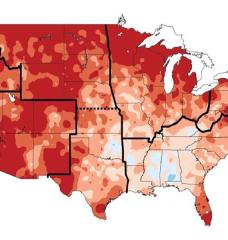
A new study reports global-warming-attributed trends in monthly-averaged maximum daily temperature for every U.S. state. Shown here are temperature changes (highest increases in deeper red and dark orange) between 1991 and 2012 compared to the average temperature between 1901 and 1960.
PostOctober 20, 2026

The ocean’s most abundant “loner” microbe has a sticky second life

MIT Civil and Environmental Engineering
An MIT study finds the tiny ocean microbe Prochlorococcus leads two connected lives: drifting alone in sunlit waters, or clinging to particles in sticky communities called biofilms. The discovery suggests the attached cells release more carbon and may help carry it toward the deep sea.
PostOctober 14, 2026

Researchers improve weather forecasts looking two to six weeks out

MIT News
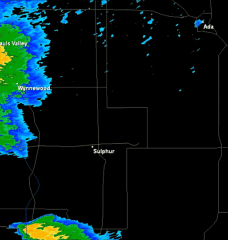
A new technique significantly improves weather forecasting beyond two weeks. The researchers developed a machine-learning model that learns to correct errors in existing forecasting models to improve their output over the two-to-six-week time frame, including for extreme weather events.
PostOctober 13, 2026

Exploring how plants thrive in a changing environment

MIT News
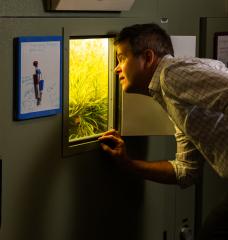
Plants are central to his lab, but David Des Marais sees them as a window into all living things. “Understanding why life is so diverse is fascinating to me,” Des Marais says.

MIT Climate Knowledge in Your Inbox


MIT Groups Log In

Log In

Footer

  • About
  • Terms & Conditions
  • Privacy Policy
  • Accessibility
  • Contact
MIT Climate Project
MIT
  • Instagram
  • TikTok
  • YouTube
  • Simplecast
Communicator Award Winner