Climate
Search

Main navigation

  • Climate 101
    • What We Know
    • What Can Be Done
    • Climate Primer
  • Explore
    • Explainers
    • Ask MIT Climate
    • Podcast
    • For Educators
  • MIT Action
    • News
    • Events
    • Resources
  • Search
MIT

Main navigation

  • Climate 101
    • What We Know
    • What Can Be Done
    • Climate Primer
  • Explore
    • Explainers
    • Ask MIT Climate
    • Podcast
    • For Educators
  • MIT Action
    • News
    • Events
    • Resources
  • Search
PostJuly 15, 2020

International Association for the Properties of Water and Steam recognizes J-WAFS Director John Lienhard's research

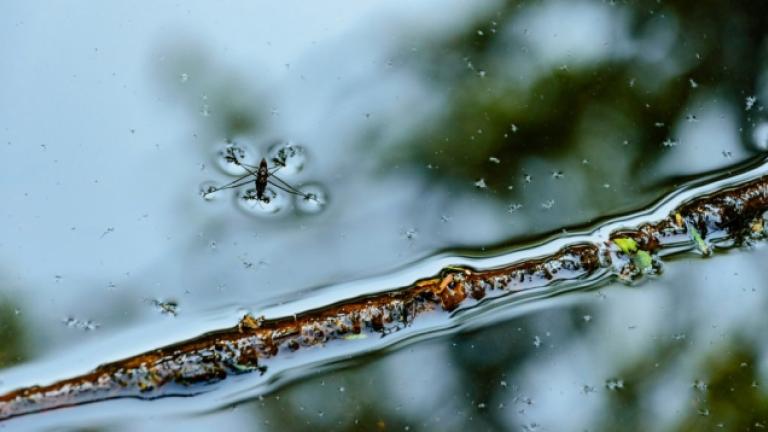
Waterbug floating on the surface of a pond near a stick

In 2012 J-WAFS Director John Lienhard embarked on a research project to understand how the surface tension of seawater changes with temperature and salinity. His subsequent research has been internationally recognized and deemed an international guideline. Read more here. 

by Abdul Latif Jameel Water and Food Systems Lab (J-WAFS)
Topics
Education
Food, Water & Agriculture
Oceans

Related Posts

PostDecember 8, 2025

Where the Ocean and Atmosphere Communicate

MIT Spectrum
Global map showing kilometer-scale ocean turbulence that mix water masses and transport heat, energy, and nutrients.
PostNovember 19, 2025

How a building creates and defines a region

Department of Urban Studies and Planning MIT
Architecture students Vincent Jackow (left) and Aleks Banaś with the models they constructed in their design studio course.
PostNovember 18, 2025

Introducing the MIT-GE Vernova Climate and Energy Alliance

MIT News
Provost and Chief Innovation and Strategy Officer Anantha Chandrakasan (left) speaks with Massachusetts Secretary of Energy and Environmental Affairs Rebecca Tepper outside Lobby 13.
PostNovember 18, 2025

Ultrasonic device dramatically speeds harvesting of water from the air

MIT News
MIT engineers design an ultrasonic system to “shake” water out of an atmospheric water harvester. The design (two prototypes shown in photo) can recover captured water in minutes rather than hours.

MIT Climate News in Your Inbox


MIT Groups Log In

Log In

Footer

  • About
  • Terms & Conditions
  • Privacy Policy
  • Accessibility
  • Contact
MIT Climate Project
MIT
Communicator Award Winner