Climate
    • What We Know
    • What Can Be Done
    • Climate Primer
    • Podcast
    • Explainers
    • Climate Questions
    • For Educators
    • News
    • Events
    • Resources
  • Search
Search
MIT

Main navigation

    • What We Know
    • What Can Be Done
    • Climate Primer
    • Podcast
    • Explainers
    • Climate Questions
    • For Educators
    • News
    • Events
    • Resources
  • Search
VideoNovember 4, 2019

Watch the MIT Climate Action Symposium: Challenges of Climate Policy

    Description

    The second of MIT’s six Climate Action Symposia, Challenges of Climate Policy, was held on Tuesday, October 29, 2019. Topics included:

    • societal impacts and policy challenges of climate change;
    • adaptations that could limit economic damages and national security risks; and
    • potential solutions to overcome domestic and international political hurdles for addressing climate change and reducing greenhouse gas emissions.

    In Part 1, Symposium Chair Richard Schmalensee introduces the event.

    In Part 2, panelists Maximilian Auffhammer of UC Berkeley and Kathleen Hicks of the Center for Strategic and International Studies discuss "Risks and Damages."

    In Part 3, panelists Susanne Moser of Moser Research and Consulting and Andrew Steer of the World Resources Institute discuss "Adaptation."

    In Part 4, panelists Stephen Ansolabehere of Harvard, Henry Jacoby of MIT and Leah Stokes of UC Santa Barbara discuss "the Politics of Mitigation."

    by MIT Climate Action
    Topics
    Government & Policy
    Advocacy & Activism
    Education
    Adaptation
    MIT Action

    Related Posts

    PostNovember 17, 2026

    Tariffs, Global Value Chains, and the Incidence of Protection: Evidence fro...

    MIT Center for Energy and Environmental Policy Research
    PostOctober 30, 2026

    Study pinpoints states with steepest warming trends since 1980

    MIT News
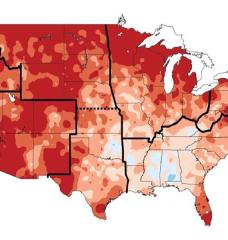
    A new study reports global-warming-attributed trends in monthly-averaged maximum daily temperature for every U.S. state. Shown here are temperature changes (highest increases in deeper red and dark orange) between 1991 and 2012 compared to the average temperature between 1901 and 1960.
    PostOctober 26, 2026

    At New York Climate Week 2026, MIT connects with a global network

    MIT News
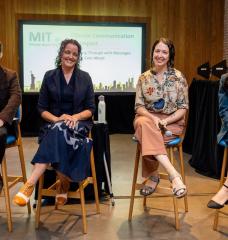
    Aaron Krol, managing editor of the MIT Climate Change Engagement Program, led MIT’s Climate Week NYC session “Climate Communication for Impact,” which featured (left to right) Allison Crimmons of Talking Climate, Arielle Tannenbaum of Climate Central, and Mallika Talwar of Yale University.
    PostOctober 14, 2026

    Researchers improve weather forecasts looking two to six weeks out

    MIT News
    A new technique significantly improves weather forecasting beyond two weeks. The researchers developed a machine-learning model that learns to correct errors in existing forecasting models to improve their output over the two-to-six-week time frame, including for extreme weather events.

    MIT Climate Knowledge in Your Inbox


    MIT Groups Log In

    Log In

    Footer

    • About
    • Terms & Conditions
    • Privacy Policy
    • Accessibility
    • Contact
    MIT Climate Project
    MIT
    • Instagram
    • TikTok
    • YouTube
    • Simplecast
    Communicator Award Winner
    Communicator Award Winner