Climate
    • What We Know
    • What Can Be Done
    • Climate Primer
    • Podcast
    • Explainers
    • Climate Questions
    • For Educators
    • News
    • Events
    • Resources
  • Search
Search
MIT

Main navigation

    • What We Know
    • What Can Be Done
    • Climate Primer
    • Podcast
    • Explainers
    • Climate Questions
    • For Educators
    • News
    • Events
    • Resources
  • Search
MIT News
About

Bringing you MIT's climate change and sustainability news from on campus and around the world.

http://news.mit.edu
Connect
https://www.facebook.com/MITnews
https://twitter.com/mit

Latest Posts by MIT News

Filter
Type
PostJanuary 20, 2022

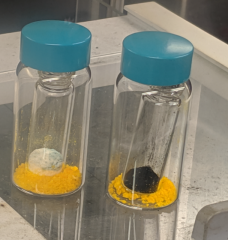
Encapsulation as a method for preventing degradation in Li-air batteries

MIT News
Two vials showing the start of the redox reaction on the left and the end of the reaction on the right.
PostJanuary 18, 2022

School of Engineering fourth quarter 2021 awards

MIT News
Members of the MIT engineering faculty receive many awards in recognition of their scholarship, service, and overall excellence. The School of Engineering periodically recognizes their achievements by highlighting the honors, prizes, and medals won by faculty working in our academic departments, labs, and centers.
PostJanuary 11, 2022

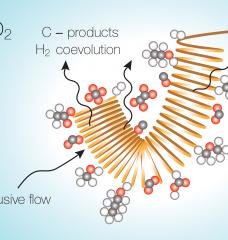
Overcoming a bottleneck in carbon dioxide conversion

MIT News
MIT researchers have identified a problem that tends to limit chemical processes for turning carbon dioxide into fuel or other useful chemicals — and ways of addressing that problem.
PostJanuary 10, 2022

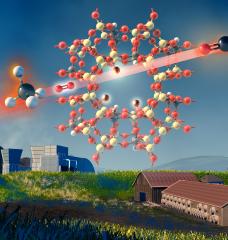
A dirt cheap solution? Common clay materials may help curb methane emission...

MIT News
A team of researchers at MIT has come up with a promising approach to controlling methane emissions and removing it from the air, using an inexpensive and abundant type of clay called zeolite. In this image, the zeolite, depicted as the complex structure in the middle, absorbs the methane that passes through it.
PostJanuary 9, 2022

Understanding air pollution from space

MIT News
Arlene Fiore, the Peter H. Stone and Paola Malanotte Stone Professor in Earth, Atmospheric and Planetary Sciences at MIT, uses satellite data to understand ozone smog.
PostJanuary 3, 2022

Predator interactions chiefly determine where Prochlorococcus thrive

MIT News
Where the microbe Prochlorococcus, pictured in green, lives is not determined primarily by temperature, as previously thought. An MIT study finds that a relationship with bacteria, purple, and a shared predator, orange, actually sets the microbe’s range.

Pagination

  • Previous page ‹
  • Page97
  • Page98
  • Current page99
  • Page100
  • Page101
  • Next page ›
589 - 594 of 975

MIT Climate Knowledge in Your Inbox


MIT Groups Log In

Log In

Footer

  • About
  • Terms & Conditions
  • Privacy Policy
  • Accessibility
  • Contact
MIT Climate Project
MIT
  • Instagram
  • TikTok
  • YouTube
  • Simplecast
Communicator Award Winner


Share your profile.

Spread the word about MIT Climate and help our community grow.

Share to Facebook Share to LinkedIn Share to Twitter

Or

Link to your page

Copy to clipboardCopy Link