Climate
Search

Main navigation

  • Climate 101
    • What We Know
    • What Can Be Done
    • Climate Primer
  • Explore
    • Podcast
    • Explainers
    • Climate Questions
    • For Educators
  • MIT Action
    • News
    • Events
    • Resources
  • Search
MIT

Main navigation

  • Climate 101
    • What We Know
    • What Can Be Done
    • Climate Primer
  • Explore
    • Podcast
    • Explainers
    • Climate Questions
    • For Educators
  • MIT Action
    • News
    • Events
    • Resources
  • Search
MIT News
About

Bringing you MIT's climate change and sustainability news from on campus and around the world.

http://news.mit.edu
Connect
https://www.facebook.com/MITnews
https://twitter.com/mit

Latest Posts by MIT News

Filter
Type
PostSeptember 22, 2021

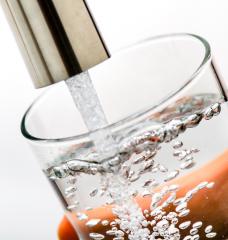
A new method for removing lead from drinking water

MIT News
Engineers have designed a relatively low-cost, energy-efficient approach to treating water contaminated with heavy metals.
PostSeptember 22, 2021

Study: Global cancer risk from burning organic matter comes from unregulate...

MIT News
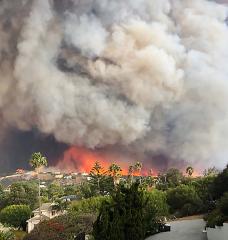
Whenever organic matter is burned, such as in a wildfire, a power plant, a car’s exhaust, or in daily cooking, the combustion releases polycyclic aromatic hydrocarbons (PAHs) — a class of pollutants that is known to cause lung cancer.
PostSeptember 17, 2021

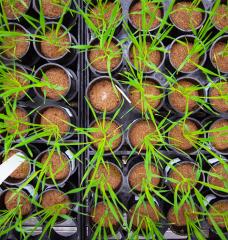
Research collaboration puts climate-resilient crops in sight

MIT News
The Des Marais Lab at MIT uses the model grass species Brachypodium distachyon to understand plant-environment interaction. Here, replicate plants are receiving two different levels of soil water availability to study genetic differences in response to drying.
PostSeptember 15, 2021

School of Engineering Awards for 2021

MIT News
PostSeptember 7, 2021

Making catalytic surfaces more active to help decarbonize fuels and chemica...

MIT News
This diagram illustrates the new process for enhancing reaction rates in an electrocatalytic process. The catalyst layer, made of gold or platinum, is shown as gray spheres at the bottom, and the material to be catalyzed is shown as the rad spheres at the top. Adding a layer of ionic liquid in between, shown as the hexagonal lattices, can increase reaction rates by fivefold. At left, a detail of how oxygen (red) and hydrogen (green) can combine to form water at an enhanced rate through this process.
PostSeptember 2, 2021

J-WAFS announces 2021 Solutions Grants for commercializing water and food t...

MIT News
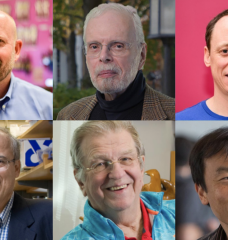
MIT faculty who received 2021 J-WAFS Solutions grants include (top row, left to right) Daniel Frey, Leon Glicksman, Eric Verploegen; (bottom row, left to right) Greg Stephanopoulos, Anthony J. Sinskey, and Jongyoon Han.

Pagination

  • Previous page ‹
  • Page99
  • Page100
  • Current page101
  • Page102
  • Page103
  • Next page ›
601 - 606 of 955

MIT Climate Knowledge in Your Inbox


MIT Groups Log In

Log In

Footer

  • About
  • Terms & Conditions
  • Privacy Policy
  • Accessibility
  • Contact
MIT Climate Project
MIT
  • Instagram
  • TikTok
  • YouTube
  • Simplecast
Communicator Award Winner


Share your profile.

Spread the word about MIT Climate and help our community grow.

Share to Facebook Share to LinkedIn Share to Twitter

Or

Link to your page

Copy to clipboardCopy Link