Climate
Search

Main navigation

  • Climate 101
    • What We Know
    • What Can Be Done
    • Climate Primer
  • Explore
    • Podcast
    • Explainers
    • Climate Questions
    • For Educators
  • MIT Action
    • News
    • Events
    • Resources
  • Search
MIT

Main navigation

  • Climate 101
    • What We Know
    • What Can Be Done
    • Climate Primer
  • Explore
    • Podcast
    • Explainers
    • Climate Questions
    • For Educators
  • MIT Action
    • News
    • Events
    • Resources
  • Search
MIT News
About

Bringing you MIT's climate change and sustainability news from on campus and around the world.

http://news.mit.edu
Connect
https://www.facebook.com/MITnews
https://twitter.com/mit

Latest Posts by MIT News

Filter
Type
PostSeptember 25, 2019

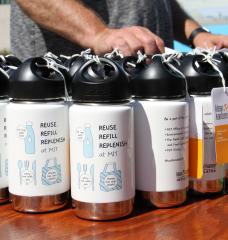
First-year students encouraged to “reuse, refill, replenish”

MIT News
Water bottles designed by architecture student Effie Jia encourage students to take up environmentally friendly habits.
PostSeptember 25, 2019

Greener and fairer: Balancing pollution, energy prices, and household incom...

MIT News
Traffic in Madrid, Spain
PostSeptember 24, 2019

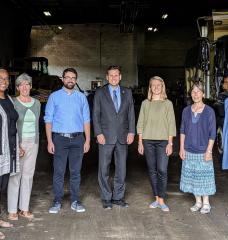
Malden Works for Waterfront Equity and Resilience awarded Norman B. Leventh...

MIT News
The Malden Works team gathered in the Malden, Massachusetts, Department of Public Works garage during a recent site tour: (left to right) Marcia Manong, Karen Buck, Evan Spetrini, Gary Christenson, Amber Christoffersen, Kathleen Vandiver, and Marie Law Adams.
PostSeptember 19, 2019

Bridging the information gap in solar energy

MIT News
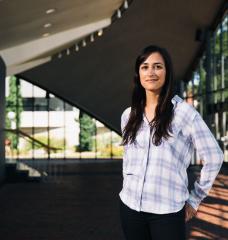
Elise Harrington
PostSeptember 17, 2019

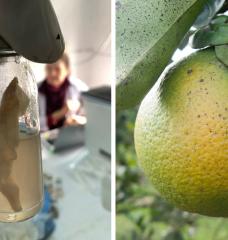
J-WAFS announces 2019 Solutions Grants supporting agriculture and clean wat...

MIT News
Left: A water sample undergoing testing using the J-WAFS-funded water quality test kit soon to be deployed throughout Nepal. Right: Citrus trees infected with citrus greening disease are highly contagious and can wipe out whole orange groves. A J-WAFS-funded sensor could help farmers detect the disease much earlier.
PostSeptember 16, 2019

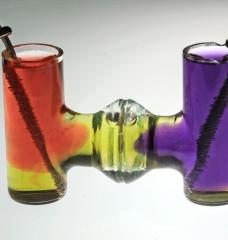
New approach suggests path to emissions-free cement

MIT News
In a demonstration of the basic chemical reactions used in the new process, electrolysis takes place in neutral water. Dyes show how acid (pink) and base (purple) are produced at the positive and negative electrodes. A variation of this process can be used to convert calcium carbonate (CaCO3) into calcium hydroxide (Ca(OH)2), which can then be used to make Portland cement without producing any greenhouse gas emissions. Cement production currently causes 8 percent of global carbon emissions.

Pagination

  • Previous page ‹
  • Page136
  • Page137
  • Current page138
  • Page139
  • Page140
  • Next page ›
823 - 828 of 955

MIT Climate Knowledge in Your Inbox


MIT Groups Log In

Log In

Footer

  • About
  • Terms & Conditions
  • Privacy Policy
  • Accessibility
  • Contact
MIT Climate Project
MIT
  • Instagram
  • TikTok
  • YouTube
  • Simplecast
Communicator Award Winner


Share your profile.

Spread the word about MIT Climate and help our community grow.

Share to Facebook Share to LinkedIn Share to Twitter

Or

Link to your page

Copy to clipboardCopy Link