Climate
    • What We Know
    • What Can Be Done
    • Climate Primer
    • Podcast
    • Explainers
    • Climate Questions
    • For Educators
    • News
    • Events
    • Resources
  • Search
Search
MIT

Main navigation

    • What We Know
    • What Can Be Done
    • Climate Primer
    • Podcast
    • Explainers
    • Climate Questions
    • For Educators
    • News
    • Events
    • Resources
  • Search
PostApril 7, 2017

Why European countries are scrapping diesel cars

New measures are being introduced across Europe to combat the use of diesel cars in their cities. 

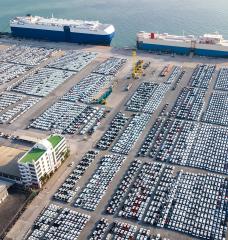
Whilst diesel cars are known for their fuel efficiency, they also produce harmful emissions. This is why many European countries are now introducing a number of regulations on diesel cars, including fees for driving in capital cities and hefty fines for car makers found to be cheating on emissions tests. 

Learn more about how diesel cars harm the environment and what Europe is doing to tackle it here.

Photo courtesy of MIT Tech Review

by ClimateX Team
Topics
Atmosphere
Government & Policy
Transportation
Cars
Alternative Fuels

Related Posts

PostNovember 17, 2026

Tariffs, Global Value Chains, and the Incidence of Protection: Evidence fro...

MIT Center for Energy and Environmental Policy Research
PostOctober 30, 2026

Study pinpoints states with steepest warming trends since 1980

MIT News
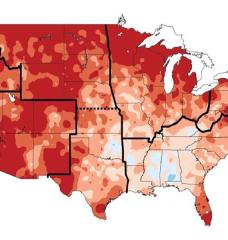
A new study reports global-warming-attributed trends in monthly-averaged maximum daily temperature for every U.S. state. Shown here are temperature changes (highest increases in deeper red and dark orange) between 1991 and 2012 compared to the average temperature between 1901 and 1960.
PostOctober 15, 2026

State of Supply Chain Sustainability Report finds corporate commitment at r...

MIT Center for Transportation and Logistics
In the 2026 State of Supply Chain Sustainability report, 83 percent of respondents rate sustainability as important or very important to long-term business success, the highest level in the report's seven-year history. But commitment is not the same as capacity.
PostOctober 14, 2026

Researchers improve weather forecasts looking two to six weeks out

MIT News
A new technique significantly improves weather forecasting beyond two weeks. The researchers developed a machine-learning model that learns to correct errors in existing forecasting models to improve their output over the two-to-six-week time frame, including for extreme weather events.

MIT Climate Knowledge in Your Inbox


MIT Groups Log In

Log In

Footer

  • About
  • Terms & Conditions
  • Privacy Policy
  • Accessibility
  • Contact
MIT Climate Project
MIT
  • Instagram
  • TikTok
  • YouTube
  • Simplecast
Communicator Award Winner