Julia Kumari Drapkin is the founder and CEO of ISeeChange; a digital application for climate adaptation. ISeeChange allows users to upload photos and data related to natural disasters and extreme weather in their community. ISeeChange is an award-winning platform, and was recently recognized by MIT Solve; winning the "AI for the Betterment of Humanity" prize and the “Coastal Communities” challenge.
Mikaela: What was the inspiration for ISeeChange?
Julia: When I was living in DC in 2011 as a climate science reporter, I was in conversations with the science advisors to the president. I’d say things like, “C’mon, we need to start talking about adaptation”. And the scientists would say: “Well we can’t tell congress how much climate change costs their districts”. That’s where I had this moment where I realized that they had the same problem I did as a journalist. Scaling down from global space and geological time to any individual experience is very difficult in terms of climate modeling. And if you can’t say to someone, this is how climate change looks in your backyard, you really aren’t able to have real conversations. I can’t report that story, and that congressman/woman can’t analyze climate change impacting daily life in their district. And so what I thought about was the idea of re-engineering communication around climate change.
Mikaela: How and where did ISeeChange get started?
Julia: I got a public media grant to start ISeeChange in rural Colorado. Rural Coloradans keep track of change and are impacted by it because every season matters. They pay attention. It impacts everything that they do on their farms and ranches. This is a tradition that goes back to pioneer days– writing down little stories about the weather, with a little bit of data, to learn the land. I would ask them, “how do you make decisions in a year like this?” And they would show me their notebooks. These were journals with calendars with notes in the margins. There was a batch of journals from the Dust Bowl that read like tweets from 1933. I realized that this is an adaptation tool. When it comes to 21st-century climate change, we don’t know everything. We need to write it all down in ways that are meaningful to people in real life.
Mikaela: How does social media play into the interface of ISeeChange?
Julia: ISeeChange is geographically focused. With the application, you can ask to see the posts by the people around you, or you can access the global feed. We stick to weather and climate data, and people are posting updates on the changes and impacts in their area. We started getting posts from all around the world, and we can connect immediately to the changes happening. I log in and I’m surprised every day. It’s a great feeling to see and connect with people globally in an instant.
Mikaela: What impacts have you noticed from ISeeChange?
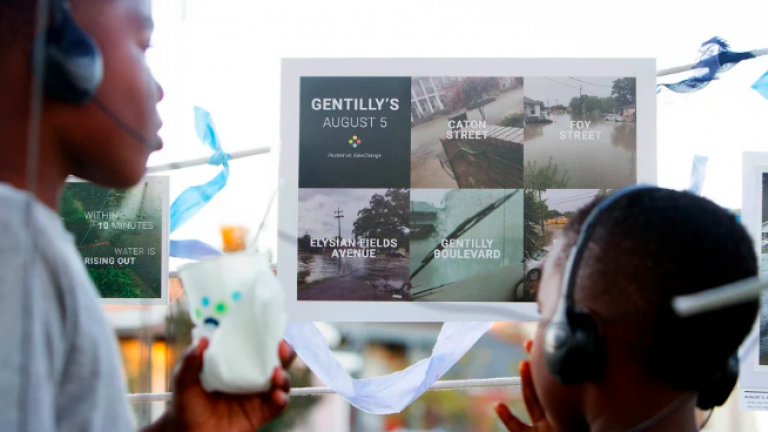
Julia: We really want to influence adaptation.We can do so much more, when we help communities focus on the questions and topics that they care about. So we launched what we call “local investigations”. The first was with urban heat, and syncing community stories about coping with the heat alongside sensors in unairconditioned apartments. We started another one in New Orleans around flooding. It allows people to sync stories and photos about flooding alongside rain gauges to measure storms and do hyperlocal modeling. We don’t actually know how any individual community is going to be changing, as extreme weather becomes more and more common.

Now we’re using ISeeChange data to help with green infrastructure design and adaptation. Working with residents on identifying not only what the weather data is, but what the impacts it has on you and your daily life, it starts with the residents doing detailed story and data collection. Then we can actually start to fill in the missing pieces when it comes to modeling and adaptation efforts at scale.
Mikaela: What features are you looking to add to ISeeChange?
Julia: We’re going to be launching new navigation and mapping features, but making sure we protect people’s privacy. We’ll be developing new features powered with computer vision, to help our users see change over time. We’re launching new investigations in other cities for flooding this year, which we are rolling out one-by-one as partners come forward.
Mikaela: What advice would you give people looking to act on climate?
Julia: Pay attention to how changes in weather are impacting your daily life and the things around you. When we pay attention and notice things, we can be more informed when we act. We can start to figure out ways in daily life in which we can start to improve things, that might lead to a better world. Secondly, we need to start making people feel heard. It’s only by having these conversations with our leaders, as well as the people who don’t agree with us, that we’re going to start seeing the changes that we’re going to need to be making.
Many of the people who helped us start ISeeChange, in rural Colorado, don’t even believe in climate change. Yet they gave us so much knowledge about how to have a conversation about climate- it starts with what’s familiar, our homes, our backyards, our gardens. With tangible community context, you can show people, not tell them about climate change in real life.
And it’s really a big conversation, and we learn so much by talking to people we normally don’t talk to. The weather and the climate impact everyone and everything; rural, urban, republican, democrat. Pay attention, talk to your leaders, and talk to the people who don’t agree with you. Start with the weather - it’s not small talk anymore.