Climate
Search

Main navigation

  • Climate 101
    • What We Know
    • What Can Be Done
    • Climate Primer
  • Explore
    • Podcast
    • Explainers
    • Climate Questions
    • For Educators
  • MIT Action
    • News
    • Events
    • Resources
  • Search
MIT

Main navigation

  • Climate 101
    • What We Know
    • What Can Be Done
    • Climate Primer
  • Explore
    • Podcast
    • Explainers
    • Climate Questions
    • For Educators
  • MIT Action
    • News
    • Events
    • Resources
  • Search
PostDecember 20, 2019

Improving farmers' income through low-cost greenhouse technology

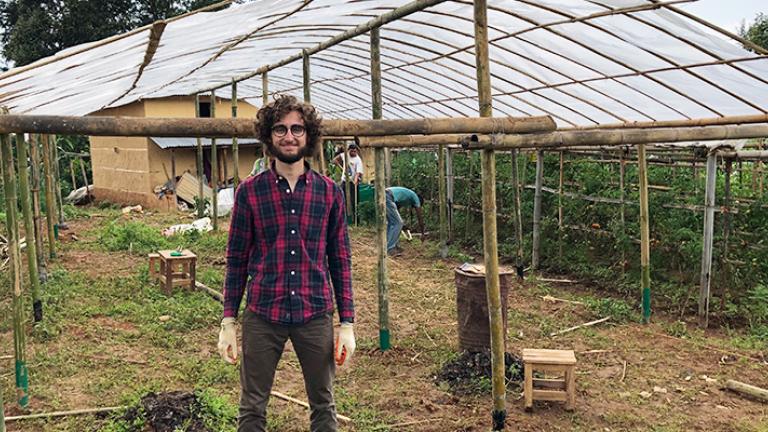
MIT D-Lab student Matthew Baldwin is using low-cost greenhouse technology to help smallholder farmers in Nepal grow crops at high altitudes.

Read more here

by Abdul Latif Jameel Water and Food Systems Lab (J-WAFS)
Topics
Energy
Food, Water & Agriculture
Climate Justice

Related Posts

PostJune 10, 2026

Startup’s nuclear-inspired cooling system could make data centers more su...

MIT News
Ferveret’s cooling system submerges computer servers in a specialized liquid that absorbs heat much more efficiently than air from a fan. What makes the solution different from other liquid cooling systems are smaller bubbles at the surface of the server, which detach more frequently, accelerating the heat transfer process.
PostJune 8, 2026

Innovative projects explore ways to deal with extreme heat

MIT News
The MIT Climate Project requested proposals for a Critical Cooling initiative last year. The projects, which received grants totaling $450,000, are now complete. All have showed promise, and are now exploring ways to further develop their concepts.
PostMay 28, 2026

MIT researchers develop a low-cost technique to get lithium out of rocks

MIT News
MIT researchers developed a low-temperature process for extracting battery-grade lithium from the common mineral spodumene.
PostMay 27, 2026

Place-based pathways to a viable future

MIT News
Living Climate Futures Symposium participants worked together to identify potential pros, cons, and trade-offs of allowing a data center to be built in a fictitious community.

MIT Climate Knowledge in Your Inbox


MIT Groups Log In

Log In

Footer

  • About
  • Terms & Conditions
  • Privacy Policy
  • Accessibility
  • Contact
MIT Climate Project
MIT
  • Instagram
  • TikTok
  • YouTube
  • Simplecast
Communicator Award Winner