Climate
    • What We Know
    • What Can Be Done
    • Climate Primer
    • Podcast
    • Explainers
    • Climate Questions
    • For Educators
    • News
    • Events
    • Resources
  • Search
Search
MIT

Main navigation

    • What We Know
    • What Can Be Done
    • Climate Primer
    • Podcast
    • Explainers
    • Climate Questions
    • For Educators
    • News
    • Events
    • Resources
  • Search
PostApril 21, 2024

Featured video: Moooving the needle on methane

Methane traps much more heat per pound than carbon dioxide, making it a powerful contributor to climate change. “In fact, methane emission removal is the fastest way that we can ensure immediate results for reduced global warming,” says Audrey Parker, a graduate student in the Department of Civil and Environmental Engineering.

Parker and other researchers in the Methane Emission Removal Project are developing a catalyst that can convert methane to carbon dioxide. They are working to set up systems that would reduce methane in the air at dairy farms, which are major emitters of the gas. Overall, agricultural practices and waste generation are responsible for about 28 percent of the world’s methane emissions.

“If we do our job really well, within the next five years, we will be able to reduce the operating temperature of this catalyst in a way that is net beneficial to the climate and potentially even economically incentivized for the farmer and for society,” says Desirée Plata, an associate professor of civil and environmental engineering who leads the Methane Emission Removal Project.

Video by Melanie Gonick/MIT News | 4 minutes, 35 seconds

by MIT News
Topics
Atmosphere
Food, Water & Agriculture

Related Posts

PostOctober 26, 2026

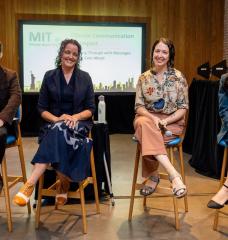
At New York Climate Week 2026, MIT connects with a global network

MIT News
Aaron Krol, managing editor of the MIT Climate Change Engagement Program, led MIT’s Climate Week NYC session “Climate Communication for Impact,” which featured (left to right) Allison Crimmons of Talking Climate, Arielle Tannenbaum of Climate Central, and Mallika Talwar of Yale University.
PostOctober 14, 2026

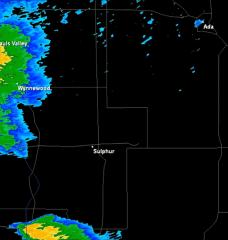
Researchers improve weather forecasts looking two to six weeks out

MIT News
A new technique significantly improves weather forecasting beyond two weeks. The researchers developed a machine-learning model that learns to correct errors in existing forecasting models to improve their output over the two-to-six-week time frame, including for extreme weather events.
PostOctober 13, 2026

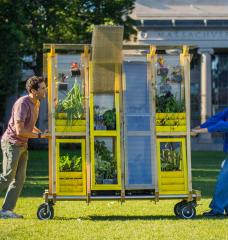
MIT Farm is growing

Department of Urban Studies and Planning MIT
Zachary Rapaport (left) and Aleks Banaś move their farm cart across the MIT campus. The two graduate architecture students co-designed and built the cart.
PostOctober 13, 2026

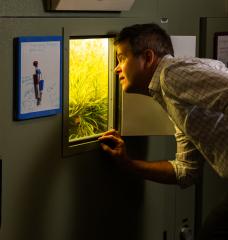
Exploring how plants thrive in a changing environment

MIT News
Plants are central to his lab, but David Des Marais sees them as a window into all living things. “Understanding why life is so diverse is fascinating to me,” Des Marais says.

MIT Climate Knowledge in Your Inbox


MIT Groups Log In

Log In

Footer

  • About
  • Terms & Conditions
  • Privacy Policy
  • Accessibility
  • Contact
MIT Climate Project
MIT
  • Instagram
  • TikTok
  • YouTube
  • Simplecast
Communicator Award Winner