Climate
    • What We Know
    • What Can Be Done
    • Climate Primer
    • Podcast
    • Explainers
    • Climate Questions
    • For Educators
    • News
    • Events
    • Resources
  • Search
Search
MIT

Main navigation

    • What We Know
    • What Can Be Done
    • Climate Primer
    • Podcast
    • Explainers
    • Climate Questions
    • For Educators
    • News
    • Events
    • Resources
  • Search
PostJuly 15, 2025

Dynamics of the Atmosphere

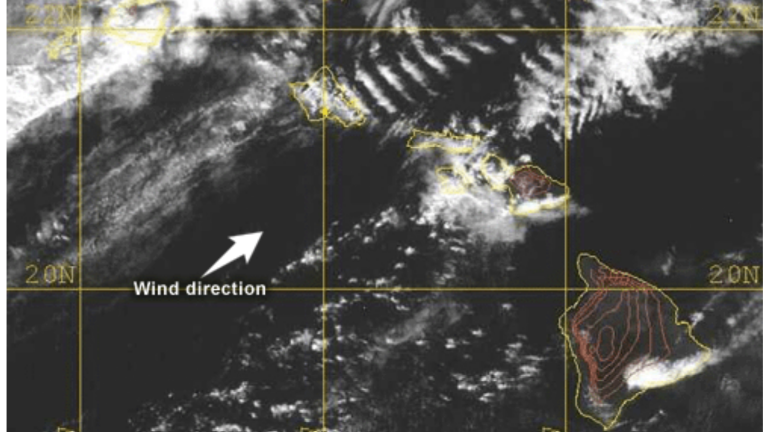
Satellite photo depicting a line of wavefront clouds over ocean.
Photo Credit
Public domain image: NOAA / NRL-Monterey.

This graduate-level course discusses the dynamics of the atmosphere, with emphasis on the large scale. Topics include internal gravity waves in the atmosphere; potential vorticity conservation and Rossby waves; baroclinic instability and extratropical storms; the general circulation including the role of eddies, isentropic coordinates and tracer transport.

Instructor: Prof. Paul O'Gorman

View the course materials

 
by MIT OCW
Topics
Atmosphere
Weather & Natural Disasters

Related Posts

PostSeptember 18, 2026

MIT researchers are mapping extreme weather risks — and building tools to...

MIT News
The  “New World of Weather” project, one of MIT’s five Climate Grand Challenges announced in 2022, is “advancing the science, technologies, and practical strategies needed to help communities anticipate [extreme weather] and build greater resilience,” says MIT Vice President for Energy and Climate Evelyn Wang.
PostAugust 31, 2026

Translating economic growth into better lives

MIT School of Humanities, Arts, and Social Sciences
Enrolling in the DEDP program “has been game-changing,” graduate student Lyonel Tanganco says. “The program provides a solid foundation for understanding the world and how to make a positive, measurable difference in the lives of other people, especially the least fortunate among us.”
PostAugust 24, 2026

Generating scenarios for extreme events, without extreme data

MIT News
MIT engineers have developed a tool that generates realistic extreme events and worst-case scenarios. Their method does not need to know about previous extreme events in order to generate realistic, future extreme events.
PostJuly 16, 2026

For energy systems that power a reliable grid, the future is all about loca...

MIT News
MIT researchers have created a way to make more climate-informed energy siting choices and shown how it can be used to make energy systems more resilient and reduce blackouts.

MIT Climate Knowledge in Your Inbox


MIT Groups Log In

Log In

Footer

  • About
  • Terms & Conditions
  • Privacy Policy
  • Accessibility
  • Contact
MIT Climate Project
MIT
  • Instagram
  • TikTok
  • YouTube
  • Simplecast
Communicator Award Winner