Climate
    • What We Know
    • What Can Be Done
    • Climate Primer
    • Podcast
    • Explainers
    • Climate Questions
    • For Educators
    • News
    • Events
    • Resources
  • Search
Search
MIT

Main navigation

    • What We Know
    • What Can Be Done
    • Climate Primer
    • Podcast
    • Explainers
    • Climate Questions
    • For Educators
    • News
    • Events
    • Resources
  • Search
PostNovember 27, 2018

Event: Reducing the error bars on climate predictions

Lecture presented by Ali Ramadhan, Graduate student, EAPS (Climate Science) 

Title: Reducing the error bars on climate predictions

Abstract: Starting with the first computational weather forecasts, a ridiculously crazy idea a hundred years ago, we'll see how modern climate models work and why uncertainties in climate predictions are so high despite their sophistication. Then I'll talk about how we're trying to reduce uncertainties in climate predictions by developing a new climate model in Julia that runs on massively parallel GPU accelerators and learns from observations and high-resolution simulations.

  • Date: Wednesday, Nov 28, 4:30 PM - 5:30 PM
  • Location: 2-105
  • Refreshments provided
by ClimateX Team
Topics
Climate Modeling

Related Posts

PostNovember 2, 2026

PODCAST: Climate Reveal (Season 3, Episode 1) - Tipping Points

MIT Center for Sustainability Science and Strategy
Climate Reveal Podcast
PostOctober 30, 2026

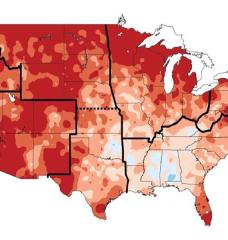
Study pinpoints states with steepest warming trends since 1980

MIT News
A new study reports global-warming-attributed trends in monthly-averaged maximum daily temperature for every U.S. state. Shown here are temperature changes (highest increases in deeper red and dark orange) between 1991 and 2012 compared to the average temperature between 1901 and 1960.
PostOctober 14, 2026

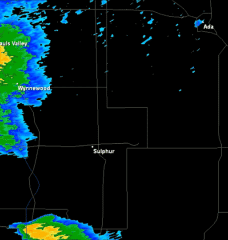
Researchers improve weather forecasts looking two to six weeks out

MIT News
A new technique significantly improves weather forecasting beyond two weeks. The researchers developed a machine-learning model that learns to correct errors in existing forecasting models to improve their output over the two-to-six-week time frame, including for extreme weather events.
PostSeptember 18, 2026

MIT researchers are mapping extreme weather risks — and building tools to...

MIT News
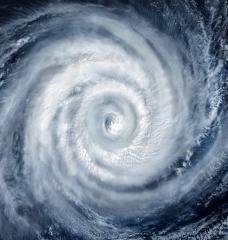
The  “New World of Weather” project, one of MIT’s five Climate Grand Challenges announced in 2022, is “advancing the science, technologies, and practical strategies needed to help communities anticipate [extreme weather] and build greater resilience,” says MIT Vice President for Energy and Climate Evelyn Wang.

MIT Climate Knowledge in Your Inbox


MIT Groups Log In

Log In

Footer

  • About
  • Terms & Conditions
  • Privacy Policy
  • Accessibility
  • Contact
MIT Climate Project
MIT
  • Instagram
  • TikTok
  • YouTube
  • Simplecast
Communicator Award Winner