Climate
Search

Main navigation

  • Climate 101
    • What We Know
    • What Can Be Done
    • Climate Primer
  • Explore
    • Podcast
    • Explainers
    • Climate Questions
    • For Educators
  • MIT Action
    • News
    • Events
    • Resources
  • Search
MIT

Main navigation

  • Climate 101
    • What We Know
    • What Can Be Done
    • Climate Primer
  • Explore
    • Podcast
    • Explainers
    • Climate Questions
    • For Educators
  • MIT Action
    • News
    • Events
    • Resources
  • Search
PostApril 22, 2019

Conscripting Climate: Environmental Risk & Defensive Urbanism

As adaptation to climate change has become a concern for municipalities, resilience has largely replaced sustainability as the dominant environmental framing in planning discourse. This shift towards the “securitization of nature” coincides with the elevation of climate change on military agendas. In the military’s conception, climate change will not only contribute to security issues from resource wars to refugee crises, but will act as a “threat multiplier,” magnifying all existing forms of risk. The potential alliance between planners and the military seems an unlikely one, but in fact there is a long history of planners both shaping urban form to meet security needs and appropriating military technologies and systems. Still, given the current iteration of urban risk, planners must consider the relationships between security, urban form, and ecological risk anew.

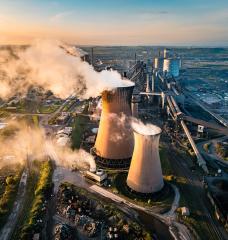
Read more in 'Conscripting Climate: Environmental Risk & Defensive Urbanism,' volume 13 of Projections, the Journal of the MIT Department of Urban Studies and Planning.

by Department of Urban Studies and Planning MIT
Topics
Finance & Economics
Education
Energy
Government & Policy
Transportation

Related Posts

PodcastMarch 26, 2026

E5: The (micro)grid of the future

Ask MIT Climate Podcast
Ask MIT Climate
PostMarch 18, 2026

Sustaining diplomacy amid competition in US-China relations

MIT Energy Initiative
Nicholas Burns, former U.S. ambassador to the People’s Republic of China, emphasized the impact that the two countries have on the global order, and how that influence could be directed toward addressing climate change.
PostMarch 18, 2026

Turning extreme heat into large-scale energy storage

MIT News
In Fourth Power’s thermal battery, thermophotovoltaic (TPV) power sticks can be moved in and out of the light, which allows the system to respond quickly and flexibly to grid needs.
PodcastMarch 12, 2026

E4: The reshuffling of life on Earth

Ask MIT Climate Podcast
Ask MIT Climate

MIT Climate Knowledge in Your Inbox


MIT Groups Log In

Log In

Footer

  • About
  • Terms & Conditions
  • Privacy Policy
  • Accessibility
  • Contact
MIT Climate Project
MIT
  • Instagram
  • TikTok
  • YouTube
  • Simplecast
Communicator Award Winner