Climate
Search

Main navigation

  • Climate 101
    • What We Know
    • What Can Be Done
    • Climate Primer
  • Explore
    • Podcast
    • Explainers
    • Climate Questions
    • For Educators
  • MIT Action
    • News
    • Events
    • Resources
  • Search
MIT

Main navigation

  • Climate 101
    • What We Know
    • What Can Be Done
    • Climate Primer
  • Explore
    • Podcast
    • Explainers
    • Climate Questions
    • For Educators
  • MIT Action
    • News
    • Events
    • Resources
  • Search
PostJune 9, 2021

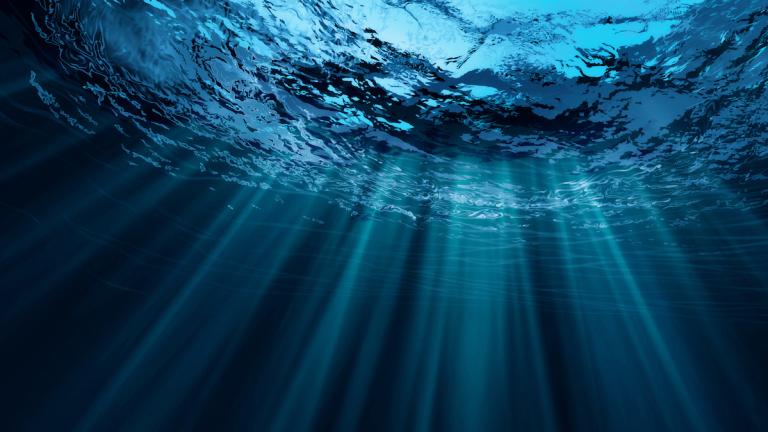
Blue water thinking

Addressing the challenges of warming, rising seas is essential for global sustainability on multiple fronts, but two are particularly stark. One is coastal habitats: as the world’s coastlines recede and are degraded, the homes and livelihoods of the one-in-three of the world's people who live along its coasts will likely be irrevocably changed in this generation. The second is global food supplies.

Now, there are a number of companies and technologies working to combat the effects of climate change on marine ecosystems can evoke thrilling acts of derring-do on the high seas, writes MIT Technology Review Insights.

Read the full article at: https://www.technologyreview.com/2021/06/02/1025623/blue-water-thinking/

 

by MIT Technology Review
Topics
Biodiversity
Food, Water & Agriculture
Industry & Manufacturing
Oceans

Related Posts

PostAugust 11, 2026

Researcher Profile: 3 questions with Jennifer Morris

MIT Center for Sustainability Science and Strategy
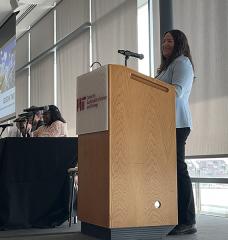
Jennifer Morris moderating a panel at the 48th Global Change Forum in March 2026 (Photo by Jamie Bartholomay)
PostAugust 6, 2026

A new way to watch heat move through electronics

MIT News
To measure how heat moves through materials, MIT researchers use laser pulses (red) to heat a sample while ultrafast X-rays (purple) penetrate multiple material layers and measure changes as heat dissipates.
PostAugust 4, 2026

Solving the solvent problem

MIT Department of Nuclear Science and Engineering
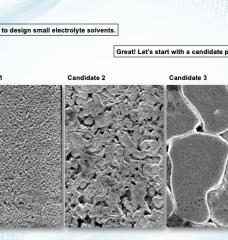
A machine-learning-guided pipeline enables researchers to generate solvent candidate pools on demand, narrow the selections down, and experimentally test the most promising electrolyte recipes. These scanning electron microscopy images show the morphology of sodium-metal deposits obtained from three different electrolyte candidates.
PostJuly 31, 2026

Building energy security through more sustainable batteries

MIT News
“Lots of smart people have already made wind and solar very cheap,” Hugh Smith says. “The issue is reliability, and batteries can help solve that problem.”

MIT Climate Knowledge in Your Inbox


MIT Groups Log In

Log In

Footer

  • About
  • Terms & Conditions
  • Privacy Policy
  • Accessibility
  • Contact
MIT Climate Project
MIT
  • Instagram
  • TikTok
  • YouTube
  • Simplecast
Communicator Award Winner