Climate
Search

Main navigation

  • Climate 101
    • What We Know
    • What Can Be Done
    • Climate Primer
  • Explore
    • Podcast
    • Explainers
    • Climate Questions
    • For Educators
  • MIT Action
    • News
    • Events
    • Resources
  • Search
MIT

Main navigation

  • Climate 101
    • What We Know
    • What Can Be Done
    • Climate Primer
  • Explore
    • Podcast
    • Explainers
    • Climate Questions
    • For Educators
  • MIT Action
    • News
    • Events
    • Resources
  • Search
PostJune 13, 2019

Bitcoin mining may be pumping out as much CO2 per year as Kansas City

The cryptocurrency Bitcoin requires powerful computing hardware to acquire, and the amount of electricity this process uses remains an open question. The latest studies used data from initial public offering (IPO) filings to find that the mining process accounts for 0.2% of global electricity consumption and produces as much carbon dioxide as Kansas City. In this article James Temple, MIT Technology Review's senior editor for energy, reveals that while this data may not accurately represent energy usage and emissions, Bitcoin-related emissions are too high and alternatives are needed.

Read the full article at: https://www.technologyreview.com/s/613658/bitcoin-mining-may-be-pumping…

Image by: Diana Parkhouse on Unsplash

by MIT Technology Review
Topics
Energy

Related Posts

PostAugust 11, 2026

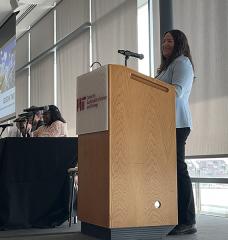
Researcher Profile: 3 questions with Jennifer Morris

MIT Center for Sustainability Science and Strategy
Jennifer Morris moderating a panel at the 48th Global Change Forum in March 2026 (Photo by Jamie Bartholomay)
PostAugust 6, 2026

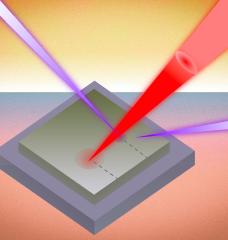
A new way to watch heat move through electronics

MIT News
To measure how heat moves through materials, MIT researchers use laser pulses (red) to heat a sample while ultrafast X-rays (purple) penetrate multiple material layers and measure changes as heat dissipates.
PostAugust 4, 2026

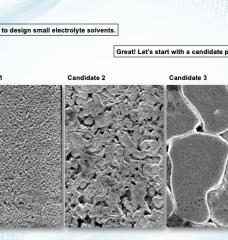
Solving the solvent problem

MIT Department of Nuclear Science and Engineering
A machine-learning-guided pipeline enables researchers to generate solvent candidate pools on demand, narrow the selections down, and experimentally test the most promising electrolyte recipes. These scanning electron microscopy images show the morphology of sodium-metal deposits obtained from three different electrolyte candidates.
PostAugust 3, 2026

CS3 Lecture Series: Fundamentals of Climate Science and Policy

MIT OCW
Photo of session attendees watching a speaker's talk.

MIT Climate Knowledge in Your Inbox


MIT Groups Log In

Log In

Footer

  • About
  • Terms & Conditions
  • Privacy Policy
  • Accessibility
  • Contact
MIT Climate Project
MIT
  • Instagram
  • TikTok
  • YouTube
  • Simplecast
Communicator Award Winner