Climate
    • What We Know
    • What Can Be Done
    • Climate Primer
    • Podcast
    • Explainers
    • Climate Questions
    • For Educators
    • News
    • Events
    • Resources
  • Search
Search
MIT

Main navigation

    • What We Know
    • What Can Be Done
    • Climate Primer
    • Podcast
    • Explainers
    • Climate Questions
    • For Educators
    • News
    • Events
    • Resources
  • Search
VideoOctober 9, 2019

Watch the MIT Climate Action Symposium: Progress in Climate Science

    Description

    The first of MIT’s six Climate Action Symposia, Progress in Climate Science, was held on Wednesday, October 2, 2019. Topics included:

    • the relationship between greenhouse gas concentrations in the atmosphere and global warming, extreme weather events, and other climate impacts;
    • remaining uncertainties and the prospects for reducing them; and
    • projected physical effects of increasing greenhouse gas emissions under alternative mitigation scenarios.

    In Part 1, Symposium Chair Kerry Emanuel introduces the event and MIT President Rafael Reif delivers welcoming remarks.

    In Part 2, keynote speaker Susan Solomon delivers an overview of the state of climate science.

    In Part 3, moderator Noelle Selin and panelists Nicolas Gruber, David McGee, Paul O'Gorman, Ray Pierrehumbert, and Tapio Schneider discuss "Frontiers in Climate Science".

    In Part 4, moderator Maria Zuber and panelists Philip Duffy, Sherri Goodman, Jerry Mitrovica and John Reilly discuss "Climate Risks".
    by MIT Climate Action
    Topics
    Sea Level Rise
    Weather & Natural Disasters
    Climate Modeling
    Education
    Atmosphere
    MIT Action

    Related Posts

    PostNovember 2, 2026

    PODCAST: Climate Reveal (Season 3, Episode 1) - Tipping Points

    MIT Center for Sustainability Science and Strategy
    Climate Reveal Podcast
    PostOctober 30, 2026

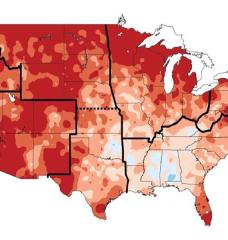
    Study pinpoints states with steepest warming trends since 1980

    MIT News
    A new study reports global-warming-attributed trends in monthly-averaged maximum daily temperature for every U.S. state. Shown here are temperature changes (highest increases in deeper red and dark orange) between 1991 and 2012 compared to the average temperature between 1901 and 1960.
    PostOctober 26, 2026

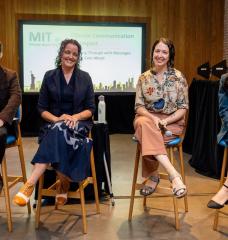
    At New York Climate Week 2026, MIT connects with a global network

    MIT News
    Aaron Krol, managing editor of the MIT Climate Change Engagement Program, led MIT’s Climate Week NYC session “Climate Communication for Impact,” which featured (left to right) Allison Crimmons of Talking Climate, Arielle Tannenbaum of Climate Central, and Mallika Talwar of Yale University.
    PostOctober 14, 2026

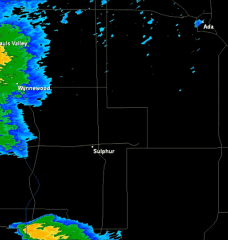
    Researchers improve weather forecasts looking two to six weeks out

    MIT News
    A new technique significantly improves weather forecasting beyond two weeks. The researchers developed a machine-learning model that learns to correct errors in existing forecasting models to improve their output over the two-to-six-week time frame, including for extreme weather events.

    MIT Climate Knowledge in Your Inbox


    MIT Groups Log In

    Log In

    Footer

    • About
    • Terms & Conditions
    • Privacy Policy
    • Accessibility
    • Contact
    MIT Climate Project
    MIT
    • Instagram
    • TikTok
    • YouTube
    • Simplecast
    Communicator Award Winner
    Communicator Award Winner