Climate
Search

Main navigation

  • Climate 101
    • What We Know
    • What Can Be Done
    • Climate Primer
  • Explore
    • Podcast
    • Explainers
    • Climate Questions
    • For Educators
  • MIT Action
    • News
    • Events
    • Resources
  • Search
MIT

Main navigation

  • Climate 101
    • What We Know
    • What Can Be Done
    • Climate Primer
  • Explore
    • Podcast
    • Explainers
    • Climate Questions
    • For Educators
  • MIT Action
    • News
    • Events
    • Resources
  • Search
PostMarch 25, 2021

What if the Perfect Climate Fix Can’t Arrive in Time?

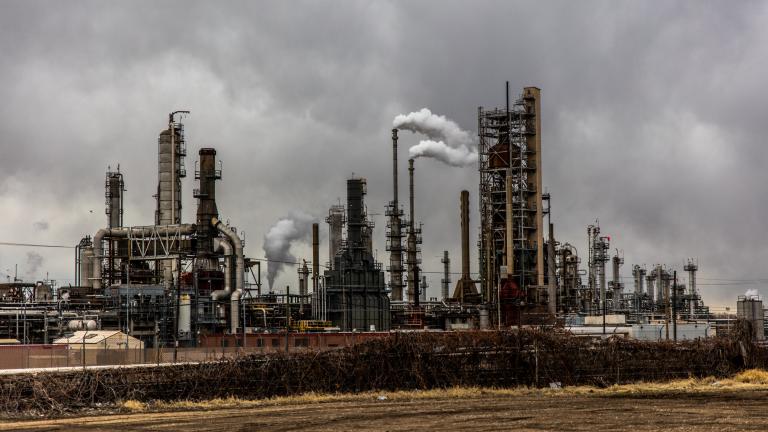
By 2050, the experts now believe, this carbon-free energy will allow us to avoid a mind-boggling fraction of projected emissions, amounting to almost — wait, what?! 7.5%. Even a surprise innovation tomorrow would require time to scale up. In the meantime, the emissions crisis would continue.

Bloomberg Green used our En-ROADS simulation to show that new zero-carbon technology is not the silver bullet many hope it is when it comes to meeting our climate goals.

Read more about their analysis using out model (co-developed with Climate Interactive) here. 

by MIT Sloan Sustainability Initiative
Topics
Adaptation
Carbon Capture
Climate Modeling
Education
Energy
Batteries, Storage & Transmission
Electrification
Energy Efficiency
Fossil Fuels
Nuclear & Fusion Energy
Renewable Energy
Government & Policy

Related Posts

PostAugust 18, 2026

Steady Heat, Flexible Power: Flexibility by Proxy in Nuclear-Thermal Energy...

MIT Center for Energy and Environmental Policy Research
rendering of energetic plasma
PostAugust 11, 2026

Researcher Profile: 3 questions with Jennifer Morris

MIT Center for Sustainability Science and Strategy
Jennifer Morris moderating a panel at the 48th Global Change Forum in March 2026 (Photo by Jamie Bartholomay)
PostAugust 6, 2026

A new way to watch heat move through electronics

MIT News
To measure how heat moves through materials, MIT researchers use laser pulses (red) to heat a sample while ultrafast X-rays (purple) penetrate multiple material layers and measure changes as heat dissipates.
PostAugust 4, 2026

Reframing leadership as a design problem

MIT News
Nicholas de Monchaux is Weber-Shaughness Professor of Architecture at MIT, as well as professor of urban studies and planning and affiliated faculty with the Program in Science, Technology, and Society.

MIT Climate Knowledge in Your Inbox


MIT Groups Log In

Log In

Footer

  • About
  • Terms & Conditions
  • Privacy Policy
  • Accessibility
  • Contact
MIT Climate Project
MIT
  • Instagram
  • TikTok
  • YouTube
  • Simplecast
Communicator Award Winner