Climate
Search

Main navigation

  • Climate 101
    • What We Know
    • What Can Be Done
    • Climate Primer
  • Explore
    • Podcast
    • Explainers
    • Climate Questions
    • For Educators
  • MIT Action
    • News
    • Events
    • Resources
  • Search
MIT

Main navigation

  • Climate 101
    • What We Know
    • What Can Be Done
    • Climate Primer
  • Explore
    • Podcast
    • Explainers
    • Climate Questions
    • For Educators
  • MIT Action
    • News
    • Events
    • Resources
  • Search
PostJanuary 31, 2023

Webinar by Prof. Mark Z. Jacobson, Stanford University, Wednesday, February 1, 5 pm EST

Transitioning the U.S. and World entirely to 100% clean, renewable energy and storage at low cost for all purposes

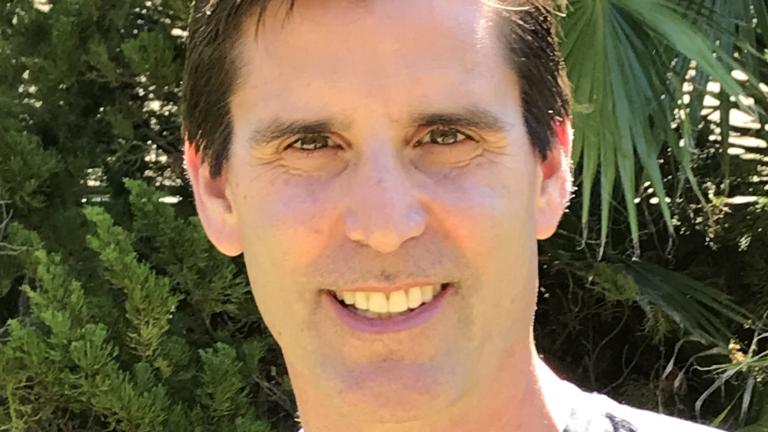
Prof. Mark Z. Jacobson will speak at a meeting of the MIT Alumni for Climate Action (MACA). Dr. Jacobson's career has focused on better understanding air pollution and global warming problems and developing large-scale clean, renewable energy solutions to them. Toward that end, he has developed and applied three-dimensional (3-D) atmosphere-biosphere-ocean computer models and solvers to simulate and understand air pollution, weather, climate, and renewable energy systems. He has also developed roadmaps to transition countries, states, cities, and towns to 100% clean, renewable energy for all purposes and computer models to examine grid stability in the presence of 100% renewable energy. Jacobson has been a professor at Stanford University since 1994. His research crosses two fields: Atmospheric Sciences and Energy and he has written the following books (among others):

"No Miracles Needed: How Today's Technology Can Save Our Climate and Clean Our Air"

"100% Clean, Renewable Energy and Storage for Everything"

To join MACA, see website: http://mitalum4climate.org or email us at info@mitalum4climate.org.
by MACA - MIT Alumni for Climate Action
Topics
Atmosphere
Climate Modeling
Education
Energy
Transportation

Related Posts

PostAugust 6, 2026

A new way to watch heat move through electronics

MIT News
To measure how heat moves through materials, MIT researchers use laser pulses (red) to heat a sample while ultrafast X-rays (purple) penetrate multiple material layers and measure changes as heat dissipates.
PostAugust 4, 2026

Reframing leadership as a design problem

MIT News
Nicholas de Monchaux is Weber-Shaughness Professor of Architecture at MIT, as well as professor of urban studies and planning and affiliated faculty with the Program in Science, Technology, and Society.
PostAugust 4, 2026

Solving the solvent problem

MIT Department of Nuclear Science and Engineering
A machine-learning-guided pipeline enables researchers to generate solvent candidate pools on demand, narrow the selections down, and experimentally test the most promising electrolyte recipes. These scanning electron microscopy images show the morphology of sodium-metal deposits obtained from three different electrolyte candidates.
PostAugust 3, 2026

Social Problems of Nuclear Energy

MIT OCW
Photo of two large cooling towers emitting some steam.

MIT Climate Knowledge in Your Inbox


MIT Groups Log In

Log In

Footer

  • About
  • Terms & Conditions
  • Privacy Policy
  • Accessibility
  • Contact
MIT Climate Project
MIT
  • Instagram
  • TikTok
  • YouTube
  • Simplecast
Communicator Award Winner