Climate
Search

Main navigation

  • Climate 101
    • What We Know
    • What Can Be Done
    • Climate Primer
  • Explore
    • Podcast
    • Explainers
    • Climate Questions
    • For Educators
  • MIT Action
    • News
    • Events
    • Resources
  • Search
MIT

Main navigation

  • Climate 101
    • What We Know
    • What Can Be Done
    • Climate Primer
  • Explore
    • Podcast
    • Explainers
    • Climate Questions
    • For Educators
  • MIT Action
    • News
    • Events
    • Resources
  • Search
PostJune 2, 2020

Webinar ~ Getting to Neutral: The Importance of Renewable Gas in Decarbonizing Society

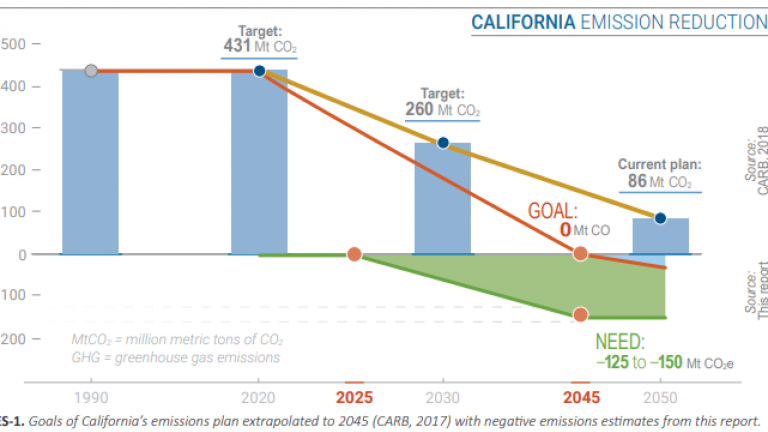
California's emission plan goals

Getting to Neutral: The Importance of Renewable Gas in Decarbonizing Society - a one hour webinar on Wednesday, June 17 - 11:00 am PT / 2:00 pm ET.

Register at https://learn.renewablegas360.com/webinar1

Several states have established visionary goals to reduce their climate footprints, with many striving to achieve carbon neutrality within the next 30 years—including California, Colorado, New York, Oregon, and Massachusetts. The achievement of these ambitious goals will be challenging.

Tune into a 1-hour webinar to hear key findings from the recently published Lawrence Livermore National Laboratory (LLNL) report, “Getting to Neutral." Attendees will learn strategies that can enable states to accelerate their efforts to fight climate change.  

One of the report’s lead authors will share an analysis on how California could achieve carbon-neutrality by complementing the state's ongoing mitigation efforts with negative emissions technologies that remove CO2 from the atmosphere, making use of the state's natural biomass and geologic advantages. The first-of-its kind study—which documents how carbon neutrality can be achieved at a very modest cost, and using available technology—was the topic of extensive discussion within California state government, and spawned the introduction of multiple bills in the legislature. 

 

by MACA - MIT Alumni for Climate Action
Topics
Humanities & Social Science
Education
Energy
Government & Policy
Transportation

Related Posts

PodcastJuly 2, 2026

E9: Dry spells and downpours

Ask MIT Climate Podcast
Ask MIT Climate
PostJuly 1, 2026

Advancing a scenario-based modeling framework for long-term land-use planni...

MIT Center for Sustainability Science and Strategy
Mississippi River watershed
PostJune 30, 2026

How Uncertainty Shapes Electricity Storage Decisions

MIT Center for Energy and Environmental Policy Research
PostJune 30, 2026

MIT researchers advance toward greater bandwidth, more energy-efficient com...

MIT News
FUTUR-IC, funded by the National Science Foundation Convergence Accelerator, was created to address resource-efficiency issues. For example, integrating photonics with the electronics that underpin today’s microchips could address energy use because the transmission, or communication of data, using light is much more energy efficient.

MIT Climate Knowledge in Your Inbox


MIT Groups Log In

Log In

Footer

  • About
  • Terms & Conditions
  • Privacy Policy
  • Accessibility
  • Contact
MIT Climate Project
MIT
  • Instagram
  • TikTok
  • YouTube
  • Simplecast
Communicator Award Winner