Climate
Search

Main navigation

  • Climate 101
    • What We Know
    • What Can Be Done
    • Climate Primer
  • Explore
    • Podcast
    • Explainers
    • Climate Questions
    • For Educators
  • MIT Action
    • News
    • Events
    • Resources
  • Search
MIT

Main navigation

  • Climate 101
    • What We Know
    • What Can Be Done
    • Climate Primer
  • Explore
    • Podcast
    • Explainers
    • Climate Questions
    • For Educators
  • MIT Action
    • News
    • Events
    • Resources
  • Search
PostFebruary 28, 2019

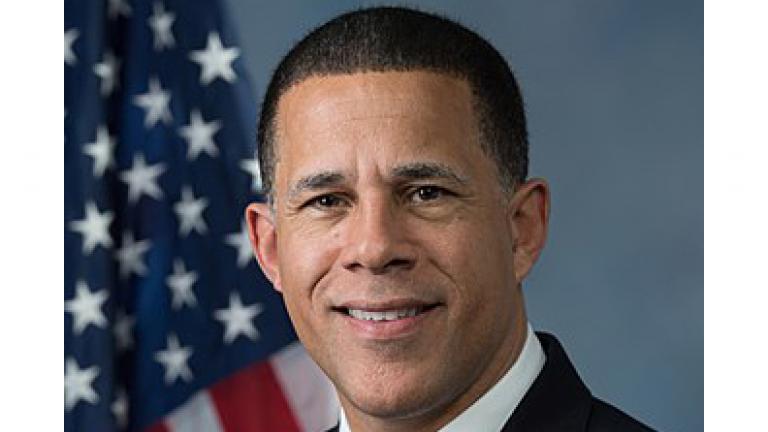
US Congressman Anthony G. Brown (D-MD) supports MIT Alumni Climate Initiative

US Congressman Anthony G. Brown, a member of the House Natural Resources Committee, has become the 5th Maryland representative to provide a statement in support of the MIT Alumni initiative on climate (see https://mit.alumniaction.com/letter.htm#MDleaders ). In the letter dated February 27, 2019, he writes "Climate change will have a major economic, public health and national security impact. I believe we have a moral obligation to act immediately and aggressively. Rather than ignoring the science, we must rise to the challenge. Climate change is one of our most pressing national security threats, and America must be a bold, transformative leader."


by MACA - MIT Alumni for Climate Action
Topics
Energy
Government & Policy
Transportation

Related Posts

PostAugust 18, 2026

Steady Heat, Flexible Power: Flexibility by Proxy in Nuclear-Thermal Energy...

MIT Center for Energy and Environmental Policy Research
rendering of energetic plasma
PostAugust 11, 2026

Researcher Profile: 3 questions with Jennifer Morris

MIT Center for Sustainability Science and Strategy
Jennifer Morris moderating a panel at the 48th Global Change Forum in March 2026 (Photo by Jamie Bartholomay)
PostAugust 6, 2026

A new way to watch heat move through electronics

MIT News
To measure how heat moves through materials, MIT researchers use laser pulses (red) to heat a sample while ultrafast X-rays (purple) penetrate multiple material layers and measure changes as heat dissipates.
PostAugust 4, 2026

Solving the solvent problem

MIT Department of Nuclear Science and Engineering
A machine-learning-guided pipeline enables researchers to generate solvent candidate pools on demand, narrow the selections down, and experimentally test the most promising electrolyte recipes. These scanning electron microscopy images show the morphology of sodium-metal deposits obtained from three different electrolyte candidates.

MIT Climate Knowledge in Your Inbox


MIT Groups Log In

Log In

Footer

  • About
  • Terms & Conditions
  • Privacy Policy
  • Accessibility
  • Contact
MIT Climate Project
MIT
  • Instagram
  • TikTok
  • YouTube
  • Simplecast
Communicator Award Winner