

Second run of ten-week course launches Oct.11
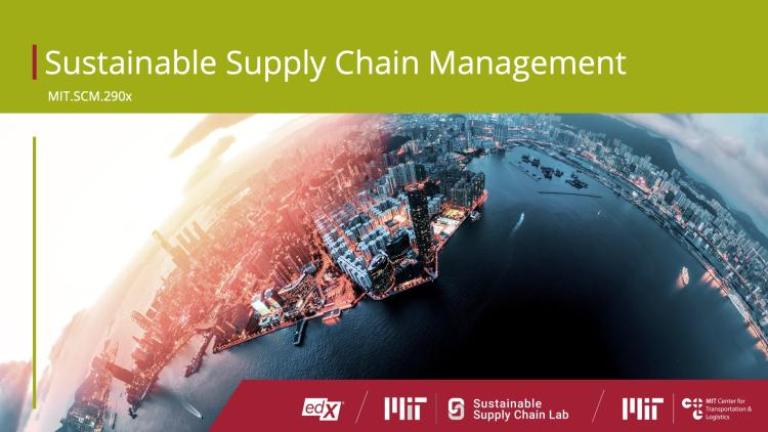
CAMBRIDGE, Mass. — The MIT Center for Transportation & Logistics announced the second run of its online, open-enrollment course, Sustainable Supply Chain Management (SCM.290x). The course, open to all, offers supply chain practitioners tools to transform ambitious corporate climate pledges into actionable strategies while keeping their organizations’ competitive edge in the market.
While many organizations have established goals to reduce emissions or become carbon-neutral in the next 10 to 20 years, they struggle to translate these goals into specific actions and strategies. The course, modeled after the curriculum of its for-credit counterpart at MIT, will illuminate pathways for how organizations might build sustainable supply chains to achieve their sustainability goals while meeting—and even exceeding—business expectations.

Topics learners can expect to cover in SCM.290x include:
- practical alternatives for optimizing carbon emissions using geospatial analysis and data analytics
- examining the “fast” and “green” delivery trade-offs in the new digital era, consumer relationships to sustainable products and services, and environmental costs of fast-shipping e-commerce
- key concepts in supply chain sustainability, including supply chain carbon footprint, sustainable transportation, green vehicle routing, fleet assignment, truck consolidation, circular supply chains, sustainable sourcing, supply chain transparency, and green inventory management
“Demand for sustainable supply chains from stakeholders and consumers alike has been increasing,” said Josué Velázquez Martínez, Course Lead for Sustainable Supply Chain Management. “If you have a personal interest in mobilizing your company to make a positive impact, this course is for you.”
SCM.290x will be available for free on the edX platform, with the option to earn a verified program certificate for $149. The course will run for nine weeks, beginning on Oct. 11, and finishing on Dec. 20, 2023.
When offered in fall 2022, SCM.290x was the first new online course produced by MIT CTL since its groundbreaking MITx MicroMasters® Program in Supply Chain Management, which launched in 2015.
![The “New World of Weather” project, one of MIT’s five Climate Grand Challenges announced in 2022, is “advancing the science, technologies, and practical strategies needed to help communities anticipate [extreme weather] and build greater resilience,” says MIT Vice President for Energy and Climate Evelyn Wang.](/sites/default/files/styles/teaser_mini_image/public/post-images/mit-climate-cyclone.jpg?itok=KwBU2suI)