Climate
Search

Main navigation

  • Climate 101
    • What We Know
    • What Can Be Done
    • Climate Primer
  • Explore
    • Podcast
    • Explainers
    • Climate Questions
    • For Educators
  • MIT Action
    • News
    • Events
    • Resources
  • Search
MIT

Main navigation

  • Climate 101
    • What We Know
    • What Can Be Done
    • Climate Primer
  • Explore
    • Podcast
    • Explainers
    • Climate Questions
    • For Educators
  • MIT Action
    • News
    • Events
    • Resources
  • Search
PostMay 28, 2019

Share/Apply to MIT Solve's Circular Economy Challenge!

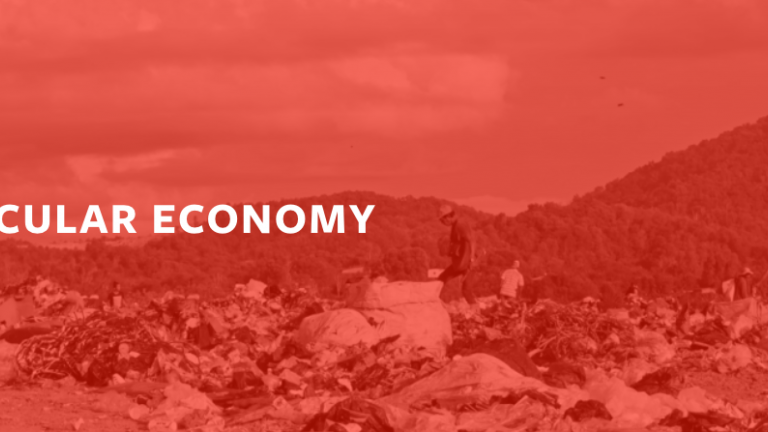
Each year, the world generates more than 2 billion tons of solid waste. How can we build a #CircularEconomy that achieves zero waste and #zerocarbon? ♻️

If you’re working on a solution, MIT Solve wants to hear from you. There is $1.5M in funding is available. Learn more, apply, and share here: http://solve.mit.edu/challenges/circular-economy

by MIT Solve
Topics
Finance & Economics
Energy

Related Posts

PostJuly 7, 2026

Hydrogen: clean fuel of the future — if we can find a cheap and clean way...

MIT Energy Initiative
The Hydrogen Carrier Analysis Tool (HyCAT), developed by a MITEI-led team, helps users determine the costs and carbon emissions incurred when transporting and delivering hydrogen fuel.
PostJune 30, 2026

How Uncertainty Shapes Electricity Storage Decisions

MIT Center for Energy and Environmental Policy Research
PostJune 30, 2026

MIT researchers advance toward greater bandwidth, more energy-efficient com...

MIT News
FUTUR-IC, funded by the National Science Foundation Convergence Accelerator, was created to address resource-efficiency issues. For example, integrating photonics with the electronics that underpin today’s microchips could address energy use because the transmission, or communication of data, using light is much more energy efficient.
PostJune 26, 2026

How data centers can better manage energy use

MIT News
“There are two dimensions that data centers have to make decisions about,” Christopher Knittel says. “One is how much of their load in any one time period is flexible. And two, how many hours, plus or minus, can they move that computation?”

MIT Climate Knowledge in Your Inbox


MIT Groups Log In

Log In

Footer

  • About
  • Terms & Conditions
  • Privacy Policy
  • Accessibility
  • Contact
MIT Climate Project
MIT
  • Instagram
  • TikTok
  • YouTube
  • Simplecast
Communicator Award Winner