Climate
Search

Main navigation

  • Climate 101
    • What We Know
    • What Can Be Done
    • Climate Primer
  • Explore
    • Podcast
    • Explainers
    • Climate Questions
    • For Educators
  • MIT Action
    • News
    • Events
    • Resources
  • Search
MIT

Main navigation

  • Climate 101
    • What We Know
    • What Can Be Done
    • Climate Primer
  • Explore
    • Podcast
    • Explainers
    • Climate Questions
    • For Educators
  • MIT Action
    • News
    • Events
    • Resources
  • Search
PostJanuary 21, 2020

Reducing the cost of decarbonization through cutting-edge carbon capture innovation

"Reducing the cost of decarbonization through cutting-edge carbon capture innovation" with Brian Anderson, Director, National Energy Technology Laboratory, U.S. Department of Energy

Wednesday, February 19, 2020

5:15pm-6:20pm

Room 6-120 

Register

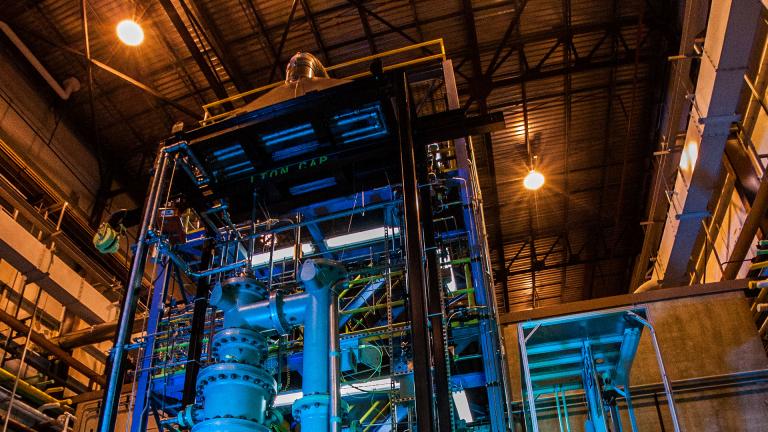
Anderson will highlight state-of-the-art carbon capture R&D and discuss crosscutting scientific and technological initiatives underway at the U.S. Department of Energy’s National Energy Technology Laboratory to meet some of the nation’s most important energy challenges—delivering reliable, low-cost, and low-carbon energy.

About the speaker:

Brian J. Anderson SM ’04 PhD ’05, is director of the National Energy Technology Laboratory of the U.S. Department of Energy (DOE). He is a recipient of the 2012 Presidential Early Career Award for Scientists and Engineers. In 2011, the DOE recognized him with an Honor Achievement Award for his role on a team that responded to the Deepwater Horizon oil spill. Anderson earned a bachelor’s degree in chemical engineering at West Virginia University and his master's and doctorate degrees in chemical engineering from MIT.

Reception with light refreshments will follow.

Please note that we will open our doors to unregistered participants 15 minutes before the event start time. To guarantee your seat, we recommend you register and arrive at least 15 minutes early.
by MIT Energy Initiative
Topics
Carbon Capture
Energy

Related Posts

PostMarch 18, 2026

Sustaining diplomacy amid competition in US-China relations

MIT Energy Initiative
Nicholas Burns, former U.S. ambassador to the People’s Republic of China, emphasized the impact that the two countries have on the global order, and how that influence could be directed toward addressing climate change.
PostMarch 18, 2026

Turning extreme heat into large-scale energy storage

MIT News
In Fourth Power’s thermal battery, thermophotovoltaic (TPV) power sticks can be moved in and out of the light, which allows the system to respond quickly and flexibly to grid needs.
PostMarch 4, 2026

Renewables and Electricity Affordability: Untangling Correlation from Causa...

MIT Center for Energy and Environmental Policy Research
People reviewing their electricity bills
PostFebruary 26, 2026

New method could increase LLM training efficiency

MIT News
A new method could increase the training efficiency of large language models: By leveraging idle computing time, it can double the speed of model training while preserving accuracy.

MIT Climate Knowledge in Your Inbox


MIT Groups Log In

Log In

Footer

  • About
  • Terms & Conditions
  • Privacy Policy
  • Accessibility
  • Contact
MIT Climate Project
MIT
  • Instagram
  • TikTok
  • YouTube
  • Simplecast
Communicator Award Winner