Climate
    • What We Know
    • What Can Be Done
    • Climate Primer
    • Podcast
    • Explainers
    • Climate Questions
    • For Educators
    • News
    • Events
    • Resources
  • Search
Search
MIT

Main navigation

    • What We Know
    • What Can Be Done
    • Climate Primer
    • Podcast
    • Explainers
    • Climate Questions
    • For Educators
    • News
    • Events
    • Resources
  • Search
PostOctober 26, 2023

Position Paper: Green Alternative Fuels

Photo Credit
Jeremy Grace et al., MACA

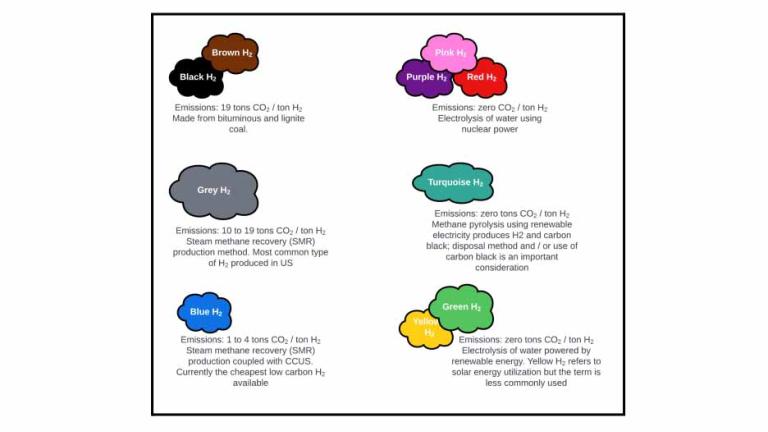
The MIT Alumni for Climate Action group on Advocacy and Policy led by Jeremy Grace, PhD, published a position paper on Green Alternative Fuels. (See https://maca.earth/). This paper examines the appropriate production and use of green alternative fuels in the context of a transition to a net-zero economy. General points articulated in the paper written for maximum clarity for citizens and government representatives include (i) Hydrogen and other green alternative fuels are not a one-to-one substitution for fossil fuels; and (ii) They should be used appropriately only where direct electrification is not possible. Any green alternative fuel, including hydrogen and ammonia, must be produced in a manner that complies with the “three pillars” of the 45V Hydrogen Production Tax credit. These pillars are necessary to ensure that scale-up of green hydrogen production does not impede the needed deep cuts in CO2 emissions. 

by MACA - MIT Alumni for Climate Action
Topics
Cities & Planning
Education
Government & Policy
Industry & Manufacturing
Transportation
Alternative Fuels

Related Posts

PostSeptember 21, 2026

Environmental Ambition and Economic Protectionism: The Design of Border Car...

MIT Center for Energy and Environmental Policy Research
Aerial view of Steel Plant Industry in Scunthorpe, UK
PostSeptember 9, 2026

An electrochemical approach turns ammonia into pure hydrogen

MIT News
MIT researchers have developed a new way to extract pure hydrogen gas from ammonia and other hydrogen carrier molecules. Their strategy, which uses electricity to speed up the extraction, reduces the temperature and energy required to recover hydrogen from these molecules.
PostSeptember 8, 2026

Political Ideology and U.S. Electric Vehicle Adoption

MIT Center for Energy and Environmental Policy Research
PostAugust 31, 2026

Translating economic growth into better lives

MIT School of Humanities, Arts, and Social Sciences
Enrolling in the DEDP program “has been game-changing,” graduate student Lyonel Tanganco says. “The program provides a solid foundation for understanding the world and how to make a positive, measurable difference in the lives of other people, especially the least fortunate among us.”

MIT Climate Knowledge in Your Inbox


MIT Groups Log In

Log In

Footer

  • About
  • Terms & Conditions
  • Privacy Policy
  • Accessibility
  • Contact
MIT Climate Project
MIT
  • Instagram
  • TikTok
  • YouTube
  • Simplecast
Communicator Award Winner