Climate
Search

Main navigation

  • Climate 101
    • What We Know
    • What Can Be Done
    • Climate Primer
  • Explore
    • Podcast
    • Explainers
    • Climate Questions
    • For Educators
  • MIT Action
    • News
    • Events
    • Resources
  • Search
MIT

Main navigation

  • Climate 101
    • What We Know
    • What Can Be Done
    • Climate Primer
  • Explore
    • Podcast
    • Explainers
    • Climate Questions
    • For Educators
  • MIT Action
    • News
    • Events
    • Resources
  • Search
PostMay 22, 2019

Maryland Governor will allow clean energy bill to become law

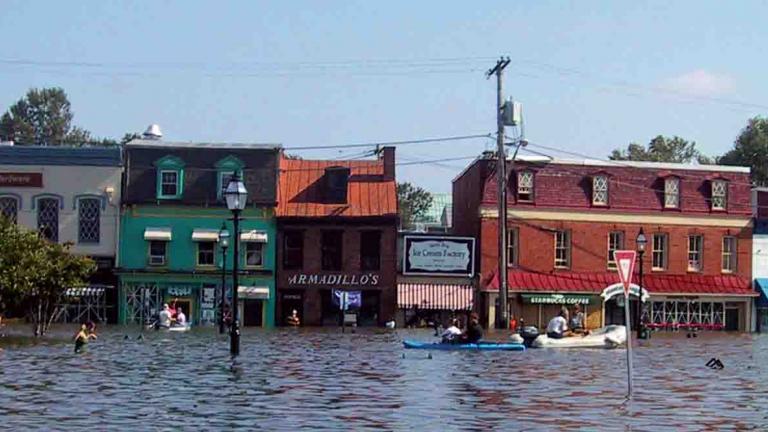
Gov. Hogan announced today that the Maryland Clean Energy Jobs Act supported by a group of MIT Alumni in the state which increases the renewable energy standard (50% electricity from renewable sources by 2030) will become law without his signature See Baltimore Sun story. The MIT Alumni wrote a letter in October 2018 which was signed by over 100 to urge immediate action and was supported by many leaders in the state. The effort is a victory for clean energy advocates in Maryland and a success for the group of MIT alumni who encouraged this step to limit the damage from climate change.
by MACA - MIT Alumni for Climate Action
Topics
Energy
Government & Policy

Related Posts

PostAugust 18, 2026

Steady Heat, Flexible Power: Flexibility by Proxy in Nuclear-Thermal Energy...

MIT Center for Energy and Environmental Policy Research
rendering of energetic plasma
PostAugust 11, 2026

Researcher Profile: 3 questions with Jennifer Morris

MIT Center for Sustainability Science and Strategy
Jennifer Morris moderating a panel at the 48th Global Change Forum in March 2026 (Photo by Jamie Bartholomay)
PostAugust 6, 2026

A new way to watch heat move through electronics

MIT News
To measure how heat moves through materials, MIT researchers use laser pulses (red) to heat a sample while ultrafast X-rays (purple) penetrate multiple material layers and measure changes as heat dissipates.
PostAugust 4, 2026

Solving the solvent problem

MIT Department of Nuclear Science and Engineering
A machine-learning-guided pipeline enables researchers to generate solvent candidate pools on demand, narrow the selections down, and experimentally test the most promising electrolyte recipes. These scanning electron microscopy images show the morphology of sodium-metal deposits obtained from three different electrolyte candidates.

MIT Climate Knowledge in Your Inbox


MIT Groups Log In

Log In

Footer

  • About
  • Terms & Conditions
  • Privacy Policy
  • Accessibility
  • Contact
MIT Climate Project
MIT
  • Instagram
  • TikTok
  • YouTube
  • Simplecast
Communicator Award Winner