Climate
    • What We Know
    • What Can Be Done
    • Climate Primer
    • Podcast
    • Explainers
    • Climate Questions
    • For Educators
    • News
    • Events
    • Resources
  • Search
Search
MIT

Main navigation

    • What We Know
    • What Can Be Done
    • Climate Primer
    • Podcast
    • Explainers
    • Climate Questions
    • For Educators
    • News
    • Events
    • Resources
  • Search
PostAugust 23, 2023

Job titles of the future: Chief heat officer

Jane Gilbert
Photo Credit
Courtesy Photo

In Miami, extreme heat is a deadly concern. Rising temperatures now kill more people than hurricanes or floods, and do more harm to the region's economy than rising sea levels. That's why, in 2021, Florida's Miami-Dade County hired a chief heat officer, Jane Gilbert—the first position of its kind in the world.

Heat has been a silent killer in Miami, says Gilbert: "The number-one cause of weather-related death is from excess heat. It's been this underrecognized issue that needs to be elevated." According to the Centers for Disease Control and Prevention, there are an average of 67,512 emergency department visits in the US due to heat each year, and 702 heat-related deaths.


Read the full story at MIT Technology Review.

by MIT Technology Review
Topics
Adaptation
Government & Policy
Heatwaves

Related Posts

PostNovember 17, 2026

Tariffs, Global Value Chains, and the Incidence of Protection: Evidence fro...

MIT Center for Energy and Environmental Policy Research
PostOctober 30, 2026

Study pinpoints states with steepest warming trends since 1980

MIT News
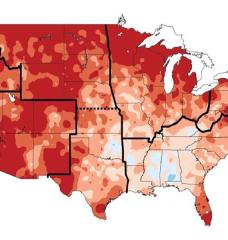
A new study reports global-warming-attributed trends in monthly-averaged maximum daily temperature for every U.S. state. Shown here are temperature changes (highest increases in deeper red and dark orange) between 1991 and 2012 compared to the average temperature between 1901 and 1960.
PostOctober 14, 2026

Researchers improve weather forecasts looking two to six weeks out

MIT News
A new technique significantly improves weather forecasting beyond two weeks. The researchers developed a machine-learning model that learns to correct errors in existing forecasting models to improve their output over the two-to-six-week time frame, including for extreme weather events.
PodcastOctober 8, 2026

E11: Data centers and the race to power AI (part 2)

Ask MIT Climate Podcast
Ask MIT Climate

MIT Climate Knowledge in Your Inbox


MIT Groups Log In

Log In

Footer

  • About
  • Terms & Conditions
  • Privacy Policy
  • Accessibility
  • Contact
MIT Climate Project
MIT
  • Instagram
  • TikTok
  • YouTube
  • Simplecast
Communicator Award Winner