by: Gilbert E. Metcalf
In New England, ISO New England (ISO-NE) is responsible for operating wholesale power markets and ensuring adequate capacity to serve load throughout the year. Theory suggests that competitive power markets should incentivize adequate capacity to serve load in all scenarios. In practice, however, a variety of real-world market impediments preclude that theoretic outcome. As a result, RTOs and ISOs have fallen back on other approaches to ensuring adequate capacity, including the introduction of capacity markets.
ISO-NE holds annual capacity auctions to lock in capacity for future years and charges load serving entities (LSEs) for that capacity. Charges to LSEs are based on their share of system load in the single highest peak hour during the summer each year. This creates incentives for LSEs to predict the peak hour and undertake measures to reduce load during that hour. The Concord Municipal Light Plant (CMLP), a small municipally owned utility in Concord, MA, has implemented an alert program to encourage residential consumers to reduce demand during a potential peak alert hour in the months of June through September.
This paper measures whether and how much these informational alerts lower the utility’s load during those hours. Using hourly data in the summer months when alerts are sent over the years 2013 to 2024, I estimate that the alerts reduce load demand by 0.714 MW (roughly two percent) during peak alert hours. Depending on ISO-NE’s cost of purchasing capacity in a given year, the benefits of a small reduction in load at peak can be substantial for a peak alert program that has almost zero cost.
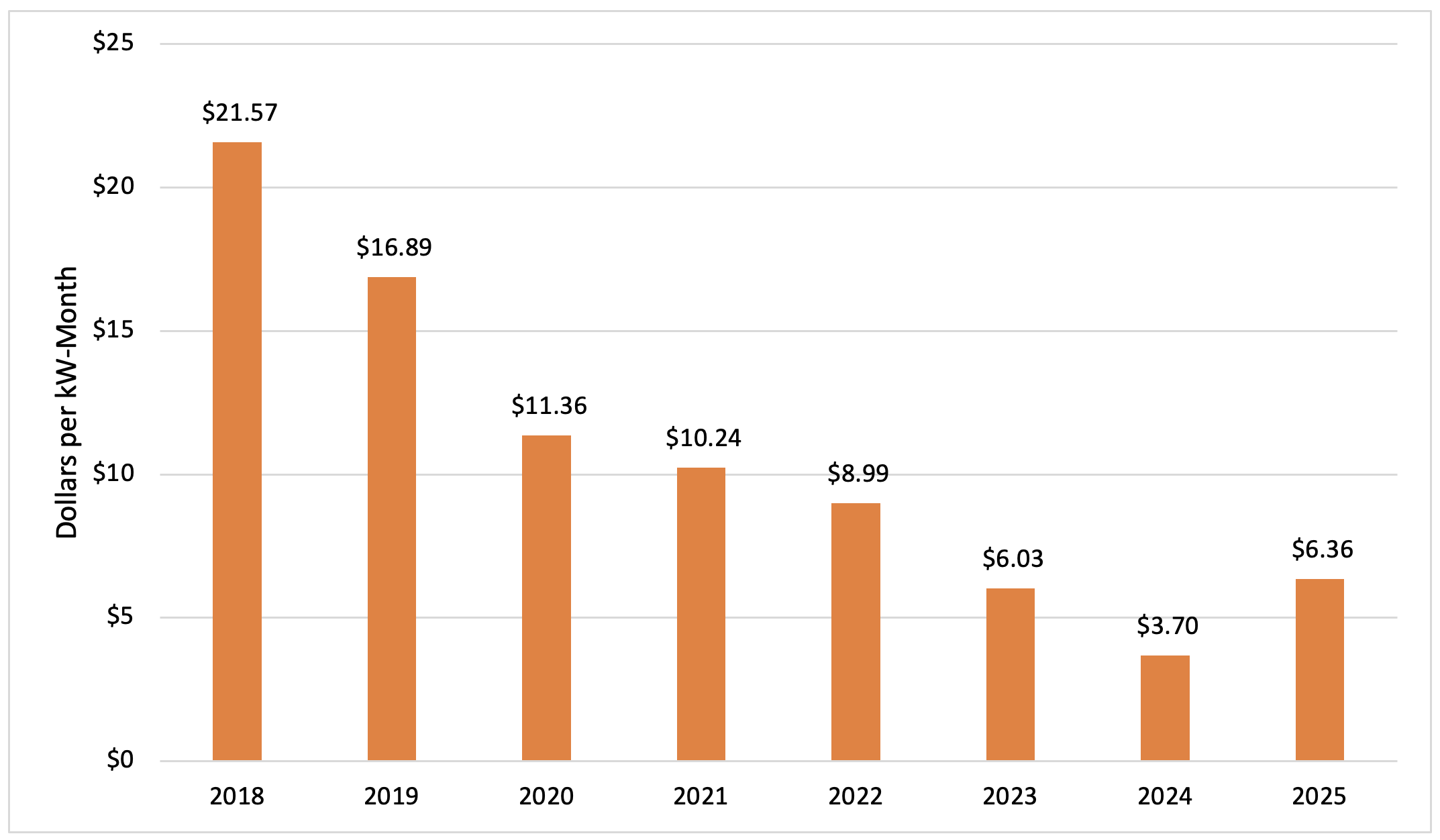
Figure 1. Value of reducing peak demand at system peak by 1 kilowatt.
Capacity costs are non-trivial for CMLP. Its annual payments in 2022 came to over $3.3 million a year. Reducing CMLP’s peak can bring about substantial savings. The value of reducing CMLP’s coincident peak per kilowatt in 2022, for example, was $8.993. On a megawatt basis, this is $8,993 per month or $107,921 annually. Figure 1 shows the value to the local municipal utility of reducing demand at the system peak by 1 kilowatt in each of the past 8 years. The expected savings have declined over time but are beginning to rise again and are anticipated to rise further, given ISO-NE’s projections of rising clearing prices in the forward capacity auction over the next few years.
As noted above, my preferred estimate of the impact of the peak alert program is to reduce the coincident peak by 0.714 MWs. Conditional on a peak alert being called for the hour that CMLP’s coincident peak occurs, the value of the program, on average, is 0.714 x $107,921 or $77,056 in 2022. This assumes CMLP correctly identifies the ISO-NE peak hour each year. In actuality, CMLP calls an alert for an hour that turns out to be the ISO-NE peak hour for that year in eleven out of the sixteen years that the alert program has been in effect. The expected value of the peak alert program then is:
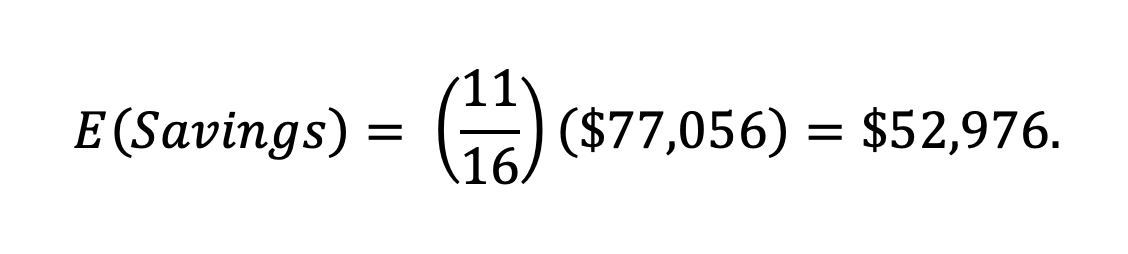
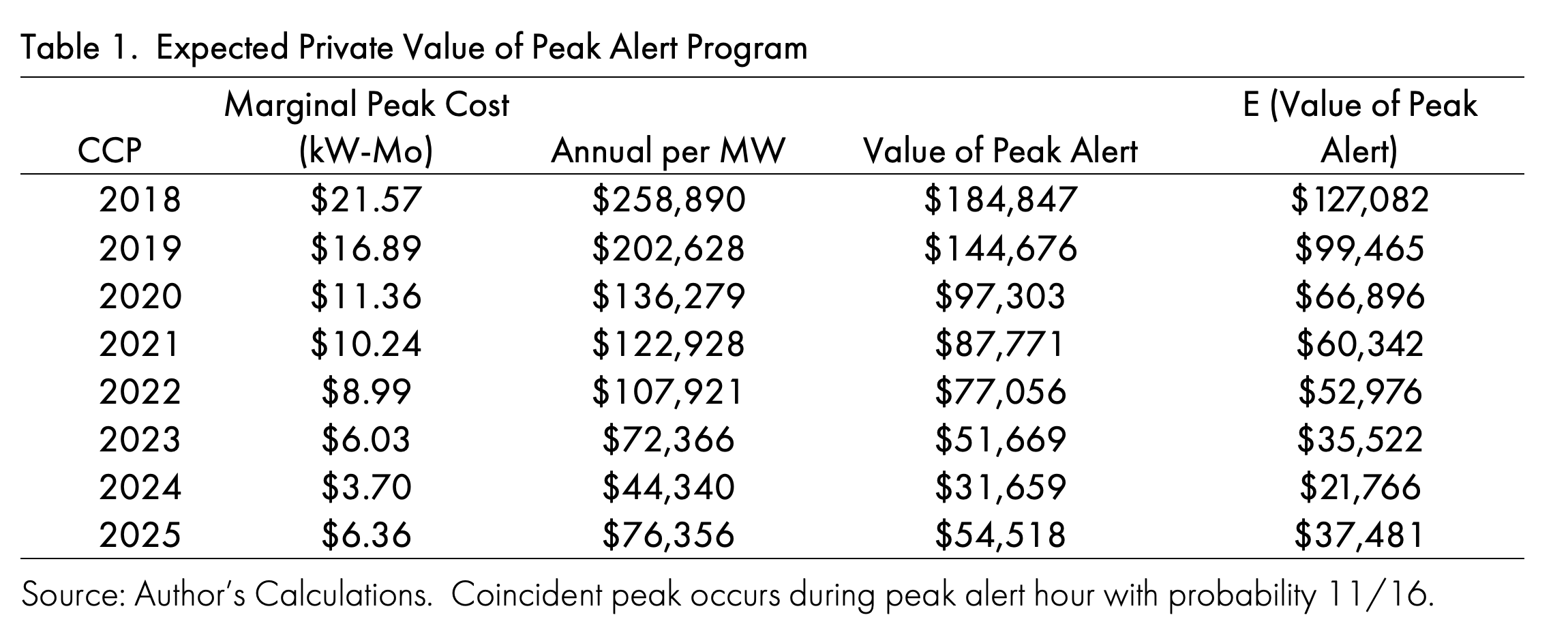
Table 1 reports the yearly expected savings to CMLP from its peak alert program. Expected savings have declined from just under $130,000 to a little more than $37,000 in year ending May 2025. While the auction clearing price for capacity in the forward capacity market has trended downward until CCP 2024 and been flat for the following three years, it jumped 38 percent in the auction for CCP 2028, reflecting higher costs of new potential entry due to inflation (and higher expected costs in future years).
The private benefits to CMLP from this program are substantial but come at the cost of shifting capacity costs on to other LSEs in ISO-NE. There are social benefits from the program, however. But I find that those social benefits are swamped by the private benefits. These private benefits arise, however, by shifting capacity costs onto other utilities and load customers in the region. This, of course, suggests an unproductive competition where ISO-NE LSE’s implement similar programs to reduce peak demand during the hour that ISO-NE is predicted to hit its annual peak. A focus on reducing this singular hour of demand is unlikely to reduce overall peak demand and the need to have capacity available for high-demand summer hours. Such a competition would suggest that it would be fruitful for ISO-NE to consider alternative ways to allocate capacity charges across its customers that don’t focus on a single peak hour of the year to allocate annual charges.