Climate
Search

Main navigation

  • Climate 101
    • What We Know
    • What Can Be Done
    • Climate Primer
  • Explore
    • Podcast
    • Explainers
    • Climate Questions
    • For Educators
  • MIT Action
    • News
    • Events
    • Resources
  • Search
MIT

Main navigation

  • Climate 101
    • What We Know
    • What Can Be Done
    • Climate Primer
  • Explore
    • Podcast
    • Explainers
    • Climate Questions
    • For Educators
  • MIT Action
    • News
    • Events
    • Resources
  • Search
PostApril 29, 2021

How megacities could lead the fight against climate change

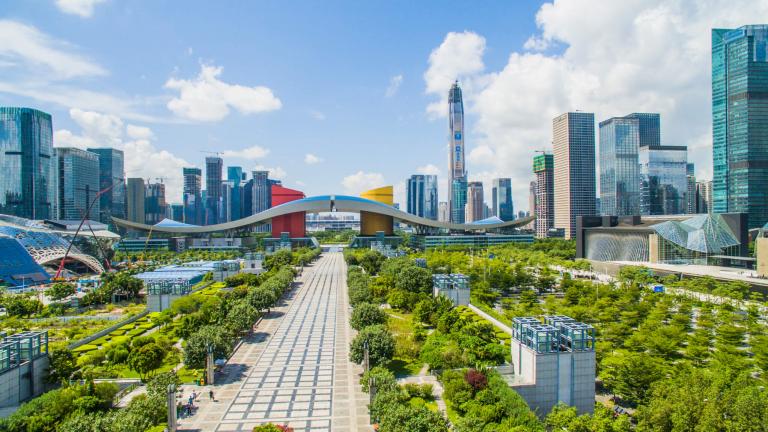
In 2050, 2.5 billion more people will live in cities than do today. As the world grows more urbanized, many cities are becoming more populous while also trying to reduce carbon emissions and blunt the impacts of climate change.

In the coming decades, cities will be engines of economic growth. But they must also play a key role in confronting climate change; the world’s 100 most populous cities are responsible for roughly one-fifth of global carbon emissions. 

Some of the world’s biggest cities—called megacities—are rising to this challenge. However, these urban areas vary greatly in how efficient they are and how much they will grow. Seeing how they stack up can help us identify where our greatest opportunities are to reduce emissions, write Gabrielle Merite and Andre Vitorio for the MIT Technology Review.

Read the full article at: https://www.technologyreview.com/2021/04/28/1023236/how-megacities-fight-climate-change/

Image by: Getty

 

by MIT Technology Review
Topics
Adaptation
Cities & Planning
Energy

Related Posts

PostAugust 6, 2026

A new way to watch heat move through electronics

MIT News
To measure how heat moves through materials, MIT researchers use laser pulses (red) to heat a sample while ultrafast X-rays (purple) penetrate multiple material layers and measure changes as heat dissipates.
PostAugust 4, 2026

Reframing leadership as a design problem

MIT News
Nicholas de Monchaux is Weber-Shaughness Professor of Architecture at MIT, as well as professor of urban studies and planning and affiliated faculty with the Program in Science, Technology, and Society.
PostAugust 4, 2026

Solving the solvent problem

MIT Department of Nuclear Science and Engineering
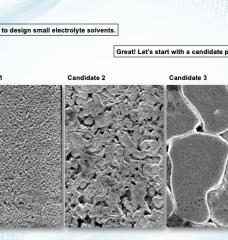
A machine-learning-guided pipeline enables researchers to generate solvent candidate pools on demand, narrow the selections down, and experimentally test the most promising electrolyte recipes. These scanning electron microscopy images show the morphology of sodium-metal deposits obtained from three different electrolyte candidates.
PostAugust 3, 2026

CS3 Lecture Series: Fundamentals of Climate Science and Policy

MIT OCW
Photo of session attendees watching a speaker's talk.

MIT Climate Knowledge in Your Inbox


MIT Groups Log In

Log In

Footer

  • About
  • Terms & Conditions
  • Privacy Policy
  • Accessibility
  • Contact
MIT Climate Project
MIT
  • Instagram
  • TikTok
  • YouTube
  • Simplecast
Communicator Award Winner