Climate
Search

Main navigation

  • Climate 101
    • What We Know
    • What Can Be Done
    • Climate Primer
  • Explore
    • Podcast
    • Explainers
    • Climate Questions
    • For Educators
  • MIT Action
    • News
    • Events
    • Resources
  • Search
MIT

Main navigation

  • Climate 101
    • What We Know
    • What Can Be Done
    • Climate Primer
  • Explore
    • Podcast
    • Explainers
    • Climate Questions
    • For Educators
  • MIT Action
    • News
    • Events
    • Resources
  • Search
PostMay 16, 2017

Food Movement Helps Address Climate Crisis

Just finished J Purdy’s After Nature: A Politics for the Anthropocene – which makes clear that a sharp distinction between humans and “nature” is no longer useful or accurate. 

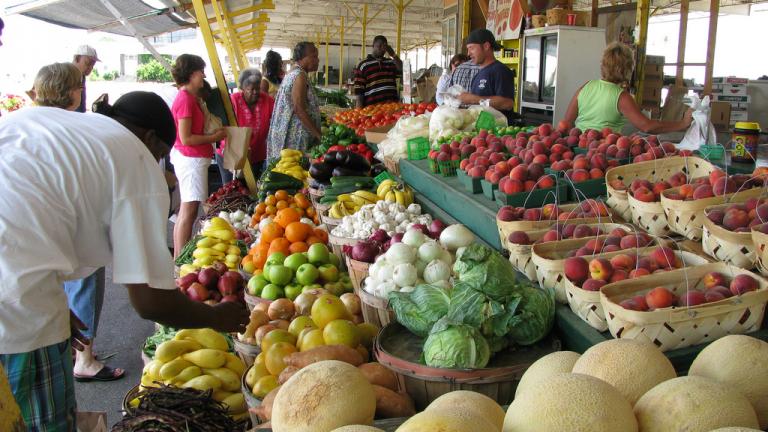
Our world is increasingly one we’ve made – in which politics, economy and ecology are all in near-perpetual crisis.  Purdy suggests that these crises, as revealed by climate change, are also opportunities for taking shared global responsibility.  He sees the current food movement, including locally oriented agriculture, as offering a way to make abstract ecological values (e.g., interdependence, integration, humility) concrete, and part of our daily lives.  Some question include:

How does or could the food movement help address crises of politics, economy and ecology?

What incentives could move industrial agriculture toward lower fossil fuel intensity?  Which incentives could increase the share of locally-oriented farms?

What would best communicate the climate implications of people’s food choices and encourage them to move to a more climate-friendly diet?

Any thoughts about these questions?  What questions do you have?

by Dave Damm-Luhr
Topics
Finance & Economics

Related Posts

PodcastApril 9, 2026

Re-air and update: Carbon pricing

Ask MIT Climate Podcast
Ask MIT Climate
PostApril 6, 2026

Connecting climate and sustainability: Synergies and tradeoffs

MIT Center for Sustainability Science and Strategy
MIT Global Change Forum 48
PostApril 3, 2026

Toward cheaper, cleaner hydrogen production

MIT News
“Creating high-impact technologies is always fun,” says Sobek.
PostMarch 18, 2026

Sustaining diplomacy amid competition in US-China relations

MIT Energy Initiative
Nicholas Burns, former U.S. ambassador to the People’s Republic of China, emphasized the impact that the two countries have on the global order, and how that influence could be directed toward addressing climate change.

MIT Climate Knowledge in Your Inbox


MIT Groups Log In

Log In

Footer

  • About
  • Terms & Conditions
  • Privacy Policy
  • Accessibility
  • Contact
MIT Climate Project
MIT
  • Instagram
  • TikTok
  • YouTube
  • Simplecast
Communicator Award Winner