Climate
Search

Main navigation

  • Climate 101
    • What We Know
    • What Can Be Done
    • Climate Primer
  • Explore
    • Podcast
    • Explainers
    • Climate Questions
    • For Educators
  • MIT Action
    • News
    • Events
    • Resources
  • Search
MIT

Main navigation

  • Climate 101
    • What We Know
    • What Can Be Done
    • Climate Primer
  • Explore
    • Podcast
    • Explainers
    • Climate Questions
    • For Educators
  • MIT Action
    • News
    • Events
    • Resources
  • Search
PostJuly 22, 2020

Environmental Technologies in Buildings

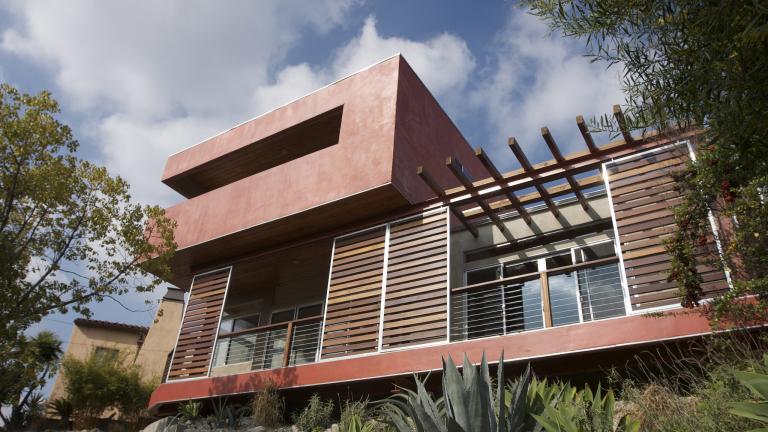
Photo of a modern house with movable wooden slat panels to shade large exterior windows.

This course focuses on the thermal, luminous, and acoustic behavior of buildings, examining the basic scientific principles underlying these phenomena and introducing students to technologies and analysis techniques for designing comfortable indoor environments. Students are challenged to apply these techniques and explore the role light, energy, and sound can play in shaping architecture.

The OCW course website features a complete set of lecture slides, and assignments that use several freely-available software packages.

Access the materials: https://ocw.mit.edu/courses/architecture/4-401-environmental-technologies-in-buildings-fall-2018/

Taught by: Prof. Christoph Reinhart

by MIT OCW
Topics
Buildings
Education
Energy

Related Posts

PostAugust 18, 2026

Steady Heat, Flexible Power: Flexibility by Proxy in Nuclear-Thermal Energy...

MIT Center for Energy and Environmental Policy Research
rendering of energetic plasma
PostAugust 11, 2026

Researcher Profile: 3 questions with Jennifer Morris

MIT Center for Sustainability Science and Strategy
Jennifer Morris moderating a panel at the 48th Global Change Forum in March 2026 (Photo by Jamie Bartholomay)
PostAugust 6, 2026

A new way to watch heat move through electronics

MIT News
To measure how heat moves through materials, MIT researchers use laser pulses (red) to heat a sample while ultrafast X-rays (purple) penetrate multiple material layers and measure changes as heat dissipates.
PostAugust 4, 2026

Reframing leadership as a design problem

MIT News
Nicholas de Monchaux is Weber-Shaughness Professor of Architecture at MIT, as well as professor of urban studies and planning and affiliated faculty with the Program in Science, Technology, and Society.

MIT Climate Knowledge in Your Inbox


MIT Groups Log In

Log In

Footer

  • About
  • Terms & Conditions
  • Privacy Policy
  • Accessibility
  • Contact
MIT Climate Project
MIT
  • Instagram
  • TikTok
  • YouTube
  • Simplecast
Communicator Award Winner