Climate
    • What We Know
    • What Can Be Done
    • Climate Primer
    • Podcast
    • Explainers
    • Climate Questions
    • For Educators
    • News
    • Events
    • Resources
  • Search
Search
MIT

Main navigation

    • What We Know
    • What Can Be Done
    • Climate Primer
    • Podcast
    • Explainers
    • Climate Questions
    • For Educators
    • News
    • Events
    • Resources
  • Search
PostJanuary 17, 2019

EAPS Adds “Computational Earth, Atmospheric & Planetary Sciences” to its PhD Offerings

In December, the MIT Department of Earth, Atmospheric and Planetary Sciences (EAPS) expanded its academic program to include a new doctoral field: Computational Earth, Atmospheric & Planetary Sciences. EAPS is the latest department to participate in the Computational Science and Engineering (CSE) PhD program, which has been offering doctoral degrees in computation since 2013. This move resonates with the Institute’s building awareness of the advantages provided by education based in computation, which recently culminated with the creation of the MIT Schwarzman College of Computing.

Read the full story at EAPS News

by MIT Department of Earth Atmospheric and Planetary Sciences
Topics
Climate Modeling
Education

Related Posts

PostNovember 2, 2026

PODCAST: Climate Reveal (Season 3, Episode 1) - Tipping Points

MIT Center for Sustainability Science and Strategy
Climate Reveal Podcast
PostOctober 30, 2026

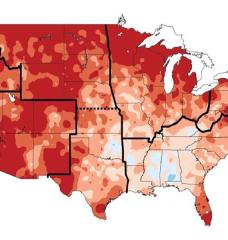
Study pinpoints states with steepest warming trends since 1980

MIT News
A new study reports global-warming-attributed trends in monthly-averaged maximum daily temperature for every U.S. state. Shown here are temperature changes (highest increases in deeper red and dark orange) between 1991 and 2012 compared to the average temperature between 1901 and 1960.
PostOctober 26, 2026

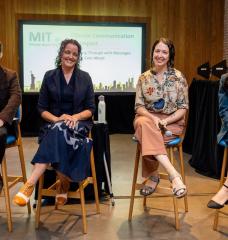
At New York Climate Week 2026, MIT connects with a global network

MIT News
Aaron Krol, managing editor of the MIT Climate Change Engagement Program, led MIT’s Climate Week NYC session “Climate Communication for Impact,” which featured (left to right) Allison Crimmons of Talking Climate, Arielle Tannenbaum of Climate Central, and Mallika Talwar of Yale University.
PostOctober 14, 2026

Researchers improve weather forecasts looking two to six weeks out

MIT News
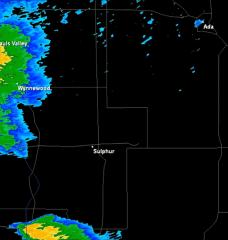
A new technique significantly improves weather forecasting beyond two weeks. The researchers developed a machine-learning model that learns to correct errors in existing forecasting models to improve their output over the two-to-six-week time frame, including for extreme weather events.

MIT Climate Knowledge in Your Inbox


MIT Groups Log In

Log In

Footer

  • About
  • Terms & Conditions
  • Privacy Policy
  • Accessibility
  • Contact
MIT Climate Project
MIT
  • Instagram
  • TikTok
  • YouTube
  • Simplecast
Communicator Award Winner