Climate
    • What We Know
    • What Can Be Done
    • Climate Primer
    • Podcast
    • Explainers
    • Climate Questions
    • For Educators
    • News
    • Events
    • Resources
  • Search
Search
MIT

Main navigation

    • What We Know
    • What Can Be Done
    • Climate Primer
    • Podcast
    • Explainers
    • Climate Questions
    • For Educators
    • News
    • Events
    • Resources
  • Search
PostJuly 22, 2020

D-Lab: Water, Climate Change, and Health

Photo of a diorama, with trees, grassy areas, and a stream, demonstrating water runoff and absorption.

D-Lab: Water, Climate Change, and Health is a project-based, experiential, and transdisciplinary course. Together with peers and experts, we will explore the vitally important interface of water, climate change, and health. This course addresses mitigation and adaptation to climate change as it pertains to water and health. Water-borne illness, malnutrition, and vector-borne diseases represent the top three causes of morbidity and mortality in regions of our focus. Students submit a term project, setting the stage for a lifelong commitment to communicating climate science to a broad public.

The OCW course website features lecture notes, an extensive reading list, and examples of student projects.

Access the materials: https://ocw.mit.edu/courses/edgerton-center/ec-719-d-lab-water-climate-change-and-health-spring-2019/index.htm

Taught by: Susan Murcott, Juliet Simpson

by MIT OCW
Topics
Humanities & Social Science
Food, Water & Agriculture
Health & Medicine

Related Posts

PostSeptember 21, 2026

Batteries that safely break down in the GI tract could improve ingestible d...

MIT News
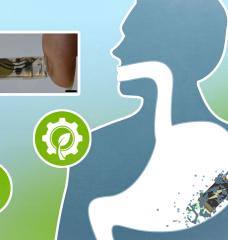
Using materials that are safe for human consumption, MIT researchers have created tiny batteries that could be used to power ingestible electronic devices. The entire battery is bioresorbable, meaning that it can be fully broken down and absorbed by the body.
PostSeptember 15, 2026

3 Questions: Putting nuclear waste into perspective

MIT Department of Nuclear Science and Engineering
“I believe that selecting a geologically sound site and communicating the science clearly — in terms that anyone can grasp — are the essential first steps toward achieving the permanent and safe disposal of nuclear waste,” says Haruko Wainwright.
PostSeptember 8, 2026

Study predicts large disparities in access to food, water, and energy in 20...

MIT News
A new study focuses on forecasting future access to food, water, and energy in 2050.
PostAugust 31, 2026

Playing against climate risk

MIT News
Left to right: Researchers Anamitra Saha and Sai Ravela of the MIT Department of Earth, Atmospheric and Planetary Sciences, and Jayanta Basu of the University of Calcutta design the board for a "snakes and ladders" game. The game is the first step in encouraging community members to use an app-based simulation that suggests solutions to their unique geographical and environmental challenges.

MIT Climate Knowledge in Your Inbox


MIT Groups Log In

Log In

Footer

  • About
  • Terms & Conditions
  • Privacy Policy
  • Accessibility
  • Contact
MIT Climate Project
MIT
  • Instagram
  • TikTok
  • YouTube
  • Simplecast
Communicator Award Winner