Climate
Search

Main navigation

  • Climate 101
    • What We Know
    • What Can Be Done
    • Climate Primer
  • Explore
    • Podcast
    • Explainers
    • Climate Questions
    • For Educators
  • MIT Action
    • News
    • Events
    • Resources
  • Search
MIT

Main navigation

  • Climate 101
    • What We Know
    • What Can Be Done
    • Climate Primer
  • Explore
    • Podcast
    • Explainers
    • Climate Questions
    • For Educators
  • MIT Action
    • News
    • Events
    • Resources
  • Search
PostOctober 18, 2017

Climate & Buildings: Where's Your Cutting Edge?

Globally, nearly 20% of energy-related greenhouse gas emissions comes from buildings, while In the US, nearly 40% of CO2 emissions comes from buildings. Since the climate clock is ticking ever more loudly we urgently need to know…

What already field-tested innovations have shown their mettle in terms of solving climate problems, while also being affordable globally?

I’m a fan of a number of such cutting-edge innovations, two of which in the residential sector include

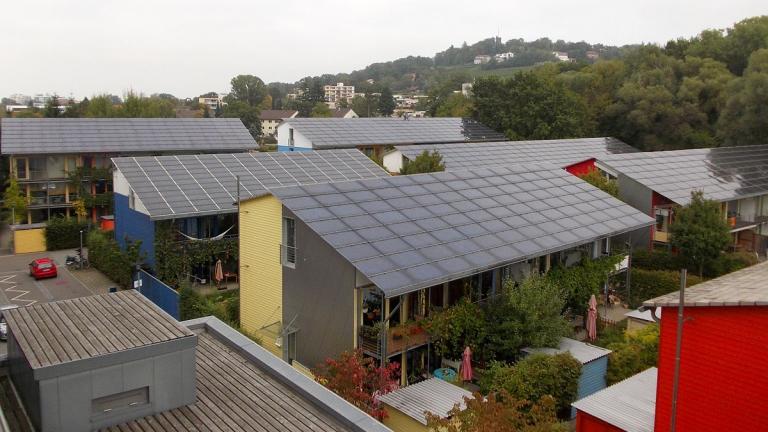
  1. Energy-Plus houses in Germany (pictured above) that are so energy efficient that they generate monthly rebate checks for residents from the local utility that buys the surplus electricity that's generated; and
  2. Earthship homes that are off the grid and
  • use primarily recycled (e.g., used tires) and natural materials (e.g., dirt);
  • incorporate passive thermal heating and cooling;
  • get power from the sun and wind;
  • harvest and use rain water;
  • enable growing food inside; and
  • have self-contained sewage treatment.

Earthship homes started in the southwest of the US and have been built in six continents and in many different conditions.

What have you spotted that’s worth a closer look?

by Dave Damm-Luhr
Topics
Buildings
Energy
Finance & Economics

Related Posts

PostMarch 18, 2026

Sustaining diplomacy amid competition in US-China relations

MIT Energy Initiative
Nicholas Burns, former U.S. ambassador to the People’s Republic of China, emphasized the impact that the two countries have on the global order, and how that influence could be directed toward addressing climate change.
PostMarch 18, 2026

Turning extreme heat into large-scale energy storage

MIT News
In Fourth Power’s thermal battery, thermophotovoltaic (TPV) power sticks can be moved in and out of the light, which allows the system to respond quickly and flexibly to grid needs.
PostMarch 4, 2026

Renewables and Electricity Affordability: Untangling Correlation from Causa...

MIT Center for Energy and Environmental Policy Research
People reviewing their electricity bills
PostMarch 2, 2026

Coping with catastrophe

MIT News
Miho Mazereeuw is the author of the new book, “Design Before Disaster: Japan’s Culture of Preparedness,” published by the University of Virginia Press.

MIT Climate Knowledge in Your Inbox


MIT Groups Log In

Log In

Footer

  • About
  • Terms & Conditions
  • Privacy Policy
  • Accessibility
  • Contact
MIT Climate Project
MIT
  • Instagram
  • TikTok
  • YouTube
  • Simplecast
Communicator Award Winner