Climate
Search

Main navigation

  • Climate 101
    • What We Know
    • What Can Be Done
    • Climate Primer
  • Explore
    • Podcast
    • Explainers
    • Climate Questions
    • For Educators
  • MIT Action
    • News
    • Events
    • Resources
  • Search
MIT

Main navigation

  • Climate 101
    • What We Know
    • What Can Be Done
    • Climate Primer
  • Explore
    • Podcast
    • Explainers
    • Climate Questions
    • For Educators
  • MIT Action
    • News
    • Events
    • Resources
  • Search
PostMay 21, 2020

Burning wood is not a solution to climate change

BY JOHN STERMAN, PHILIP DUFFY, WILLIAM MOOMAW, AND JULIETTE N. ROONEY-VARGA

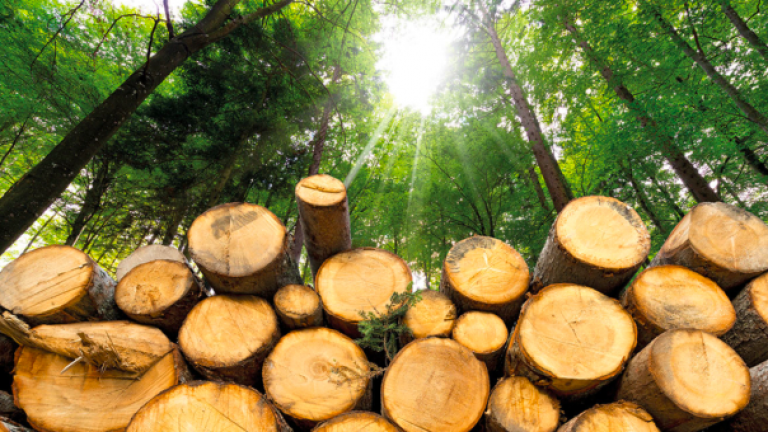
We appreciate the benefit of creating economic incentives for actions that address climate change and, in particular, for preserving forests. However, we are “skeptical” of the Orwellian notion that promoting the burning of trees results in more forests, as the authors of an op-ed previously published in The Hill suggested. 

Furthermore, it is clear from a scientific perspective that burning wood is bad for climate. It should not be promoted as a way to incentivize forest preservation and is not in fact a “win-win.”

Science is clear: To prevent unmanageable consequences from climate change, humanity needs to stop increasing carbon dioxide in the atmosphere by mid-century. Even that is not enough: we also need to remove carbon from the atmosphere to compensate for decades of delayed climate action.

To read Professor Sterman's full article, visit The Hill

by MIT Sloan Sustainability Initiative
Topics
Energy
Health & Medicine
Government & Policy

Related Posts

PostAugust 6, 2026

A new way to watch heat move through electronics

MIT News
To measure how heat moves through materials, MIT researchers use laser pulses (red) to heat a sample while ultrafast X-rays (purple) penetrate multiple material layers and measure changes as heat dissipates.
PostAugust 4, 2026

Solving the solvent problem

MIT Department of Nuclear Science and Engineering
A machine-learning-guided pipeline enables researchers to generate solvent candidate pools on demand, narrow the selections down, and experimentally test the most promising electrolyte recipes. These scanning electron microscopy images show the morphology of sodium-metal deposits obtained from three different electrolyte candidates.
PostAugust 3, 2026

Social Problems of Nuclear Energy

MIT OCW
Photo of two large cooling towers emitting some steam.
PostAugust 3, 2026

CS3 Lecture Series: Fundamentals of Climate Science and Policy

MIT OCW
Photo of session attendees watching a speaker's talk.

MIT Climate Knowledge in Your Inbox


MIT Groups Log In

Log In

Footer

  • About
  • Terms & Conditions
  • Privacy Policy
  • Accessibility
  • Contact
MIT Climate Project
MIT
  • Instagram
  • TikTok
  • YouTube
  • Simplecast
Communicator Award Winner