Climate
Search

Main navigation

  • Climate 101
    • What We Know
    • What Can Be Done
    • Climate Primer
  • Explore
    • Podcast
    • Explainers
    • Climate Questions
    • For Educators
  • MIT Action
    • News
    • Events
    • Resources
  • Search
MIT

Main navigation

  • Climate 101
    • What We Know
    • What Can Be Done
    • Climate Primer
  • Explore
    • Podcast
    • Explainers
    • Climate Questions
    • For Educators
  • MIT Action
    • News
    • Events
    • Resources
  • Search
PostJune 15, 2021

Aggregate Confusion Project targets better ways to judge corporate behavior

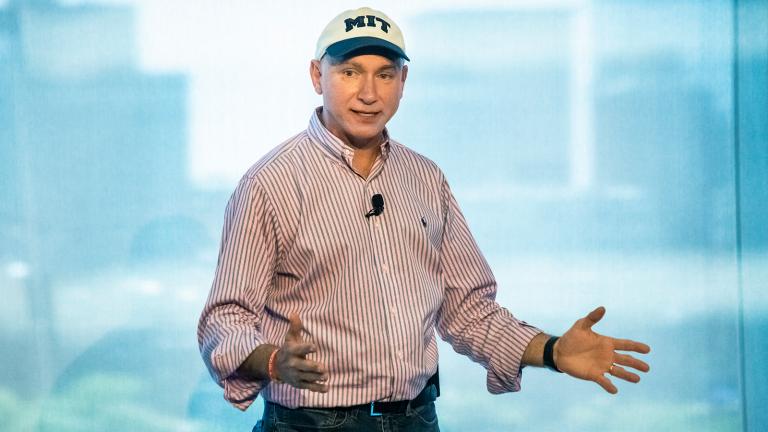
Roberto Rigobon PhD ’97 heads the Aggregate Confusion Project. Photo: Courtesy of MIT Sloan
Photo Credit
Photo: Courtesy of MIT Sloan

HOW HARD IS IT TO MAKE ETHICAL FINANCIAL DECISIONS? Roberto Rigobon PhD ’97, the Society of Sloan Fellows Professor of Management at MIT, offers an example. Say you want to support animal rights. Should you buy vegan clothes? They’re often made of plastic, which may end up in a landfill or the ocean. So, he asks: “How many seals do you want to kill to save one sheep?”

Rigobon’s work bluntly tackles exactly these kinds of thorny ethical questions. Societally, we measure importance poorly, he explains, making decisions as if the world were made of single issues. Rigobon describes himself as obsessed with measuring options more effectively and incentivizing different behaviors earlier. Such work is essential for addressing a time-sensitive crisis like global warming, he says, and it is at the heart of the Aggregate Confusion Project.

Continue reading. 

by MIT Spectrum
Topics
Cities & Planning
Energy
Finance & Economics
Industry & Manufacturing

Related Posts

PostJanuary 21, 2026

Electrifying boilers to decarbonize industry

MIT News
“Steam is the most important working fluid ever,” says AtmosZero co-founder Addison Stark.
PostJanuary 13, 2026

Understanding ammonia energy’s tradeoffs around the world

MIT News
“Before this, there was no harmonized datasets quantifying the impacts of this transition,” says lead author Woojae Shin. “It’s filling a major knowledge gap.”
PostNovember 25, 2025

Unlocking ammonia as a fuel source for heavy industry

MIT News
Because of the power density advantages of ammonia over renewables and batteries, Amogy is targeting power-hungry industries like maritime shipping, power generation, construction, and mining.
PostNovember 24, 2025

How artificial intelligence can help achieve a clean energy future

MIT Energy Initiative
Researchers at MIT and elsewhere are investigating how AI can be harnessed to support the clean energy transition.

MIT Climate Knowledge in Your Inbox


MIT Groups Log In

Log In

Footer

  • About
  • Terms & Conditions
  • Privacy Policy
  • Accessibility
  • Contact
MIT Climate Project
MIT
  • Instagram
  • TikTok
  • YouTube
  • Simplecast
Communicator Award Winner