Climate
Search

Main navigation

  • Climate 101
    • What We Know
    • What Can Be Done
    • Climate Primer
  • Explore
    • Podcast
    • Explainers
    • Climate Questions
    • For Educators
  • MIT Action
    • News
    • Events
    • Resources
  • Search
MIT

Main navigation

  • Climate 101
    • What We Know
    • What Can Be Done
    • Climate Primer
  • Explore
    • Podcast
    • Explainers
    • Climate Questions
    • For Educators
  • MIT Action
    • News
    • Events
    • Resources
  • Search
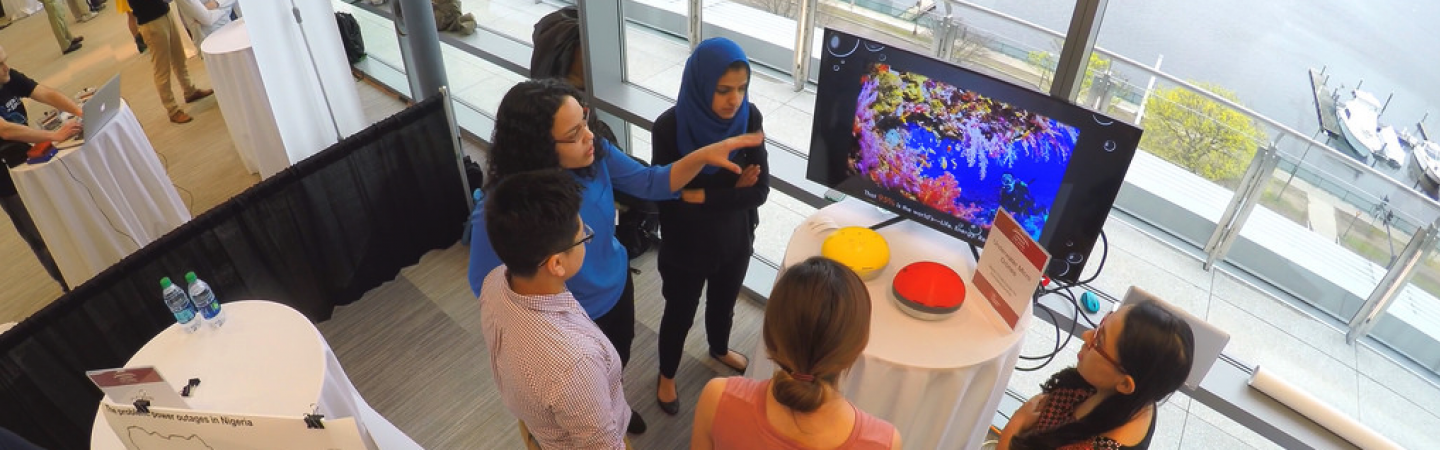
Students gather around a display of a coral reef at an MIT event

Climate News at MIT

The latest climate change research and action happening in and around MIT.
Filter
Topics
  • - Any -
  • Adaptation
  • Arctic & Antarctic
  • Arts & Communication
  • Atmosphere
  • Biodiversity
  • Buildings
  • Carbon Capture
  • Carbon Removal
  • Cities & Planning
  • Climate Modeling
  • Education
  • Energy
    • Batteries, Storage & Transmission
    • Electrification
    • Energy Efficiency
    • Fossil Fuels
    • Nuclear & Fusion Energy
    • Renewable Energy
  • Finance & Economics
    • Carbon Pricing
  • Food, Water & Agriculture
  • Forests
  • Geoengineering
  • Government & Policy
    • Advocacy & Activism
    • International Agreements
    • National Security
  • Health & Medicine
  • Humanities & Social Science
    • Climate Justice
  • Industry & Manufacturing
  • MIT Action
  • Oceans
    • Sea Level Rise
  • Transportation
    • Air Travel
    • Alternative Fuels
    • Cars
    • Freight
    • Public Transportation
  • Waste
  • Weather & Natural Disasters
    • Drought
    • Flooding
    • Heatwaves
    • Hurricanes
    • Wildfires
Content type
  • - Any -
  • Podcast
  • Post
HeatwavesFreightClear All
PostJanuary 5, 2026

New research may help scientists predict when a humid heat wave will break

MIT News
MIT scientists have identified a key atmospheric condition that determines how hot and humid midlatitude regions like the Midwest can become — and how intense related storms may be.
PostNovember 25, 2025

Unlocking ammonia as a fuel source for heavy industry

MIT News
Because of the power density advantages of ammonia over renewables and batteries, Amogy is targeting power-hungry industries like maritime shipping, power generation, construction, and mining.
PostOctober 20, 2025

MIT Maritime Consortium releases “Nuclear Ship Safety Handbook”

MIT Department of Mechanical Engineering
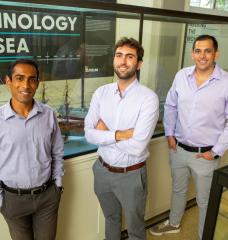
"The Nuclear Ship Safety Handbook" co-authors (left to right) Anthony Valiaveedu, Nat Edmonds, and Jose Izurieta pose in MIT's Hart Naval Gallery.
PostOctober 6, 2025

Report: Sustainability in supply chains is still a firm-level priority

MIT News
A new report by MIT researchers finds corporations are still very much seeking sustainability advances in their supply chains — but many need to improve the business metrics they use in this area.
PostAugust 21, 2025

Study links rising temperatures and declining moods

MIT News
“It's clear now, with our present study adding to findings from prior studies, that weather alters sentiment on a global scale,” Nick Obradovich says.
PostMay 27, 2025

New fuel cell could enable electric aviation

MIT News
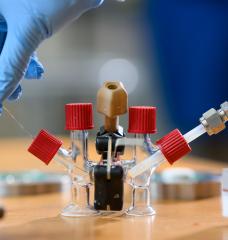
An H-cell modified with electrodes and an ion-conducting ceramic membrane to conduct sodium-air fuel cell experiments.
PostApril 8, 2025

Study: Burning heavy fuel oil with scrubbers is the best available option f...

MIT News
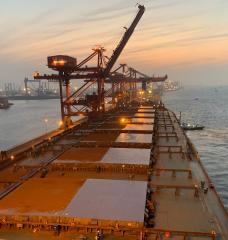
Pictured here is the Hedwig Oldendorff vessel at the Port of Taicang, China, prior to the start of the emission monitoring voyage.
PostMarch 26, 2025

MIT Maritime Consortium sets sail

MIT Department of Mechanical Engineering
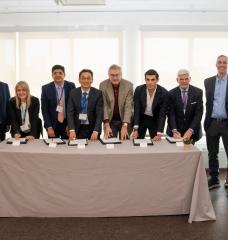
Representatives from across the MIT Maritime Consortium attended a signing ceremony at MIT. Left to right: Fotini Christia (MIT), Anantha Chandrakasan (MIT), Chara Papaefthymiou (Navios), Amulya Mohapatra (Foresight Group Services), Kwangpil Chang (HD KSOE), Chris Wiernicki (ABS), Miltiadis Marinakis (Capital), John Lycouris (Dorian LPG), Daniel Huttenlocher (MIT), and Themis Sapsis (MIT).
PostSeptember 24, 2024

Study evaluates impacts of summer heat in U.S. prison environments

MIT News
“In terms of environmental hazards, extreme heat causes some of the most acute impacts for incarcerated people,” says Ufuoma Ovienmhada.
PostJuly 17, 2024

Collaborative effort supports an MIT resilient to the impacts of extreme he...

MIT Office of Sustainability
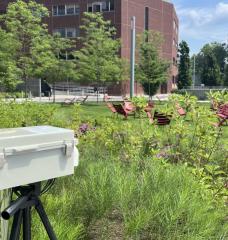
A heat sensor captures data in the Kendall/MIT Open Space.

Pagination

  • Current page1
  • Page2
  • Page3
  • Page4
  • Page5
  • Next page ›
1 - 10 of 60

MIT Climate Knowledge in Your Inbox


MIT Groups Log In

Log In

Footer

  • About
  • Terms & Conditions
  • Privacy Policy
  • Accessibility
  • Contact
MIT Climate Project
MIT
  • Instagram
  • TikTok
  • YouTube
  • Simplecast
Communicator Award Winner