Climate
    • What We Know
    • What Can Be Done
    • Climate Primer
    • Podcast
    • Explainers
    • Climate Questions
    • For Educators
    • News
    • Events
    • Resources
  • Search
Search
MIT

Main navigation

    • What We Know
    • What Can Be Done
    • Climate Primer
    • Podcast
    • Explainers
    • Climate Questions
    • For Educators
    • News
    • Events
    • Resources
  • Search
PostMay 6, 2019

We still need breakthroughs to clean the electricity grid

California is in pursuit of some of the most ambitious climate policies across the nation. The state is looking to cut its entire economy’s greenhouse-gas emissions to 40% below 1990 levels by 2030, create a carbon-free electricity system by 2045, and have an 80% cut in total emissions by 2050. In this article James Temple, MIT Technology Review's senior editor for energy, explores the analysis completed by the Energy Futures Initiative (EFI), a think tank that explored the feasibility of this plan. While the transition was deemed possible, it will not occur without new technological breakthroughs.

Read the full article at: https://www.technologyreview.com/s/613422/we-still-need-breakthroughs-t…

Image by: David McNew/Getty Images

by MIT Technology Review
Topics
Energy
Government & Policy

Related Posts

PostNovember 17, 2026

Tariffs, Global Value Chains, and the Incidence of Protection: Evidence fro...

MIT Center for Energy and Environmental Policy Research
PostNovember 2, 2026

Powering up for a pivotal moment

MIT Energy Initiative
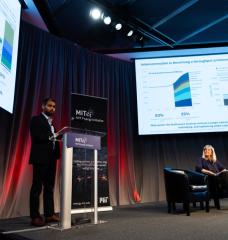
At the 2026 Energizing@MIT: MITEI’s Annual Research Conference, MITEI principal research scientist Deepjyoti Deka (left) presented his Seed Innovation Fund project on accelerating energy planning in the era of data centers through generative AI.
PostOctober 30, 2026

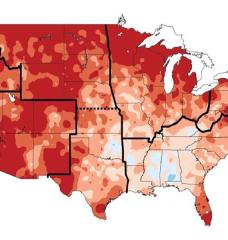
Study pinpoints states with steepest warming trends since 1980

MIT News
A new study reports global-warming-attributed trends in monthly-averaged maximum daily temperature for every U.S. state. Shown here are temperature changes (highest increases in deeper red and dark orange) between 1991 and 2012 compared to the average temperature between 1901 and 1960.
PostOctober 28, 2026

3 Questions: Why infrastructure is entering a defining era

MIT Civil and Environmental Engineering
“Designing infrastructure is a highly transdisciplinary, sociotechnical endeavor, involving social, technical, and economic considerations. Understanding how these systems are designed is increasingly important because they are becoming more complex, making decision-making particularly difficult,” says Ali Jadbabaie, JR East Professor and head of the Department of Civil and Environmental Engineering.

MIT Climate Knowledge in Your Inbox


MIT Groups Log In

Log In

Footer

  • About
  • Terms & Conditions
  • Privacy Policy
  • Accessibility
  • Contact
MIT Climate Project
MIT
  • Instagram
  • TikTok
  • YouTube
  • Simplecast
Communicator Award Winner