Climate
    • What We Know
    • What Can Be Done
    • Climate Primer
    • Podcast
    • Explainers
    • Climate Questions
    • For Educators
    • News
    • Events
    • Resources
  • Search
Search
MIT

Main navigation

    • What We Know
    • What Can Be Done
    • Climate Primer
    • Podcast
    • Explainers
    • Climate Questions
    • For Educators
    • News
    • Events
    • Resources
  • Search
PostFebruary 2, 2022

Water Diplomacy

Photo of a large partially-completed dam in a broad river valley.
Photo Credit
The Grand Ethiopian Renaissance Dam on the Blue Nile River, under construction since 2012. (Photo taken in July 2016, courtesy of Water Alternatives on Flickr. License: CC BY-NC.)

This course, which examines ways of resolving conflicts over the allocation of water resources, is designed to raise student awareness of the state of freshwater resources globally and the need for more effective water governance. It builds on several case studies of transboundary water conflicts (Nile River, US-Mexico, Indus/Jordan River) while also helping students develop the negotiation and mediation skills they will need to resolve water disputes.

The OCW course website includes videos of two lectures, and samples of student video presentations and papers on water conflict case studies.

Instructors: Dr. Animesh Gain, Prof. Lawrence Susskind
View the course

by MIT OCW
Topics
Adaptation
Food, Water & Agriculture
International Agreements
Climate Justice

Related Posts

PostNovember 6, 2026

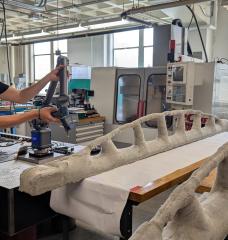
Fabric molds could bring material-saving concrete beams within reach

MIT Civil and Environmental Engineering
Mark Hellrich SM ’26, lead author of a new study on fabric molds for concrete, scans fabric-formed beams in the lab to compare their shape with the original computer design.
PostOctober 30, 2026

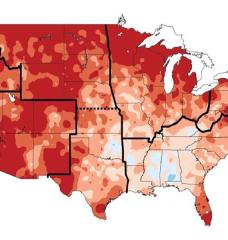
Study pinpoints states with steepest warming trends since 1980

MIT News
A new study reports global-warming-attributed trends in monthly-averaged maximum daily temperature for every U.S. state. Shown here are temperature changes (highest increases in deeper red and dark orange) between 1991 and 2012 compared to the average temperature between 1901 and 1960.
PostOctober 26, 2026

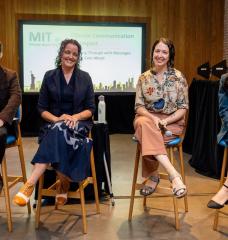
At New York Climate Week 2026, MIT connects with a global network

MIT News
Aaron Krol, managing editor of the MIT Climate Change Engagement Program, led MIT’s Climate Week NYC session “Climate Communication for Impact,” which featured (left to right) Allison Crimmons of Talking Climate, Arielle Tannenbaum of Climate Central, and Mallika Talwar of Yale University.
PostOctober 14, 2026

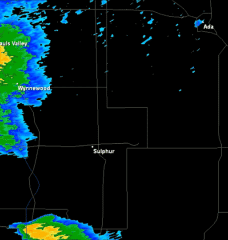
Researchers improve weather forecasts looking two to six weeks out

MIT News
A new technique significantly improves weather forecasting beyond two weeks. The researchers developed a machine-learning model that learns to correct errors in existing forecasting models to improve their output over the two-to-six-week time frame, including for extreme weather events.

MIT Climate Knowledge in Your Inbox


MIT Groups Log In

Log In

Footer

  • About
  • Terms & Conditions
  • Privacy Policy
  • Accessibility
  • Contact
MIT Climate Project
MIT
  • Instagram
  • TikTok
  • YouTube
  • Simplecast
Communicator Award Winner