Climate
    • What We Know
    • What Can Be Done
    • Climate Primer
    • Podcast
    • Explainers
    • Climate Questions
    • For Educators
    • News
    • Events
    • Resources
  • Search
Search
MIT

Main navigation

    • What We Know
    • What Can Be Done
    • Climate Primer
    • Podcast
    • Explainers
    • Climate Questions
    • For Educators
    • News
    • Events
    • Resources
  • Search
PostOctober 1, 2019

Sustainability Lunch Series: Climate Policy to Climate Action

What are the most effective climate policies local and state governments can enact? And how can corporate political activity promote (or hinder) progress?

Join us October 10th (11:45am - 12:45pm) for a panel discussion on local and state climate policy in Massachusetts, moderated by Bethany Patten (MIT Sloan).

RSVP here

Panel Participants:

  • Mia Mansfield, Director of Climate Adaptation and Resilience at MA Executive Office of Energy and Environmental Affairs
  • Hannah Payne, Sustainability Coordinator, City of Somerville.

Location: MIT Sloan School of Management, 100 Main Street, E62-262
by MIT Sloan Sustainability Initiative
Topics
Finance & Economics
Education
Energy
Government & Policy
Transportation

Related Posts

PostNovember 17, 2026

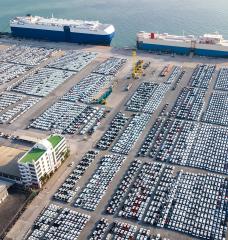
Tariffs, Global Value Chains, and the Incidence of Protection: Evidence fro...

MIT Center for Energy and Environmental Policy Research
PostNovember 2, 2026

Powering up for a pivotal moment

MIT Energy Initiative
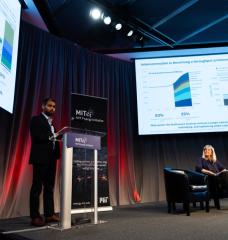
At the 2026 Energizing@MIT: MITEI’s Annual Research Conference, MITEI principal research scientist Deepjyoti Deka (left) presented his Seed Innovation Fund project on accelerating energy planning in the era of data centers through generative AI.
PostOctober 30, 2026

Study pinpoints states with steepest warming trends since 1980

MIT News
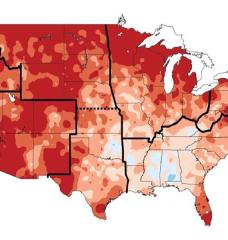
A new study reports global-warming-attributed trends in monthly-averaged maximum daily temperature for every U.S. state. Shown here are temperature changes (highest increases in deeper red and dark orange) between 1991 and 2012 compared to the average temperature between 1901 and 1960.
PostOctober 28, 2026

3 Questions: Why infrastructure is entering a defining era

MIT Civil and Environmental Engineering
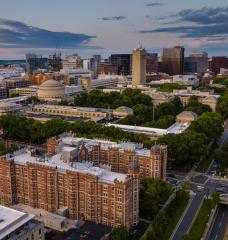
“Designing infrastructure is a highly transdisciplinary, sociotechnical endeavor, involving social, technical, and economic considerations. Understanding how these systems are designed is increasingly important because they are becoming more complex, making decision-making particularly difficult,” says Ali Jadbabaie, JR East Professor and head of the Department of Civil and Environmental Engineering.

MIT Climate Knowledge in Your Inbox


MIT Groups Log In

Log In

Footer

  • About
  • Terms & Conditions
  • Privacy Policy
  • Accessibility
  • Contact
MIT Climate Project
MIT
  • Instagram
  • TikTok
  • YouTube
  • Simplecast
Communicator Award Winner