Climate
    • What We Know
    • What Can Be Done
    • Climate Primer
    • Podcast
    • Explainers
    • Climate Questions
    • For Educators
    • News
    • Events
    • Resources
  • Search
Search
MIT

Main navigation

    • What We Know
    • What Can Be Done
    • Climate Primer
    • Podcast
    • Explainers
    • Climate Questions
    • For Educators
    • News
    • Events
    • Resources
  • Search
PostOctober 22, 2018

Q&A: MIT Professor Donald Sadoway On The Future Of Battery Storage And Renewable Energies

Earlier this year, Professor Don Sadoway published results of his new battery technology, using liquid metal, in Nature, the world’s preeminent science journal. This Q&A takes you through some of Professor Sadoway's thoughts on the importance of battery innovation regarding climate change, and why he thinks his liquid metal battery can change the future of renewable energy for the better. 

Read the full Q&A here!

by MIT Department of Materials Science and Engineering - DMSE
Topics
Batteries, Storage & Transmission
Renewable Energy

Related Posts

PostSeptember 21, 2026

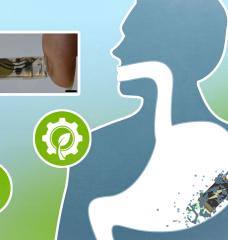
Batteries that safely break down in the GI tract could improve ingestible d...

MIT News
Using materials that are safe for human consumption, MIT researchers have created tiny batteries that could be used to power ingestible electronic devices. The entire battery is bioresorbable, meaning that it can be fully broken down and absorbed by the body.
PostSeptember 15, 2026

MIT makes progress on campus climate goals

MIT News
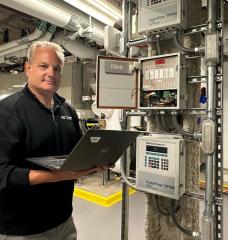
Fran Selvaggio, senior building management systems engineer in the MIT Department of Facilities, stands in the newly renovated Met Warehouse, where an innovative heat-recovery system captures heat rejected from the campus cooling system and uses electric heat pumps to generate heat for the building.
PostAugust 18, 2026

Steady Heat, Flexible Power: Flexibility by Proxy in Nuclear-Thermal Energy...

MIT Center for Energy and Environmental Policy Research
rendering of energetic plasma
PostAugust 4, 2026

Solving the solvent problem

MIT Department of Nuclear Science and Engineering
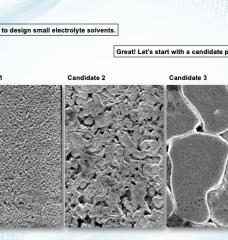
A machine-learning-guided pipeline enables researchers to generate solvent candidate pools on demand, narrow the selections down, and experimentally test the most promising electrolyte recipes. These scanning electron microscopy images show the morphology of sodium-metal deposits obtained from three different electrolyte candidates.

MIT Climate Knowledge in Your Inbox


MIT Groups Log In

Log In

Footer

  • About
  • Terms & Conditions
  • Privacy Policy
  • Accessibility
  • Contact
MIT Climate Project
MIT
  • Instagram
  • TikTok
  • YouTube
  • Simplecast
Communicator Award Winner