Climate
    • What We Know
    • What Can Be Done
    • Climate Primer
    • Podcast
    • Explainers
    • Climate Questions
    • For Educators
    • News
    • Events
    • Resources
  • Search
Search
MIT

Main navigation

    • What We Know
    • What Can Be Done
    • Climate Primer
    • Podcast
    • Explainers
    • Climate Questions
    • For Educators
    • News
    • Events
    • Resources
  • Search
PostOctober 17, 2018

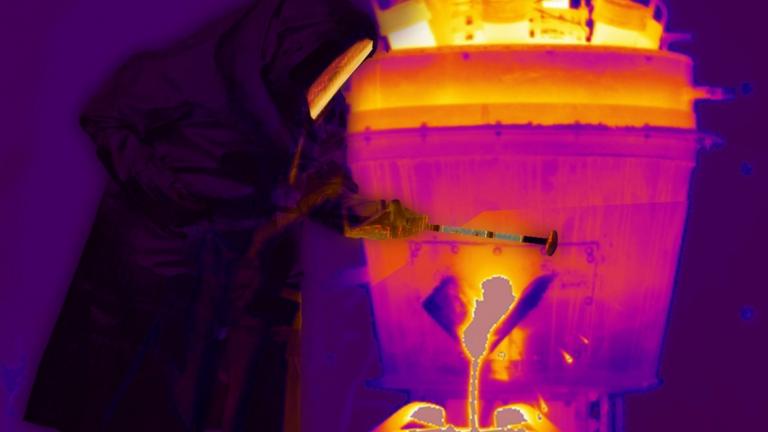
A new way to make steel could cut 5% of CO2 emissions at a stroke

Boston Metal, an MIT spinout, developed a novel approach to metal processing using an electrolytic cell to process raw iron. If the technology works at scale as cheaply as the founders hope, it could offer a clear path to cutting greenhouse-gas emissions from one of the hardest-to-clean sectors of the global economy, and the single biggest industrial source of climate pollution.

Read the full story here!

by MIT Department of Materials Science and Engineering - DMSE
Topics
Energy
Industry & Manufacturing

Related Posts

PostSeptember 9, 2026

An electrochemical approach turns ammonia into pure hydrogen

MIT News
MIT researchers have developed a new way to extract pure hydrogen gas from ammonia and other hydrogen carrier molecules. Their strategy, which uses electricity to speed up the extraction, reduces the temperature and energy required to recover hydrogen from these molecules.
PostSeptember 8, 2026

Study predicts large disparities in access to food, water, and energy in 20...

MIT News
A new study focuses on forecasting future access to food, water, and energy in 2050.
PostAugust 28, 2026

Gage Coon: An Earth scientist exploring the power of microbes

MIT News
“I discovered this world of academia, and so I was really excited when I learned about it,” Gage Coon says. “I was like, ‘Oh my god, constant learning. That is exactly what I want to do forever.’”
PostAugust 26, 2026

AI helps design new materials that work in the real world

MIT News
“You can plug this into any kind of model, not only existing diffusion models but also future models, where people can’t generate enough stable materials, and it can improve stability,” says Mingda Li.

MIT Climate Knowledge in Your Inbox


MIT Groups Log In

Log In

Footer

  • About
  • Terms & Conditions
  • Privacy Policy
  • Accessibility
  • Contact
MIT Climate Project
MIT
  • Instagram
  • TikTok
  • YouTube
  • Simplecast
Communicator Award Winner