Climate
Search

Main navigation

  • Climate 101
    • What We Know
    • What Can Be Done
    • Climate Primer
  • Explore
    • Podcast
    • Explainers
    • Climate Questions
    • For Educators
  • MIT Action
    • News
    • Events
    • Resources
  • Search
MIT

Main navigation

  • Climate 101
    • What We Know
    • What Can Be Done
    • Climate Primer
  • Explore
    • Podcast
    • Explainers
    • Climate Questions
    • For Educators
  • MIT Action
    • News
    • Events
    • Resources
  • Search
PostJuly 17, 2020

A new study conducted by J-WAFS PI Chris Knittel suggests that racial discrimination has led to disproportionate numbers of Covid cases in Black communities across the US

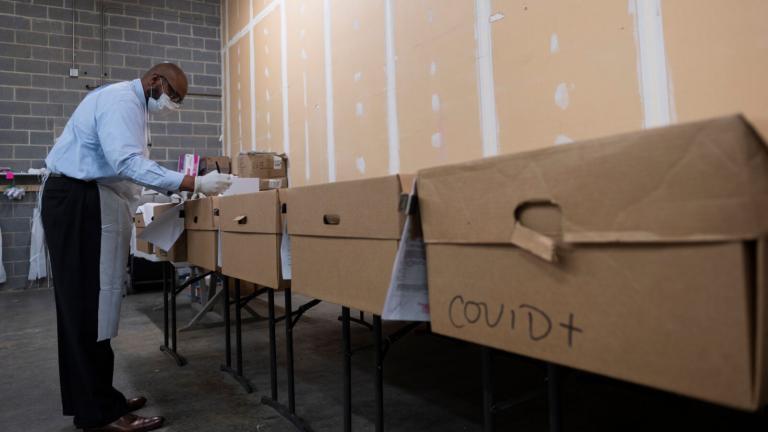
Mortician and funeral director Bryan Clayton inspects names on a row of cardboard caskets, one reading "COVID+," at Maryland Cremation Services in Millersville, Md.

J-WAFS PI Chris Knittel and other researchers widen their lens to look at population-level risk factors of Covid. They’re findings suggest that, in the U.S., race may be as important as age in gauging a person’s likelihood of dying from the disease. Read more here. 

by Abdul Latif Jameel Water and Food Systems Lab (J-WAFS)
Topics
Humanities & Social Science
Health & Medicine

Related Posts

PostMay 12, 2026

3 Questions: Evaluating hourly air pollution forecasts in a time of more fr...

MIT Center for Sustainability Science and Strategy
Improving air quality forecasts
PostApril 6, 2026

Connecting climate and sustainability: Synergies and tradeoffs

MIT Center for Sustainability Science and Strategy
MIT Global Change Forum 48
PostFebruary 18, 2026

Bridging science and society in the emerging bioeconomy

MIT School of Humanities, Arts, and Social Sciences
Class STS.059 (The Bioeconomy and Society) is taught jointly by professor of biological engineering Mark Bathe (standing, right) and associate professor of science, technology, and society Robin Wolfe Scheffler (standing, left).
PostDecember 8, 2025

When companies “go green,” air quality impacts can vary dramatically

MIT News
MIT researchers found that industry’s actions to shrink their carbon footprint — like buying renewable electricity or reducing air travel — can both cut CO₂ emissions but have very different impacts on overall air quality.

MIT Climate Knowledge in Your Inbox


MIT Groups Log In

Log In

Footer

  • About
  • Terms & Conditions
  • Privacy Policy
  • Accessibility
  • Contact
MIT Climate Project
MIT
  • Instagram
  • TikTok
  • YouTube
  • Simplecast
Communicator Award Winner