The MIT Energy Initiative (MITEI) has launched a new research consortium — the Future Energy Systems Center — to address the climate crisis and the role energy systems can play in solving it. This integrated effort engages researchers from across all of MIT to help the global community reach its goal of net-zero carbon emissions. The center examines the accelerating energy transition and collaborates with industrial leaders to reform the world’s energy systems. The center is part of “Fast Forward: MIT’s Climate Action Plan for the Decade,” MIT’s multi-pronged effort announced earlier this year to address the climate crisis.
The Future Energy Systems Center investigates the emerging technology, policy, demographics, and economics reshaping the landscape of energy supply and demand. The center conducts integrative analysis of the entire energy system — a holistic approach essential to understanding the cross-sectorial impact of the energy transition.
“We must act quickly to get to net-zero greenhouse gas emissions. At the same time, we have a billion people around the world with inadequate access, or no access, to electricity — and we need to deliver it to them,” says MITEI Director Robert C. Armstrong, the Chevron Professor of Chemical Engineering. “The Future Energy Systems Center combines MIT’s deep knowledge of energy science and technology with advanced tools for systems analysis to examine how advances in technology and system economics may respond to various policy scenarios.”
The overarching focus of the center is integrative analysis of the entire energy system, providing insights into the complex multi-sectorial transformations needed to alter the three major energy-consuming sectors of the economy — transportation, industry, and buildings — in conjunction with three major decarbonization-enabling technologies — electricity, energy storage and low-carbon fuels, and carbon management. “Deep decarbonization of our energy system requires an economy-wide perspective on the technology options, energy flows, materials flows, life-cycle emissions, costs, policies, and socioeconomics consequences,” says Randall Field, the center’s executive director. “A systems approach is essential in enabling cross-disciplinary teams to work collaboratively together to address the existential crisis of climate change.”
Through techno-economic and systems-oriented research, the center analyzes these important interactions. For example:
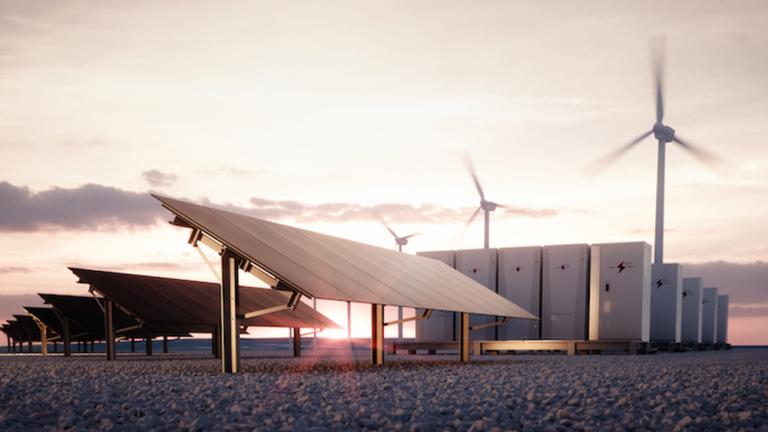
• Increased reliance on variable renewable energy, such as wind and solar, and greater electrification of transportation, industry, and buildings will require expansion of demand management and other solutions for balancing of electricity supply and demand across these areas.
• Likewise, balancing supply and demand will require deploying grid-scale energy storage and converting the electricity to low-carbon fuels (hydrogen and liquid fuels), which can in turn play a vital role in the energy transition for hard-to-decarbonize segments of transportation, industry, and buildings.
• Carbon management (carbon dioxide capture from industry point sources and from air and oceans; utilization/conversion to valuable products; transport; storage) will also play a critical role in decarbonizing industry, electricity, and fuels — both as carbon-mitigation and negative-carbon solutions.
As a member-supported research consortium, the center collaborates with industrial experts and leaders — from both energy’s consumer and supplier sides — to gain insights to help researchers anticipate challenges and opportunities of deploying technology at the scale needed to achieve decarbonization. “The Future Energy Systems Center gives us a powerful way to engage with industry to accelerate the energy transition,” says Armstrong. “Working together, we can better understand how our current technology toolbox can be more effectively put to use now to reduce emissions, and what new technologies and policies will ultimately be needed to reach net-zero.”
A steering committee, made up of 11 MIT professors and led by Armstrong, selects projects to create a research program with high impact on decarbonization, while leveraging MIT strengths and addressing interests of center members in pragmatic and scalable solutions. “MIT — through our recently released climate action plan — is committed to moving with urgency and speed to help wring carbon dioxide emissions out the global economy to resolve the growing climate crisis,” says Armstrong. “We have no time to waste.”
The center members to date are: AECI, Analog Devices, Chevron, ConocoPhillips, Copec, Dominion, Duke Energy, Enerjisa, Eneva, Eni, Equinor, Eversource, Exelon, ExxonMobil, Ferrovial, Iberdrola, IHI, National Grid, Raizen, Repsol, Rio Tinto, Shell, Tata Power, Toyota Research Institute, and Washington Gas.