Climate
    • What We Know
    • What Can Be Done
    • Climate Primer
    • Podcast
    • Explainers
    • Climate Questions
    • For Educators
    • News
    • Events
    • Resources
  • Search
Search
MIT

Main navigation

    • What We Know
    • What Can Be Done
    • Climate Primer
    • Podcast
    • Explainers
    • Climate Questions
    • For Educators
    • News
    • Events
    • Resources
  • Search
PostMarch 13, 2019

Investigating the Flint Water Crisis

Health crises can arise from improper water treatment.  J-WAFS is deeply invested in addressing the health challenges associated with poor water quality, with several funded projects that address the issue, from E. coli test kits to low-cost water filters.  Others at MIT and across the region are also devoted to solving these challenges.  The MIT Water Club recently brought a researcher at the University of Rhode Island to present at their monthly Lunch & Learn series on February 14th to discuss his efforts to address one of the highest profile water quality crises in recent years that occurred in Flint, Michigan.

Read more on the J-WAFS website.

by Abdul Latif Jameel Water and Food Systems Lab (J-WAFS)
Topics
Food, Water & Agriculture
Advocacy & Activism
Health & Medicine
Climate Justice

Related Posts

PostOctober 26, 2026

At New York Climate Week 2026, MIT connects with a global network

MIT News
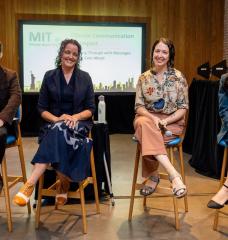
Aaron Krol, managing editor of the MIT Climate Change Engagement Program, led MIT’s Climate Week NYC session “Climate Communication for Impact,” which featured (left to right) Allison Crimmons of Talking Climate, Arielle Tannenbaum of Climate Central, and Mallika Talwar of Yale University.
PostOctober 13, 2026

MIT Farm is growing

Department of Urban Studies and Planning MIT
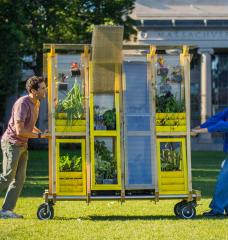
Zachary Rapaport (left) and Aleks Banaś move their farm cart across the MIT campus. The two graduate architecture students co-designed and built the cart.
PostOctober 13, 2026

Exploring how plants thrive in a changing environment

MIT News
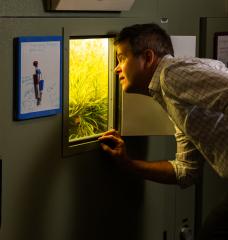
Plants are central to his lab, but David Des Marais sees them as a window into all living things. “Understanding why life is so diverse is fascinating to me,” Des Marais says.
PostSeptember 21, 2026

Batteries that safely break down in the GI tract could improve ingestible d...

MIT News
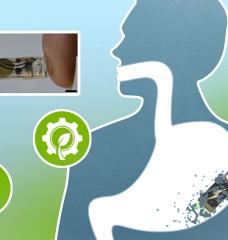
Using materials that are safe for human consumption, MIT researchers have created tiny batteries that could be used to power ingestible electronic devices. The entire battery is bioresorbable, meaning that it can be fully broken down and absorbed by the body.

MIT Climate Knowledge in Your Inbox


MIT Groups Log In

Log In

Footer

  • About
  • Terms & Conditions
  • Privacy Policy
  • Accessibility
  • Contact
MIT Climate Project
MIT
  • Instagram
  • TikTok
  • YouTube
  • Simplecast
Communicator Award Winner